
Tillabéri Under Double Offensive — JNIM and ISSP Strike Niger in June 2026
 Marie Dubois
Tillabéri Under Double Offensive — JNIM and ISSP Strike Niger in June 2026
On June 17, in In-Ates and Banibangou, in western Niger, the attack did not only target two military positions. It opened a sequence. According to ACLED, fighters from the Islamic State in the Sahel Province (ISSP) simultaneously overwhelmed camps, inflicted heavy losses on Nigerien forces, and seized weapons, vehicles, and equipment. The next day, Jama'at Nusrat al-Islam wal-Muslimin (JNIM), al-Qaeda's Sahel branch, attempted an incursion into the Niamey airport area. Then, on June 30, the same JNIM struck Makalondi, Torodi, and Diagourou, alongside attacks in Sebba, Solhan, and Gayéri in Burkina Faso.
On a map, this looks like a series of points. On the ground, it is a line of pressure running from Liptako-Gourma to the Benin border, then northwest into Nigeria. Tillabéri is no longer just a troubled periphery. It has become the arena where two jihadist organizations test the Nigerien state, measure themselves against each other, and seek to determine which banner will control the roads, markets, and retreat routes.
A Battle of Crossroads, Not Just Villages
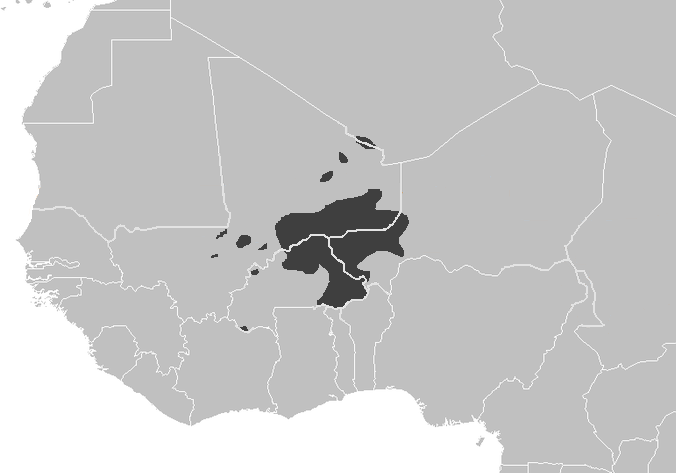
In-Ates and Banibangou are located in this contact zone where administrative borders matter less than paths, water points, and weekly markets. From Niamey, one must think in terms of hours of travel and fuel autonomy, not in abstract kilometers. A unit that departs too late, with a tank too visible or poor radio communication, becomes a target even before reaching contact.
The logic of ISSP is well-known: strike isolated garrisons, capture equipment, demonstrate that the army can only hold in urban areas or along major routes. JNIM's logic is more political and patient. The group seeks to encircle pockets of state control, negotiate locally when it suits them, and then escalate with coordinated attacks. The events of June show that both methods now coexist in the same theater of operations.
The attempt against the Niamey airport, repelled by security forces according to Nigerien authorities cited by ACLED, has particular significance. An airport is not just a symbolic target. In a landlocked country, it is a logistical lifeline: evacuation, arrival of spare parts, rotation of advisors, transport of the wounded. When an armed group forces the government to defend this gateway, it imposes its tempo on the capital.
JNIM and ISSP Also Fight Against the Clock
The duel between JNIM and ISSP is not an abstract theological rivalry. It plays out in recruitment, perception of strength, and the ability to reward fighters. The weapons seized in In-Ates or Banibangou thus have immediate military value, but also propaganda value. A captured pickup, a repurposed machine gun, a video of an abandoned camp: in these areas, this sometimes holds more weight than a victory statement.
JNIM, for its part, seems to be seeking depth. The attacks on June 30, conducted in Niger and Burkina Faso almost within the same window, suggest cross-border coordination that aims less at immediate conquest than at stretching enemy forces. Burkinabé authorities claimed to have killed at least 400 assailants and seized over 250 motorcycles and 353 weapons. These figures should be treated with caution until independently verified. But even if the offensive was repelled at several points, the operational message remains serious: JNIM can still open multiple fronts at once.
From experience, a repelled attack is not always a failure for the attacker. If it forces the army to thin out another area, consume scarce fuel, or immobilize helicopters to cover secondary routes, it achieves part of its objective. In the Sahel, logistical wear and tear kills plans before bullets do.
The Sahel States Alliance Responds from the Sky
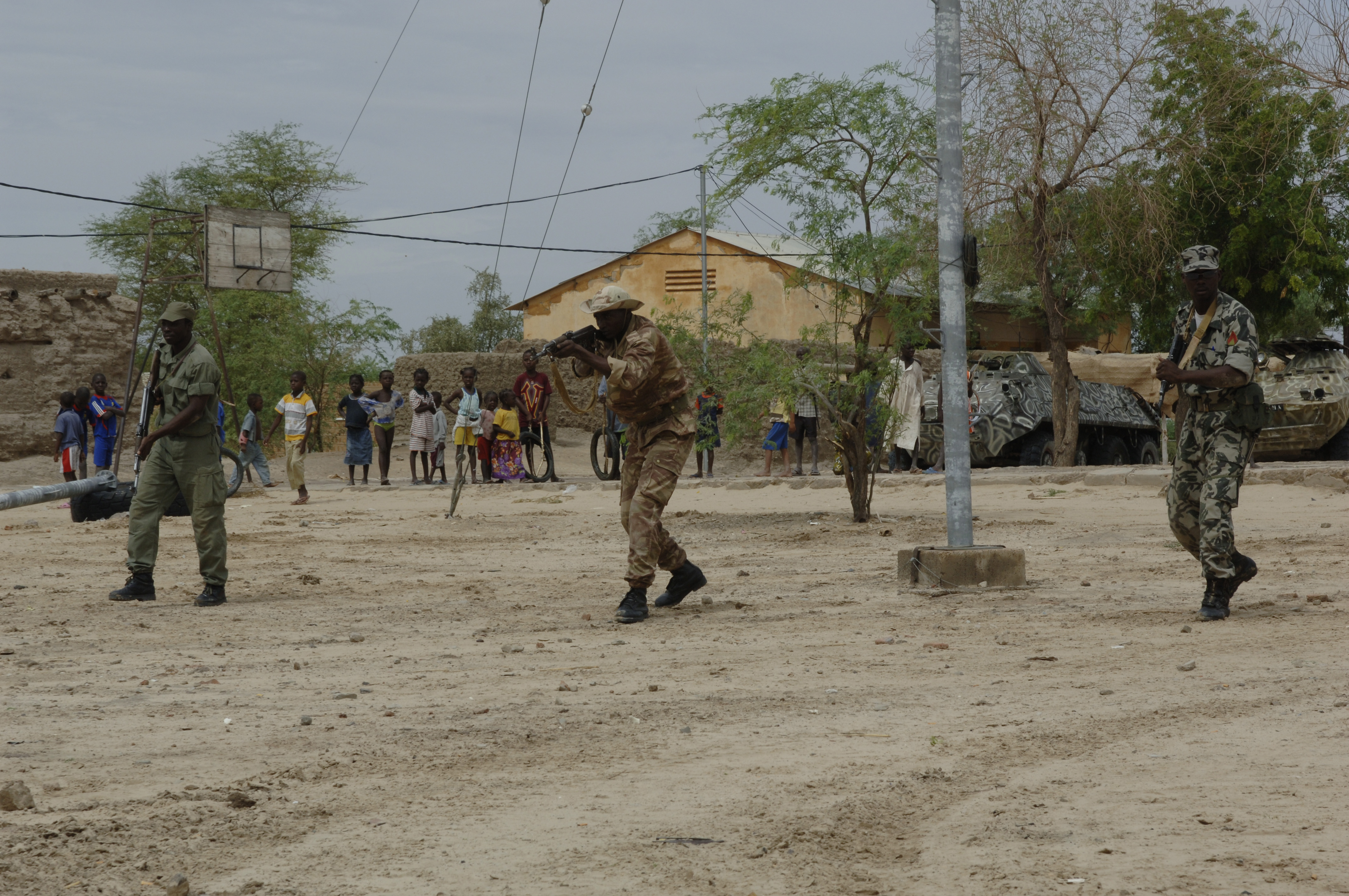
In the face of this degradation, the Sahel States Alliance (AES), formed by Mali, Niger, and Burkina Faso, increasingly favors aerial responses and military coordination outside the ECOWAS framework. The Security Council Report reminds us that the three countries have already conducted coordinated strikes against suspected positions in Mali, while the Security Council is set to review the situation in West Africa and the Sahel in July with a briefing from UNOWAS.
Aerial power can break a column of motorcycles or neutralize a gathering before the attack. It does not hold a market after the planes leave. It does not restore trust between a military post and a village chief who must survive the next night. This is the central weakness of the AES response: it can produce visible tactical effects, but it still struggles to rebuild a permanent network of human intelligence, local justice, and administrative presence.
There is also a question of command. The three Sahelian juntas have built their legitimacy on the promise of restoring sovereignty. However, sovereignty is now measured in very concrete places: who controls the Torodi-Makalondi road after 6 PM, who allows a truck to pass, who arbitrates a pastoral conflict, who decides if a teacher can return. In Tillabéri, these answers are contested.
The Risk of Contagion to the South
The most dangerous consequence is not just the pressure on Niamey. It is the widening of the gray zone towards Benin and northwestern Nigeria. ACLED notes that the outcome of the JNIM-ISSP rivalry in western Niger will weigh beyond Niger, extending to Burkina Faso, Mali, Benin, and Nigeria. This is not a diplomatic formula. The circulation routes already exist. The smuggling networks do too. Armed groups do not need to conquer a capital to transform a corridor into a sanctuary.
The north of Benin remains particularly vulnerable because it combines a porous border, hard-to-monitor protected areas, and a local economy dependent on crossings. Northwestern Nigeria, on the other hand, overlaps banditry, trafficking, and jihadist infiltration. If ISSP manages to anchor itself more firmly in Tillabéri, it can link up with these spaces. If JNIM gains the upper hand, it has a more flexible method to insert itself into local conflicts.
One must recognize a limit: the available information remains incomplete. Casualty figures, equipment captures, and the actual degree of coordination between fronts are not all verified. But the trend is clear enough to be taken seriously. The west of Niger has become a laboratory for competitive jihadist warfare.
What to Watch for Now
Three indicators will tell if June 2026 was a peak or the beginning of a new phase. The first is the frequency of attacks against secondary posts around Torodi, Makalondi, and Banibangou. The second is the circulation of captured equipment, as weapons taken from a camp rarely reappear by chance. The third is the reaction of the villages: mass departures, local agreements, market closures, or an increase in armed escorts.
If Niamey concentrates its best units around the capital and airports, armed groups will push on the margins. If the army disperses its forces to hold the margins, the capital will become more nervous again. This is the classic dilemma of a state under territorial pressure.
The next signal may not come from a statement. It will come from a road that is no longer used, a canceled market, or a convoy that will require two escorts instead of one. In the Sahel, this is often how one sees a map change before the chancelleries redraw it.
ISSP launched attacks on military positions in In-Ates and Banibangou, Niger, on June 17, 2026, resulting in heavy losses for Nigerien forces. JNIM attempted an incursion at Niamey's airport the following day. On June 30, JNIM conducted further attacks in Makalondi, Torodi, and Diagourou, alongside operations in Burkina Faso, indicating a coordinated strategy between the two jihadist groups. The situation highlights the escalating conflict in the Tillabéri region.
- ISSP attacked military positions in In-Ates and Banibangou, causing heavy losses to Nigerien forces.
- JNIM attempted an incursion at Niamey's airport, indicating a strategic target.
- Burkinabe authorities reported at least 400 assailants killed and significant equipment seized during the attacks.
- The attacks suggest a coordinated effort between JNIM and ISSP across borders.
- The situation in Tillabéri reflects a competitive jihadist environment with implications for regional stability.