
TKMS and Navantia Plan 2026 Submarine Partnership — Europe's Industrial Base Remains Fragmented
 Dr. Klaus Weber
TKMS and Navantia Plan 2026 Submarine Partnership — Europe's Industrial Base Remains Fragmented
A second Memorandum of Understanding between TKMS and Navantia sounds like European defense integration. In fact, it is initially something more modest: the attempt by two nationally shaped shipyards to create a cooperation framework for selected future submarine projects by the end of 2026, without a merger, without a joint ownership structure, and explicitly without interference in existing programs. It is precisely this limitation that makes the news interesting. Europe is not suddenly learning to build submarines together. It is learning how difficult it has become to assert national design authority and industrial scaling simultaneously.
An MoU Does Not Replace Industrial Consolidation
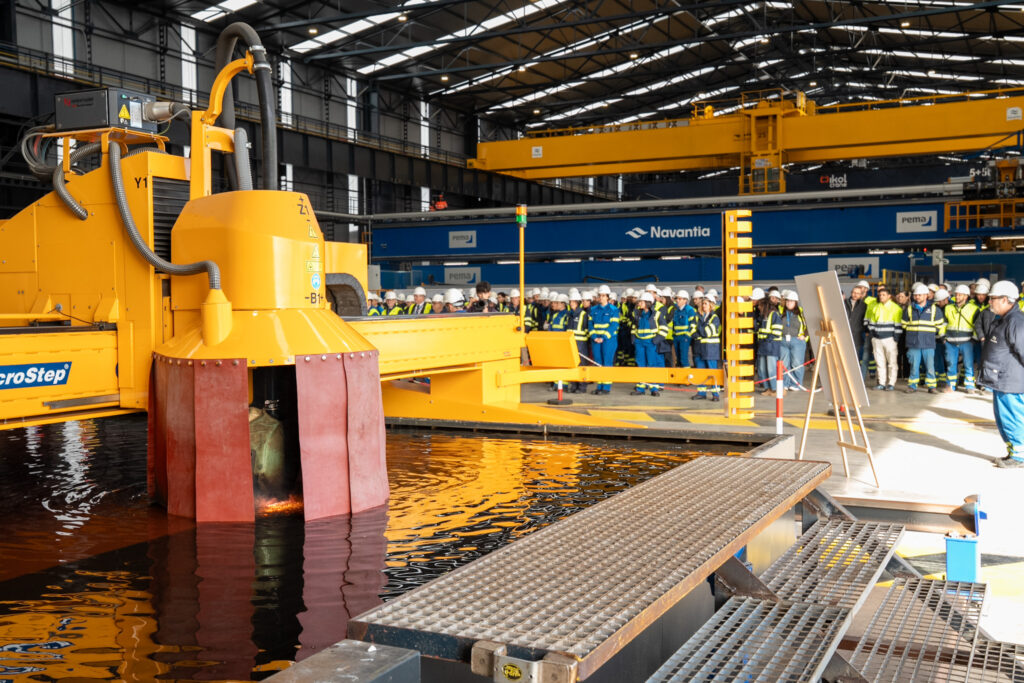
According to the Navantia statement published by Naval News, TKMS AG & Co. KGaA and Navantia S.A. have signed a second MoU. It builds on a first agreement from early 2026 and aims to clearly define areas where both companies can pool their capabilities for the production and marketing of selected submarine projects. The target date is the end of the year; prerequisites include competition law, export controls, regulatory procedures, and the approval of affected customers.
This is not a small asterisk in the contract text, but the core of the matter. The planned cooperation only applies to future opportunities. Existing contracts, programs, and customer relationships remain independent. Both companies retain their technologies, quality standards, and design authority. For a European strategist, this sounds reasonable. For a European planner, it is simultaneously sobering: If each partner secures its architecture, its customers, and its technological sovereignty, capacity will only arise where the market allows, not where Europe's security situation demands it.
The European Submarine Gap is a Capacity Issue
The military logic behind the approach is nonetheless compelling. The Baltic Sea, the North Atlantic, and the Mediterranean require more underwater presence, not less. Russia is forcing NATO states to adopt robust submarine defense, protect critical infrastructure, and maintain continuous surveillance of maritime chokepoints. At the same time, global demand for conventional submarines with air independence, quiet signatures, and long deployment times is growing. In this market, TKMS and Navantia are not only competing against South Korean, French, or Swedish providers but also against the physics of limited shipyard capacities.
TKMS brings the German tradition of the HDW lines, from the Class 209 export business to the 212/214 families and the German-Norwegian 212CD program. Navantia contributes the S-80 class, a Spanish design that has become politically costly but industrially valuable after painful delays. Both companies thus have something that Europe urgently needs: real submarine experience. But experience is not the same as throughput. Europe cannot simply decide today to deliver twice as many modern conventional submarines in five years. Skilled workers, pressure vessel manufacturing, battery systems, combat system integration, sonar, periscopes, software certification, and port infrastructure cannot be conjured up by an MoU.
Strategic Autonomy Remains Tied to Design Authority
Notably, the language of the statement is significant. Oliver Burkhard explicitly emphasizes that TKMS wants to pool complementary industrial strengths while preserving technological leadership, design authority, and quality standards. Gonzalo Mateo-Guerrero formulates for Navantia almost mirror-like that both companies will retain their own technologies and design authority in existing programs. This is not a diplomatic platitude. In the submarine industry, design authority is power: whoever understands the overall system controls modernization, export approvals, spare parts, combat value enhancement, and operational adaptation over decades.
Here lies the parallel to FCAS and other European major programs. Europe likes to talk about common platforms but argues over who integrates. This is visible in the fighter jet context. In the submarine context, it is even trickier because national navies treat underwater technology as a strategic core area. A Spanish S-80 customer does not automatically want to adopt a German 212CD ecosystem; a TKMS customer does not automatically want to accept Spanish industrial dependencies. The partnership can improve utilization, supply chains, and marketing. However, it does not resolve the political question of whether Europe is willing to give up national control in favor of a genuine common design.
NATO Pressure Increases Demand, Not Automatically Efficiency
The timing is no coincidence. In the Ankara Summit Declaration of July 8, NATO stated that European allies and Canada would increase their investments in core defense requirements by more than $139 billion by 2025. The alliance also announced more than $50 billion in new procurements, explicitly mentioning integrated air and missile defense, precision strike, unmanned systems, industrial production capacity, and innovation acceleration. For the maritime dimension, this means: NATO expects more industrial depth from Europe, not just higher budget lines.
But higher budgets initially generate orders, not shipyards. When Germany, Norway, Spain, Poland, or other NATO states simultaneously demand new maritime capabilities, a distribution conflict arises between national urgency and European rationalization. The usual political response is cooperation. The industrial response is: cooperation only where competition law, export control, customer wishes, and national jobs are compatible. That is precisely why the TKMS-Navantia MoU is both sensible and limited.
What the Partnership Can Achieve
In the best case, a model could emerge by the end of 2026 that reduces three practical problems. First, joint planning could stabilize certain supply chains, such as for modules, sensor integration, steel processing, or training systems. Second, coordinated marketing to third-party customers could strengthen the European position instead of pitting German and Spanish offers against each other. Third, both shipyards could improve delivery times by sharing clearly defined work packages without having to develop a complete joint submarine.
This would not be trivial. The European defense industry often fails not due to a lack of intelligence but due to incorrect institutional incentives. When each state protects its own national industry with European words, economies of scale are politically celebrated and practically prevented. A limited, customer-oriented cooperation framework can therefore be more useful than a large integration promise that later breaks on sovereignty reflexes.
What It Cannot Achieve
However, the partnership will not free Europe from its structural fragmentation. It does not create a European submarine agency, a common procurement plan, or a binding standard for sensors, weapons, batteries, or combat management systems. It also does not answer how Germany, Spain, and other states will set priorities when national contracts collide with export opportunities. The MoU is industry-focused, not institutional. It can coordinate capacity but cannot enforce European demand planning.
For European defense policy, this is the real lesson. Strategic autonomy does not arise from two companies using the word sovereignty in a press release. It arises when states accept that autonomy has costs: common standards, shared risks, and occasionally the loss of national uniqueness. TKMS and Navantia are taking a reasonable step. Europe should welcome it. But it should not overestimate it. Those who fully retain design authority nationally will get cooperation. Those who want European combat power must eventually share more than market opportunities.
The paradoxical conclusion is: Without such industrial partnerships, Europe's submarine base remains too small; with such partnerships alone, it remains too national. More collaboration is necessary. It is not yet integration.
Sources
- Naval News / Navantia press release, July 24, 2026 — TKMS and Navantia Advance Strategic Submarine Partnership with Ambition to Establish Joint Collaboration Framework by Year-End.
- NATO, July 8, 2026 — The Ankara Summit Declaration.
TKMS and Navantia signed a second Memorandum of Understanding to establish a partnership for submarine projects by the end of 2026. This cooperation aims to enhance production capabilities while maintaining national design authority and existing contracts. NATO's recent declarations emphasize the need for increased industrial capacity among European allies in response to security challenges.
- TKMS and Navantia signed a second Memorandum of Understanding for submarine projects.
- The partnership aims to identify fields for cooperation without merging or affecting existing programs.
- NATO expects increased industrial capacity from European allies in response to security demands.