
Training in the Scorching Heat! A Close Look at the Army Artillery's Live-Fire Training by the Coast
We are currently in the dog days of summer, and many places across the country are experiencing high temperatures. In the past few days, a certain brigade of the 73rd Group Army has incorporated challenging real combat subjects such as precision shooting, simultaneous firing, and maximum firing rate of a single gun into their training under the high temperature and humidity conditions of the coastal area. They organized soldiers to conduct all-element, day-and-night live-fire training, honing the unit's firepower assault capabilities and all-time, all-domain combat skills in the sweltering heat.
During the peak of summer, the relative humidity along the southeastern coast exceeds 85%, creating a stifling feeling. With continuous exposure to sunlight, the surface temperature of the training ground has surpassed 45°C, and the surface temperature of artillery, vehicles, and other equipment is close to 50°C.
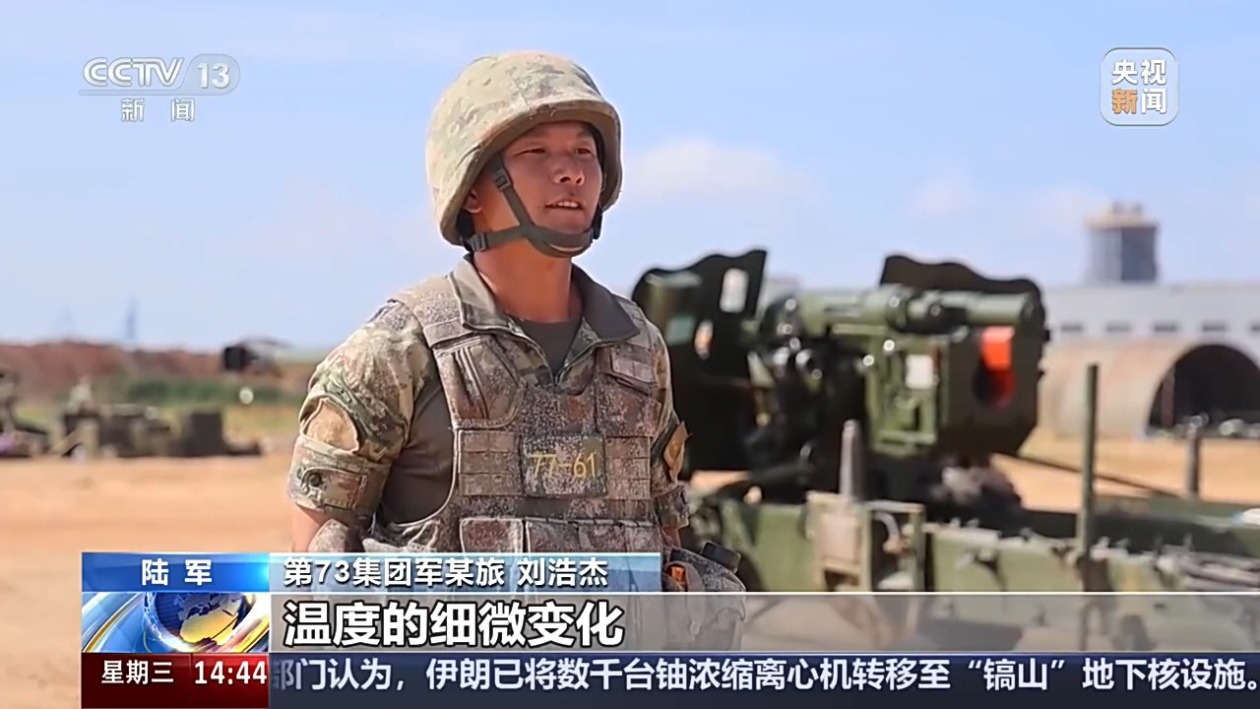
Lieutenant Liu Haojie, 73rd Group Army: In the high temperature and humidity environment of the coastal area, even slight changes in temperature can affect the trajectory. Therefore, during live-fire shooting, we need to monitor temperature changes in real-time to correct and update parameters to ensure shooting accuracy.
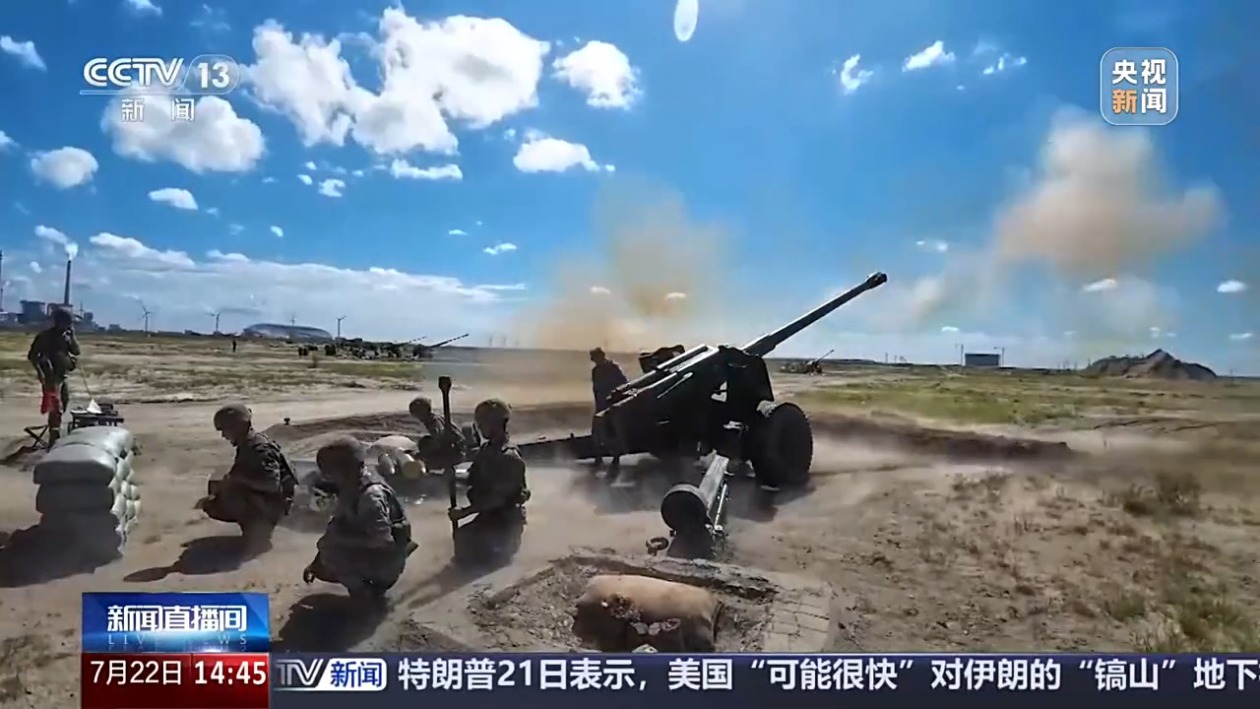
The focus of this training is the 8-round rapid fire exercise, which is a key and challenging subject for honing the extreme coordination and rapid fire assault capabilities of the artillery team. The artillery crew needs to complete a full set of tactical actions—loading ammunition, aiming, firing, and re-aiming—continuously within a short period, with a tight operational rhythm, high precision in coordination, and minimal margin for error. In the extreme heat, the physical consumption of soldiers accelerates significantly, and the working conditions of precision components and aiming devices are prone to fluctuations, which raises higher demands for team coordination, professional operation, and on-site handling capabilities.
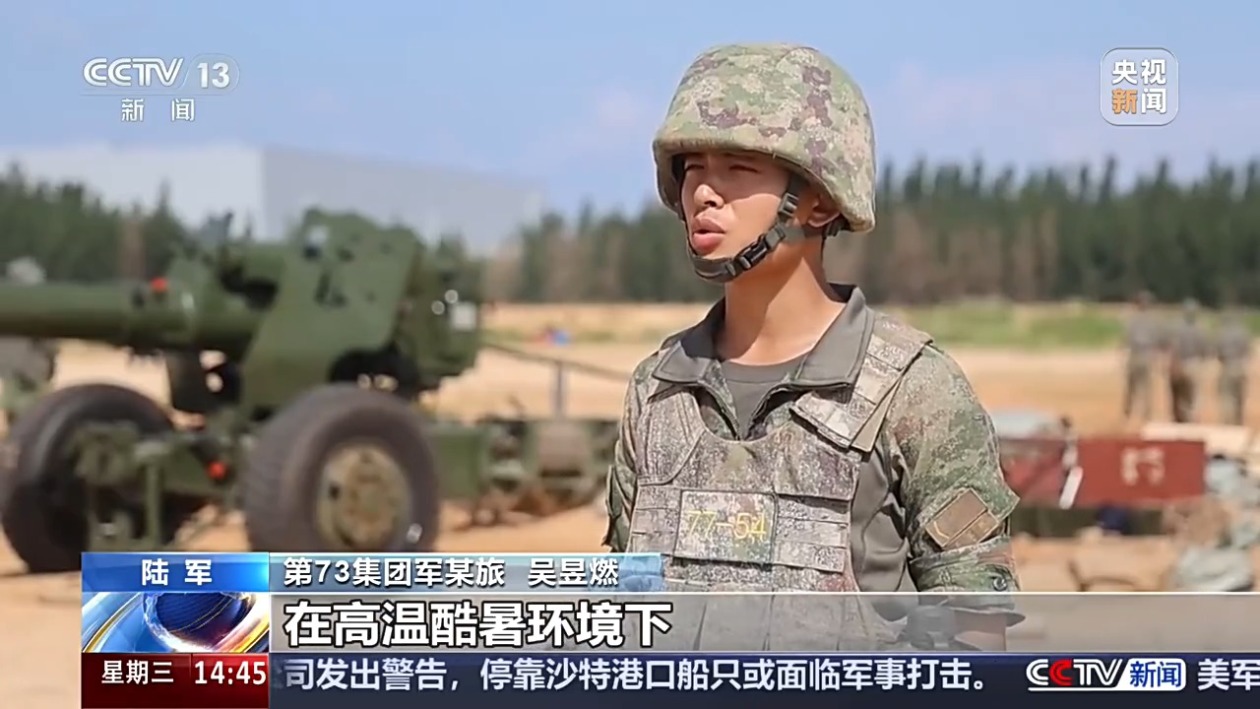
Sergeant Wu Yuran, 73rd Group Army: The 8-round rapid fire tests not only speed but also coordination and endurance. In the high temperature and sweltering environment, we must overcome the effects of physical exhaustion and ensure that every operation is error-free. Through extreme subjects and high-intensity practical training, we further enhance our combat capabilities.
As night falls, the residual heat of the coastal training ground lingers, with the environmental temperature still above 32°C, and live-fire training continues. Soldiers rely on the complex environment of the night to conduct parameter setting and night fire assault exercises under low-light conditions, using a continuous day-and-night training model under extreme heat pressure to comprehensively test and refine the unit.
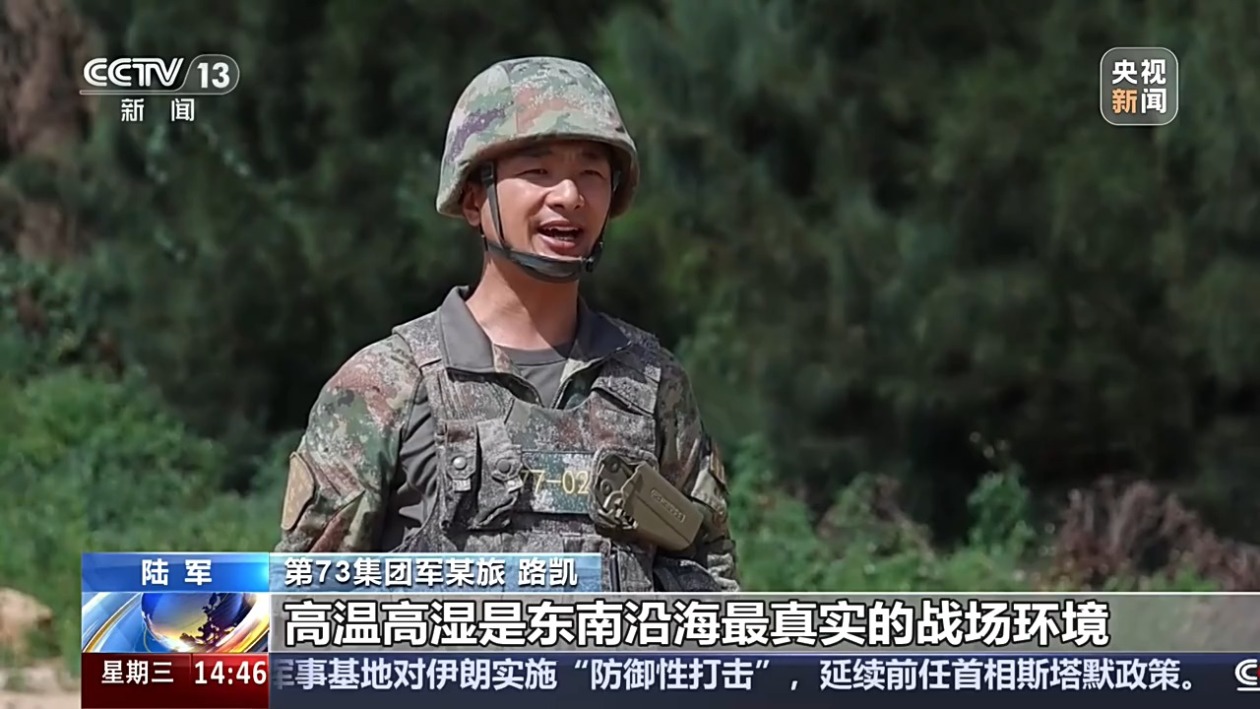
Corporal Lu Kai, 73rd Group Army: High temperature and humidity represent the most realistic battlefield environment along the southeastern coast. In this environment, we integrate challenging subjects such as the maximum firing rate of a single gun into our training to address training shortcomings, test the extreme performance of personnel and equipment, and continuously hone our combat skills to be ready at all times and capable of fighting at any moment.
The 73rd Group Army conducted live-fire training exercises in Binhai under extreme heat and humidity, focusing on precision shooting and rapid-fire artillery operations. The training aimed to improve combat readiness and operational capabilities, with personnel adapting to environmental challenges. The exercises included monitoring temperature changes to ensure accuracy during firing.
- The 73rd Group Army conducted live-fire training in high temperature and humidity conditions.
- Training included precision shooting and rapid-fire exercises with artillery.
- Environmental conditions affected the training, with temperatures exceeding 45°C.
- Personnel monitored temperature changes to ensure shooting accuracy.
- Training aimed to enhance combat readiness and operational capabilities.