
Translators for "Geraniums" in Belarus fell silent on June 22 — how the Russian strike scheme is changing
 Dmitri Volkov
Translators for "Geran" in Belarus Went Silent on June 22 — How the Russian Strike Scheme is Changing
Three days of silence in the Belarusian section of the air corridor may mean more than another report on downed drones. On June 24, Volodymyr Zelensky stated that the translators on Belarusian territory, used for coordinating Russian strikes, ceased to operate on June 22; he specifically noted that it is still unknown whether they have been dismantled or simply turned off (Ukrinform, June 24, 2026). For military analysis, the technical aspect is more important than the diplomatic formula: if the ground communication node is turned off, not only the route of the "Geran" changes, but also the very economy of long-range strikes.
What Exactly Could Have Gone Silent
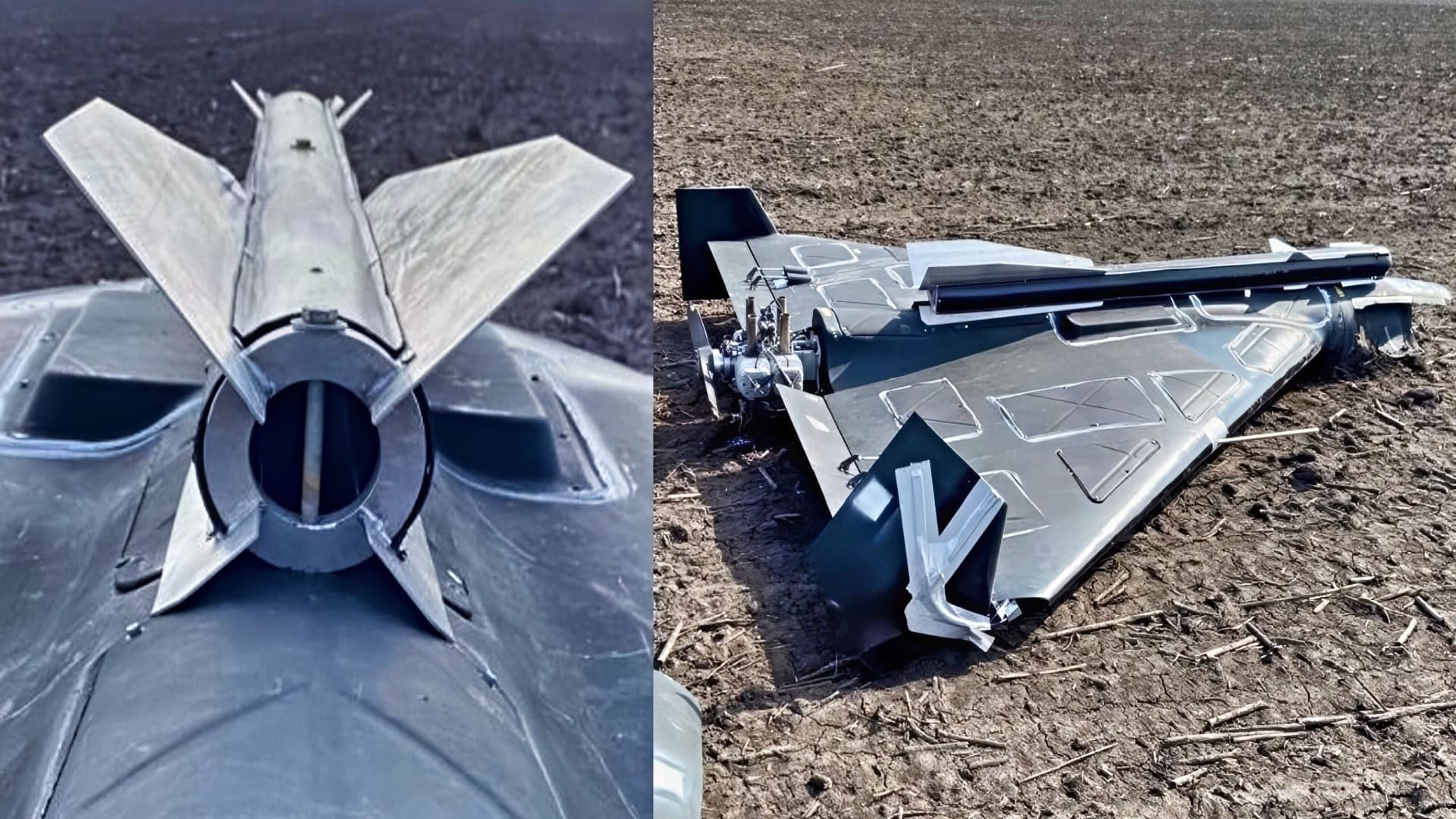
According to Meduza, this refers to antennas and ground nodes that supported two-way video communication with long-range Russian drones such as "Geran" and "Gerbera." In this scheme, the drones themselves can operate as elements of a mesh network, transmitting signals to each other over tens and sometimes hundreds of kilometers, but a primary stable channel must still enter the network from somewhere. If this entry point is the Belarusian border infrastructure, it turns a neutrally formatted territory into part of the combat contour. This is not "political support" in the soft sense of the word, but a component of the weapon control system.
The technical side here deserves attention. The "Geran-2," the Russian version of the Iranian Shahed-136, is typically assessed as a device weighing about 200 kilograms with a warhead of approximately 40–50 kilograms and a range of about 1,000–2,000 kilometers depending on the flight profile and modification. It does not require constant manual piloting, but new modifications with cameras, modems, and feedback elements allow the operator to refine the route, select vulnerable air defense zones, and change the drone's behavior in the final phase. The "Gerbera" is lighter and cheaper, often considered a reconnaissance-deception or auxiliary device, but in the network group, it is no less important: a cheap node can expand the communication channel for a more expensive strike asset. The Soviet General Staff would not call this a "drone," but a system where the carrier, channel, and operator form a single complex. It is amusing that forty years later we are again explaining the obvious: without communication, the most mass-produced technology quickly becomes blunt technology.
Why the Belarusian Direction Was Convenient for Moscow
The Belarusian corridor provided Russia with three advantages. First, geography. Flying along the Chernihiv region and north of Kyiv allowed for stretching Ukrainian air defense and forced Kyiv to keep some sensors and mobile fire groups away from hotter directions. Second, political ambiguity. As long as Russian devices use Belarusian infrastructure without direct involvement of Belarusian troops in the war, Minsk has the opportunity to deny full participation, while Moscow can use foreign territory as an extension of its own theater of military operations. Third, communication. A ground translator on a tower, especially if covered by the status of a union state, is cheaper and more stable than an improvised chain of aerial translators.
On June 24, the Ukrainian border service reported a decrease in the intensity of Russian strike drones entering through the Chernihiv region and the absence of mass flights of "Shaheds" along the Belarusian-Ukrainian border in recent days (Ukrainian Truth, June 24). This does not automatically prove a causal relationship. Sources from the Ukrainian publication noted that pauses in the operation of such nodes had been recorded before. However, the timing coinciding with Zelensky's ultimatum from June 19 and the subsequent statement about the cessation of operations from June 22 makes the version of forced de-escalation or preventive shutdown quite plausible.
Lukashenko Between Threat and Dependency
An important paradox is that Minsk in this story appears not as the owner of the territory, but as the manager of a rented military resource. Meduza, citing The Wall Street Journal, reports that Russia intensified pressure on Belarus in 2026, seeking deeper involvement of the country in the war: expanding drone strikes, diverting Ukrainian forces from Donbas, and creating opportunities for operations against neighboring NATO countries. The Russian lever is banal and therefore effective — financial support, from which the Belarusian model still depends. But Lukashenko understands the reverse price as well. In June, he publicly stated that key Belarusian life support and logistics facilities would be "in plain sight" for Ukrainian military forces in the event of further escalation.
The Kremlin, in turn, stated on June 24 through Dmitry Peskov that Russia, as an ally, will always support Belarus in repelling "direct, quasi-, prospective, or real threats" (TASS, June 24). This wording is not a defense, but a reminder of dependency. Moscow offers Minsk insurance against a fire that it itself helps to ignite. In Soviet practice, such relationships were called allied only on posters; in real planning, a more accurate term would be "operational use of the territory of the junior partner."
Operational Consequences for Russian Strikes
If the translators are indeed turned off, the Russian side does not lose the ability to attack Ukraine with drones. On June 25, the Ukrainian Air Forces reported intercepting 83 out of 90 Russian drones launched since the evening of June 24 (Ukrinform, June 25). This means the overall strike cycle continues. But its configuration is changing. Russia may shift its focus to routes from Bryansk, Kursk, and Oryol regions and from southern directions; increase the share of autonomous trajectories without video correction; use more decoys; or attempt to restore the chain of aerial translators without a ground Belarusian support. All these options are more expensive or less reliable.
For Ukrainian air defense, this is not a gift, but a redistribution of the load. Fewer northern video channels do not mean fewer drones overall. However, there is an opportunity to more accurately predict routes and reduce the number of directions where constant ambush groups are required. In the drone war, this is already significant. A mobile group with a machine gun, spotlight, thermal imager, and anti-aircraft installation is cheap only on paper; it needs to be fed with intelligence data, fuel, communication, and personnel. If the northern corridor becomes less flexible, Ukraine gains not a strategic victory, but a few percentage points of operational savings. In a war of attrition, a few percentage points are sometimes more important than a beautiful map.
What the Coming Weeks Will Show
There are three indicators by which the reality of change can be checked. The first — will the absence of mass "Geran" crossings along the Belarusian border persist after the public ultimatum ends? The second — will there be Russian or Belarusian reports of a "terrorist threat" to communication facilities, which usually indicates preparation for informational cover? The third — will the structure of nighttime raids change: more devices from southern and eastern directions, fewer video-corrected trajectories to Kyiv, more primitive decoys?
My cautious conclusion is as follows: the shutdown of translators in Belarus does not break the Russian campaign of long-range strikes, but it worsens its quality and increases the political cost for Minsk. For Moscow, this is an unpleasant but not catastrophic failure. For Lukashenko — a reminder that participation in the war is not only about a tank battalion at the border. Sometimes, just one antenna on a tower is enough for a country to find itself inside someone else's combat contour.
Relay stations in Belarus used for coordinating Russian drone strikes stopped functioning on June 22, 2026, impacting the operational capabilities of the Russian Armed Forces. Ukrainian Air Force reported intercepting 83 out of 90 Russian drones on June 25, indicating ongoing drone operations despite the communication disruption. This situation may alter the routes and tactics of Russian drone attacks, as Belarusian infrastructure played a crucial role in their operations.
- Relay stations in Belarus ceased operation on June 22, 2026.
- Ukrainian Air Force intercepted 83 out of 90 Russian drones on June 25, 2026.
- The Belarusian corridor provided strategic advantages for Russian drone operations.
- The disruption may lead to changes in Russian drone attack routes and tactics.
- Belarus appears to be under pressure from Russia to increase military involvement.