
Trump declares Hormuz "American territory" and Iran responds that the strait only opens at its command, while an Iranian-Omani agreement redraws the navigation map.
 Ahmed Al-Rashid
Trump Declares Hormuz "American Territory" and Iran Responds That the Strait Only Opens at Its Command, While an Iranian-Omani Agreement Redraws the Navigation Map
Before U.S. President Donald Trump announced that he would soon make the Strait of Hormuz "American territory," the most telling figure had emerged from ship tracking data: only two ships crossed the strait on Friday without any crude oil cargo, compared to more than 130 ships that used to cross daily before the war that broke out on February 28. This gap between American rhetoric and the ground reality is at the heart of the scene in which a new navigation equation in the Gulf is now being formed, at a table attended by Tehran and Muscat, not Washington or Riyadh.
Trump's Statement and Tehran's Response
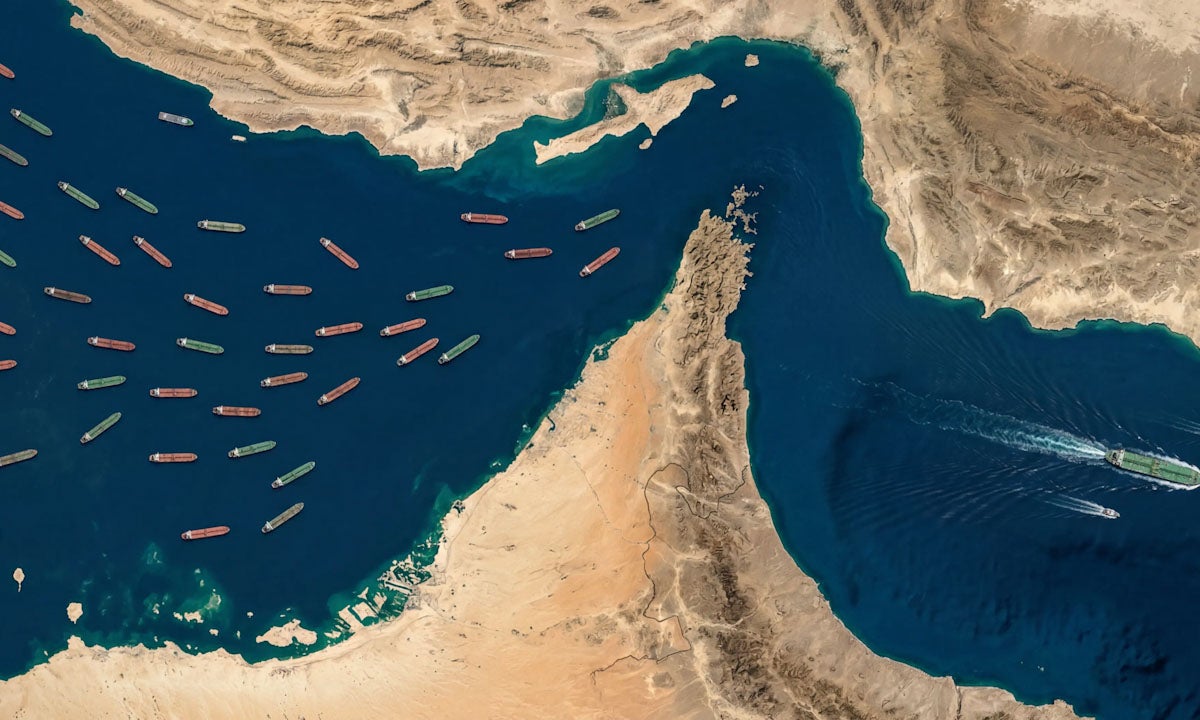
Trump stated in remarks reported by U.S. media that the Strait of Hormuz "will soon be called American territory," referring to the maritime blockade imposed by the U.S. Navy on Iran for months. The Iranian response was swift and decisive, articulated by Deputy Foreign Minister Kazem Gharib Abadi, who wrote on X: "This strait only opens and closes at Iran's command, and as long as you do not accept the reality of defeat and continue to indulge in illusions, Iran will continue to impose the blockade."
Both statements together summarize the nature of the phase: Washington raises the rhetorical ceiling and threatens a severe economic blow to Tehran, while Tehran responds that it is the party that actually holds the decision on navigation, relying on a field will it has proven over months of war. Media reports indicated that Trump asked Americans to accept slightly higher fuel prices, in a rare acknowledgment that the blockade is costing Washington a rising political and economic price.
The Strait in Numbers
Data from Kepler, a ship movement analysis company, paints a grim picture: only two ships crossed the strait on Friday, and not a single crude oil shipment appeared in the crossing movement. Before the war, the daily average exceeded 130 ships. In contrast, oil prices recorded sharp weekly gains as Washington threatened an "indefinite" blockade, while reports warned that U.S. strategic oil inventories had reached low levels that could damage the storage caves themselves.
"This strait only opens and closes at Iran's command" — Kazem Gharib Abadi, Iranian Deputy Foreign Minister
Iranian-Omani Agreement Redraws the Map
More dangerous than the exchanged rhetoric is that a parallel path is forming on the ground: the Iranian Foreign Ministry announced reaching a "mutual agreement" with Oman on a safe navigation corridor in the strait after weeks of negotiations, and a joint statement is expected to be issued soon. Ministry spokesman Ismail Baqaei stated that "despite the American obstruction, the talks have made positive progress over the past three weeks, and a navigation roadmap has been agreed upon."
However, Foreign Minister Abbas Araghchi was quick to clarify: the Oman negotiations and the reopening of the strait are "completely separate issues," adding that "the routes that previously existed are no longer valid, so a new route must be defined, and we are now designing a temporary route that can later be converted into a permanent one." This last phrase is at the heart of the emerging deal: redefining navigation in Hormuz according to Iranian standards, rather than returning to the freedom of navigation that the world knew before the war.
According to sources reported by Reuters, the proposed agreement grants Iran control over the entry movement into the strait, with Tehran demanding fees ranging from 5 to 7 percent of the value of the goods crossing, compared to about 3 percent proposed by Muscat, and it is expected that U.S. and Israeli ships will be excluded from crossing. In contrast, Washington rejects any such arrangement, asserting that "the Strait of Hormuz is an international waterway and no party has the right to control its passages or impose fees on it."
What This Means for Gulf States
Here lies the paradox that deserves attention: the Gulf states, which recently launched a maritime coalition of 15 countries led by Saudi Arabia to confront threats in Hormuz, find themselves outside the negotiating table that is shaping the future of the corridor through which nearly a quarter of the world's oil production passes. Negotiations are taking place between Tehran and Muscat, while Riyadh and Abu Dhabi are mere spectators, with their only remaining tool being the American lifting of the blockade that has yet to materialize.
Practically, it seems that "the concession has already been made," as a knowledgeable source told Reuters, meaning that recognizing some form of Iranian control over the strait has become a realistic option acknowledged even by Gulf circles, which the Wall Street Journal noted might see a temporary agreement recognizing Iranian authority as "the best available option currently." This reminds us of the old military adage: he who controls the passage controls the decision, and passages cannot be bought with money alone. This is the essence of the "triple capability" equation that has long been absent from Gulf defense spending calculations: equipment alone does not create deterrence, but rather will, training, and institution.
Tired Aircraft Carrier and Distracted American Focus
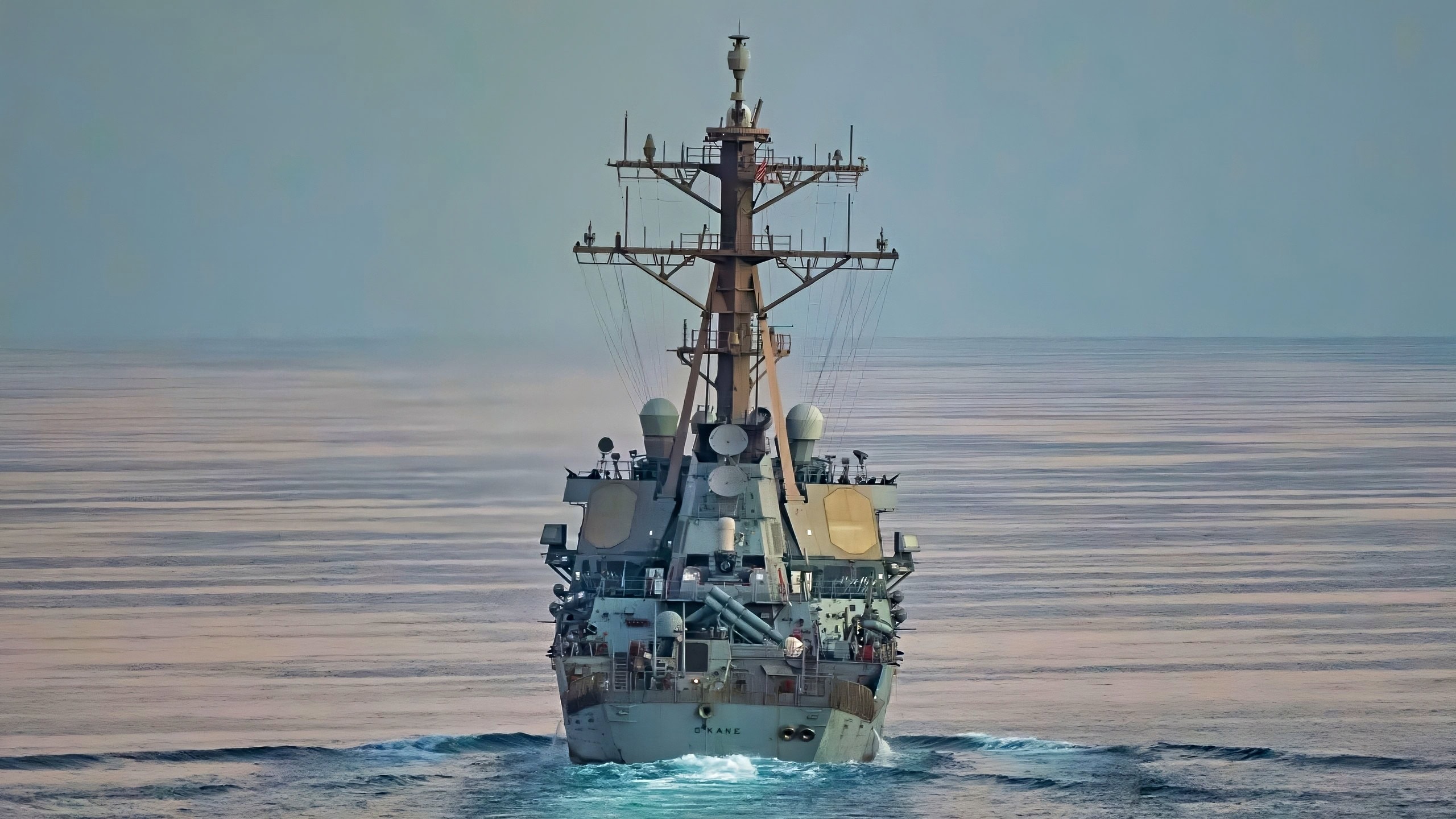
Meanwhile, Washington has been forced to withdraw its last aircraft carrier from the Pacific: it ordered the USS George Washington to the Middle East to replace the Abraham Lincoln, which spent more than 240 days in the region and launched over 10,000 air sorties as part of the blockade, amid reports of supply shortages and deteriorating morale among sailors. The commander of U.S. Central Command, Admiral Brad Cooper, visited the ship to thank its crew for what he described as "the most intensive and profound mission in modern times."
The decision reveals a dual American dilemma: withdrawal from the Middle East was an electoral slogan, but reality is pulling Washington to expand in two directions at a time when critical ammunition stocks are experiencing unprecedented depletion. Analysts noted that Beijing is "very happy" with Washington's preoccupation in the Middle East, which weakens American deterrence in the Pacific at a moment when tensions around Taiwan are escalating.
No American Territory and No Free Navigation
The conclusion imposed by the scene is that both bets have failed: Hormuz will not become "American territory" either legally or practically, and the complete freedom of navigation promised by the memorandum of understanding signed on June 17 will not return as it was. Iran links any full reopening of the strait to Washington's fulfillment of its commitments, foremost among them lifting the maritime blockade and freezing assets, while Washington insists that navigation must be free without fees or approvals, and the Omani negotiations are proceeding on their own path under the logic of "temporary routes."
In this broken triangle, the Gulf remains the weakest link: it relies on American protection that cannot guarantee the reopening of the corridor, watches an Iranian-Omani agreement in which it has no seat, and pays the price of insurance and oil together. Between "American territory" in rhetoric and "Iranian passage" in the field, the open question remains: will Riyadh and Abu Dhabi finally understand that the security of passages is not bought but built, or will they continue to buy weapons while waiting for someone to open the door for them?
Trump announced that the Strait of Hormuz will soon be considered 'American territory', while Iran asserted control over the strait. Only two ships crossed the strait recently without crude oil shipments, a stark contrast to pre-war levels. Iran and Oman reached an agreement on a safe navigation corridor, indicating a shift in control over maritime routes. The U.S. Navy is facing operational challenges in the region, complicating its military posture.
- Trump announced that the Strait of Hormuz will soon be considered 'American territory'.
- Only two ships crossed the Strait of Hormuz recently, with no crude oil shipments.
- Iran's Deputy Foreign Minister stated that the Strait will only open or close at Iran's command.
- Iran and Oman reached an agreement on a safe navigation corridor in the Strait.
- The U.S. Navy is facing challenges in maintaining its presence in the region.