
Trump Is Already Trading Taiwan's Arms for a Summit
 Marcus Chen
Trump Is Already Trading Taiwan's Arms for a Summit
Thirty-two billion dollars. That's how much in US-approved weapons Taiwan has paid for but not yet received. HIMARS launchers sitting in production queues. Harpoon missile support packages awaiting delivery. Paladin self-propelled howitzers still being manufactured. The arms aren't hypothetical — they're contracted, funded, and nominally on their way. Yet on Monday, aboard Air Force One, President Trump told reporters he'd been discussing Taiwan arms sales with Xi Jinping and would make a "determination pretty soon." That sentence didn't come out of nowhere. It came out of a trade negotiation.
What's Actually in the Pipeline
On December 17, 2025, the Biden administration's final major foreign military sale cleared the State Department: $11.1 billion for Taiwan — the largest single package in US history. The contents matter more than the headline number:
- High Mobility Artillery Rocket Systems (HIMARS) and M270 Multiple Launch Rocket Systems
- Army Tactical Missile Systems (ATACMS) — 300km range, capable of striking mainland targets
- Harpoon anti-ship missile follow-on support (extending existing batteries)
- M109A6 Paladin 155mm self-propelled howitzers
- Loitering munitions (Switchblade-class systems)
- Surface-to-air missile upgrades and F-16 training support
This isn't a symbolic package. HIMARS with ATACMS fundamentally extends Taiwan's strike depth. The Harpoon follow-on keeps existing anti-ship batteries operational. Together, these systems are core to the "porcupine strategy" — making Taiwan expensive to invade rather than impossible. Anyone who understands how Taiwan's coastline works knows mobile rocket artillery changes the calculus for an amphibious force considerably.
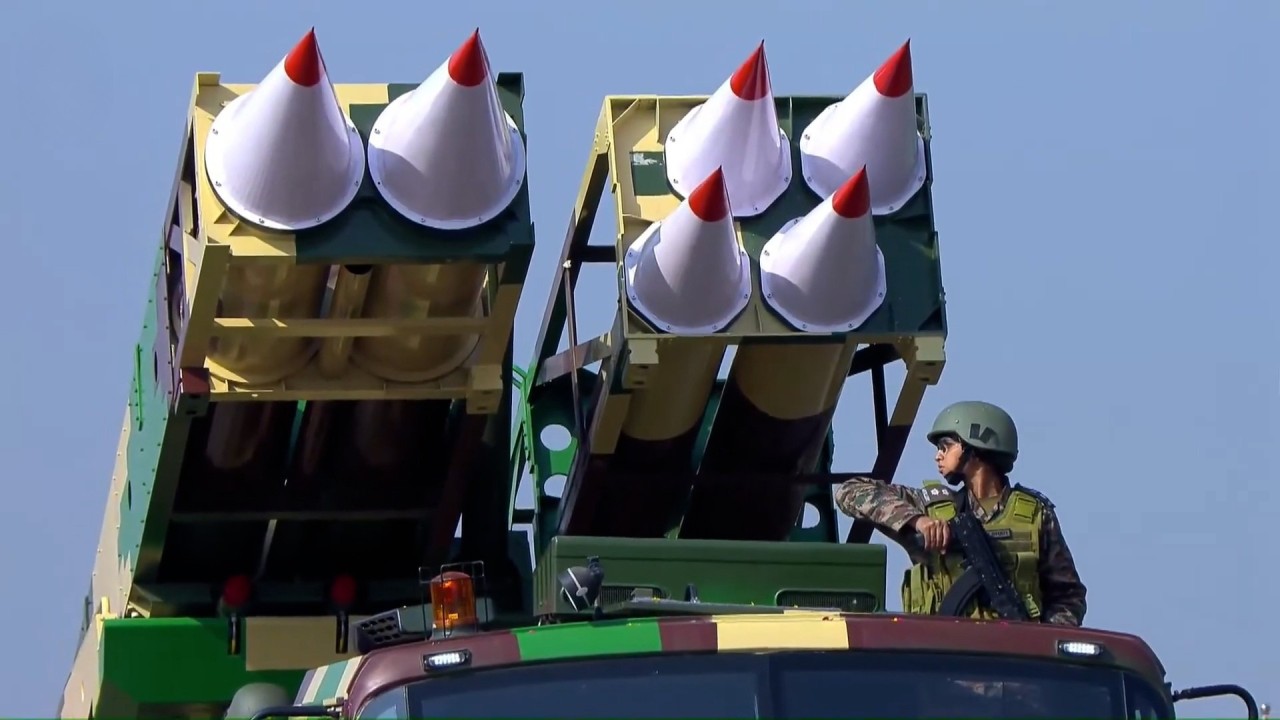
Beijing's Immediate Answer Was 130 Combat Sorties
China's response to the December package was named "Justice Mission-2025." In two days, the People's Liberation Army flew 130 combat sorties around Taiwan — 90 of them crossing the Taiwan Strait centerline — while naval and rocket forces simulated a comprehensive port blockade. The drill targeted Taiwan's three major commercial ports simultaneously.
That's not a protest. That's a rehearsal.
The PLA demonstrated it can generate sustained air tempo against Taiwan, interdict maritime traffic, and sustain joint operations across domains — all in response to one arms package announcement. China didn't need to fire a shot to make its message clear: arms deliveries have a cost, and Beijing intends to set the price.
Xi Called Trump. Trump Started Negotiating.
On February 4, Xi warned Trump directly in a phone call: "The US must handle arms sales to Taiwan with caution." According to China's state broadcaster, Xi called the Taiwan question "the most important issue in China-US relations."
Trump's response, twelve days later, was not a reaffirmation of the Taiwan Relations Act. It was a shrug from 30,000 feet: "We had a good conversation and we'll make a determination pretty soon."
That's a presidential acknowledgment that future Taiwan arms sales are a negotiable item — being negotiated with the adversary the sales are meant to deter. Trump and Xi are now scheduled to meet in Beijing in April. The $11.1 billion December package and any follow-on sales will almost certainly be on the table in some form.
"The Taiwan question is the most important issue in China-US relations. The US must handle arms sales to Taiwan with caution." — Xi Jinping to Trump, February 4, 2026
The Backlog Problem Trump Seems to Have Forgotten
Here's what makes this particularly difficult to watch: the $32 billion backlog of undelivered arms doesn't represent purchases Taiwan is thinking about. It represents purchases Taiwan already made, already paid for, and is waiting on. The US defense industrial base has been slow — Virginia-class submarines running 12-18 months late, Patriot battery deliveries backed up, HIMARS production constrained by M270 launcher availability. Taiwan is at the back of a queue that keeps getting longer.
The ISW noted in January that several systems in the backlog are funded by Taiwan's special defense budget — the same $40 billion budget that Taiwan's opposition-controlled legislature has blocked ten times since December. As of February 16, the legislature finally agreed to review it after Lunar New Year. That vote isn't done. The systems aren't funded. And now the supplier is discussing whether to keep selling at all.
Three simultaneous failure points: US delivery delays. Taiwan's own legislative gridlock. And now Trump treating future sales as a diplomatic variable. Any one of these would be a manageable problem. Together, they compound.
What the April Summit Actually Means for Taiwan's Arms
Trump-Xi summits have a pattern. Both sides want deliverables. For Xi, the obvious deliverable is some form of US restraint on Taiwan arms — either a pause on new sales, or a vague commitment to "consult" before approvals. For Trump, the deliverable is probably economic: tariff concessions, manufacturing deals, something he can announce as a win.
Taiwan doesn't have a seat at that table. Taiwan's president Lai Ching-te proposed $40 billion in defense spending — partly to absorb the US arms pipeline — and his parliament blocked it. US lawmakers wrote letters urging the opposition to reconsider. None of that changes the fundamental geometry: when Trump and Xi meet in Beijing in April, Taiwan's defense procurement will be a line item in a trade deal, not a security commitment.
What the Math Says
The December $11.1 billion package is approved but not yet deliverable in any combat-relevant timeframe. HIMARS production runs approximately 60-80 launchers per year across all customers. ATACMS stocks were significantly drawn down supporting Ukraine. Harpoon production is running at about 250 missiles per year globally. Taiwan is not the only buyer in that queue.
Realistic delivery for the full December package: 3-5 years, assuming no political interference. With Trump now openly treating arms sales as a negotiating instrument with Beijing, the timeline for political interference has shortened dramatically. The April summit is eight weeks away.
Taiwan has spent two years arguing that only strengthening its self-defense capabilities preserves peace. That argument depends on arms actually arriving. Right now, the pipeline is delayed, the budget is blocked, and the president supplying the weapons is having friendly conversations with the man who drilled a blockade of Taiwan's ports six weeks ago.
The hardware Taiwan needs exists. Whether it gets there before that conversation concludes is a different question — and it's one Washington, not Taipei, will answer.
Taiwan has a backlog of $32 billion in U.S. arms purchases, with President Trump negotiating future sales with Xi Jinping ahead of an April summit. In response to a recent arms package, China conducted 130 combat sorties around Taiwan, demonstrating military readiness. The situation is complicated by Taiwan's legislative gridlock affecting defense spending and procurement timelines.
- Taiwan has a backlog of $32 billion in arms purchases from the U.S.
- Trump is negotiating arms sales with Xi Jinping ahead of a summit in April.
- China conducted 130 combat sorties around Taiwan in response to U.S. arms sales.
- The December 2025 arms package for Taiwan is valued at $11.1 billion.
- Taiwan's defense budget has faced legislative gridlock, affecting arms procurement.