
Trump May Sell Turkey F-35s Without Solving the S-400
 Alexandra Reeves
Trump May Sell Turkey F-35s Without Solving the S-400
The easiest way to make the Turkey F-35 dispute look solved is to talk loudly about friendship and quietly about the S-400. That appears to be where Washington is heading.
At the NATO leaders summit in Ankara on July 7, President Donald Trump said the United States would lift sanctions imposed on Turkey over its 2019 purchase of the Russian S-400 air defence system. According to Defense News and Reuters, Trump also said he would consider selling F-35 stealth fighters to Turkey, calling the aircraft “the best” and praising Ankara as more loyal than some allies Washington usually trusts.
That is the political headline. The military problem is harder. Turkey was not removed from the F-35 programme because of a bad mood in Washington. It was removed because the United States concluded that a NATO ally operating Russian strategic air defence equipment could expose sensitive aircraft signatures, tactics, and supply-chain access to Moscow. The Trump-Erdogan reset may soften the diplomacy, but it does not repeal physics or counterintelligence.
The S-400 Is Still the Real Gatekeeper
The original U.S. sanctions were imposed in 2020 under CAATSA Section 231 after Turkey bought the S-400 from Rosoboronexport. The State Department said at the time that the purchase endangered U.S. military technology and personnel, provided funds to Russia's defence sector, and risked Russian access to the Turkish armed forces and defence industry. The penalties included a ban on U.S. export licences and authorisations to Turkey's Presidency of Defense Industries, along with asset freezes and visa restrictions on senior officials.
That was not symbolic punishment. It struck at the machinery that would make a return to deep U.S.-Turkish defence integration possible.
Reuters, carried by Defense News, reports that U.S. law still blocks F-35 sales while Ankara retains the S-400. One workaround reportedly discussed is transferring the Russian system to a third country. Even that is not straightforward. Russian arms exports normally include end-user obligations, and Moscow would have every reason to resist a face-saving arrangement that allows Turkey back into the F-35 ecosystem.
So the central question is not whether Trump likes Erdogan. He clearly does. The question is whether the S-400 is physically gone, verifiably unusable, and politically closed. Anything less turns the F-35 decision into a trust exercise NATO cannot afford to grade on a curve.
Why the F-35 Matters More Than Another Jet Sale
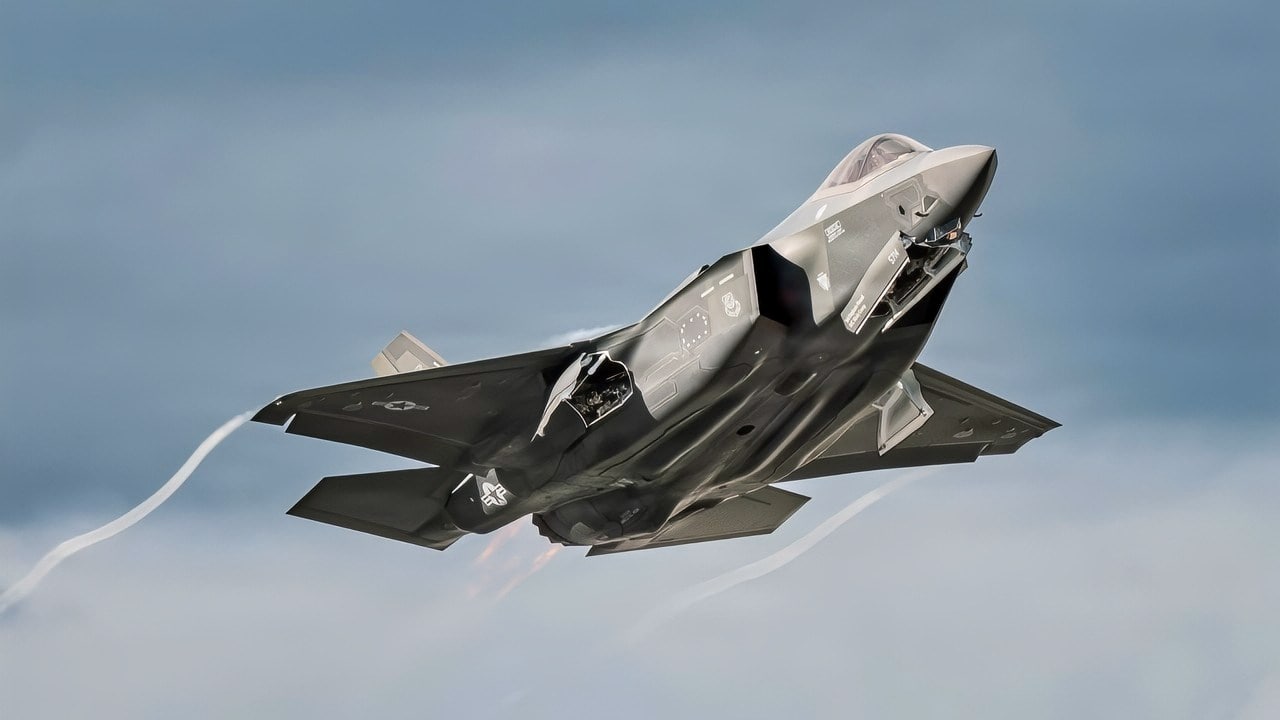
The F-35 is not just a fighter aircraft with a price tag. It is a flying sensor node built around low observability, electronic warfare, sensor fusion, data links, and an allied sustainment network. Lockheed Martin describes the aircraft as stealthy but not invisible; its advantage comes from shaping, coatings, internal carriage, reduced infrared signature, embedded sensors, and electronic attack systems that complicate detection and targeting.
That is exactly why the S-400 issue became toxic. A fourth-generation fighter sale would be one problem. A fifth-generation aircraft designed to learn, share, and survive inside dense air defence environments is another. If Turkey operates the F-35 while the S-400 remains available for testing, calibration, or intelligence exploitation, the risk is not merely that one Turkish aircraft is compromised. The risk is that data about an allied fleet becomes more accessible to Russia.
The scale of that fleet is growing. Lockheed says more than 1,150 F-35s are in service, with the aircraft operated by a widening group of U.S. allies and partners. The programme is no longer just an American procurement line. It is the airpower backbone for much of NATO Europe, from Britain and Italy to Poland, Germany, Finland, Greece, Romania and others.
That makes Turkey's possible return a NATO-wide issue. If Ankara is readmitted without a clean S-400 resolution, every other F-35 operator is being asked to accept a technology-security decision made for bilateral political reasons.
Turkey Is Too Important to Ignore
Here is where the usual Washington argument gets a little lazy. Turkey is not a minor ally that can simply be left outside the room forever. It controls the Bosphorus, sits on the southern flank of the Black Sea, hosts critical NATO infrastructure, has serious defence-industrial capacity, and can shape outcomes from Syria to the Caucasus. On Ukraine, Ankara has been awkward but useful. On drones and naval access, it has mattered.
That is why a negotiated path back into the F-35 world is not automatically reckless. If the S-400 leaves Turkey under a verifiable arrangement, if Turkish defence-industry access is rebuilt carefully, and if Congress receives a real technical case rather than a handshake photo from Ankara, there is a strategic argument for repairing the rupture.
But that is a lot of ifs.
Turkey bought a Russian system after repeated U.S. warnings. It then paid a real price: removal from the F-35 programme, sanctions on its defence procurement authority, and years of distrust inside NATO. If that price is now reversed without Ankara doing the hard part, the lesson will be obvious to every ally watching. Buy the wrong thing, wait out Washington, and let alliance politics turn a red line into an inconvenience.
The Ankara Signal
There is also a timing problem. This announcement came at a NATO summit where Ukraine was again pressing allies for air defences after intense Russian strikes. The alliance is trying to convince Moscow that its military-industrial base, air defence network, and long-range strike capacity are becoming more coherent. In the same news cycle, Washington is talking about easing penalties that were imposed because a NATO member bought Russian air defence equipment.
That is not a clean deterrence message.
Russia will read the politics before it reads the legal details. Moscow does not need Turkey to receive F-35s tomorrow to benefit from the optics. It only needs NATO to look as if its technology-security rules are negotiable when a leader wants a bilateral win.
The uncomfortable part is that both sides of this argument are partly right. NATO needs Turkey. The F-35 programme cannot be casually exposed. The S-400 dispute has gone on too long. And Trump may be right that repairing relations with Ankara is worth doing.
But repair is not the same as forgetting. The next thing to watch is not the sanction announcement itself, but whether the S-400 actually leaves Turkish control under terms Washington, Congress, and other F-35 operators can verify. If it does, this could become a hard but useful reset. If it does not, NATO will have taught its members that strategic trust is just another item on the summit agenda.
President Trump announced potential F-35 sales to Turkey during the NATO summit in Ankara on July 7, 2023, while indicating that U.S. sanctions related to Turkey's S-400 purchase may be lifted. However, the U.S. still prohibits F-35 sales as long as Turkey retains the S-400 system, raising concerns about NATO's technology-security rules. The situation remains complex, with Turkey's strategic role in NATO being a significant factor.
- Trump indicated the U.S. would lift sanctions on Turkey regarding the S-400 purchase.
- The U.S. still blocks F-35 sales while Turkey retains the S-400.
- A workaround discussed involves transferring the S-400 to a third country.
- Turkey's return to the F-35 program is contingent on the S-400 being verifiably unusable.
- Turkey's strategic importance to NATO is emphasized.