
Europe Gets a Patriot Repair Hub Because Ukraine Burned the Clock
 Alexandra Reeves
Europe Gets a Patriot Repair Hub Because Ukraine Burned the Clock
NATO has finally admitted that air defence is not just about buying interceptors. It is about getting the expensive things repaired fast enough to matter.
That is the real meaning of the July 7 government-to-government agreement signed by the United States, Germany, the Netherlands, Poland and Sweden at the NATO Summit Defense Industry Forum in Ankara. According to Lockheed Martin, the five countries will explore a dedicated PAC-3 Missile Maintenance Facility in Europe, giving allied operators of Patriot interceptors in-region sustainment instead of sending specialised repair work back across the Atlantic.
On paper, this sounds like industrial plumbing. In wartime, plumbing is strategy.
The Five Country Signal
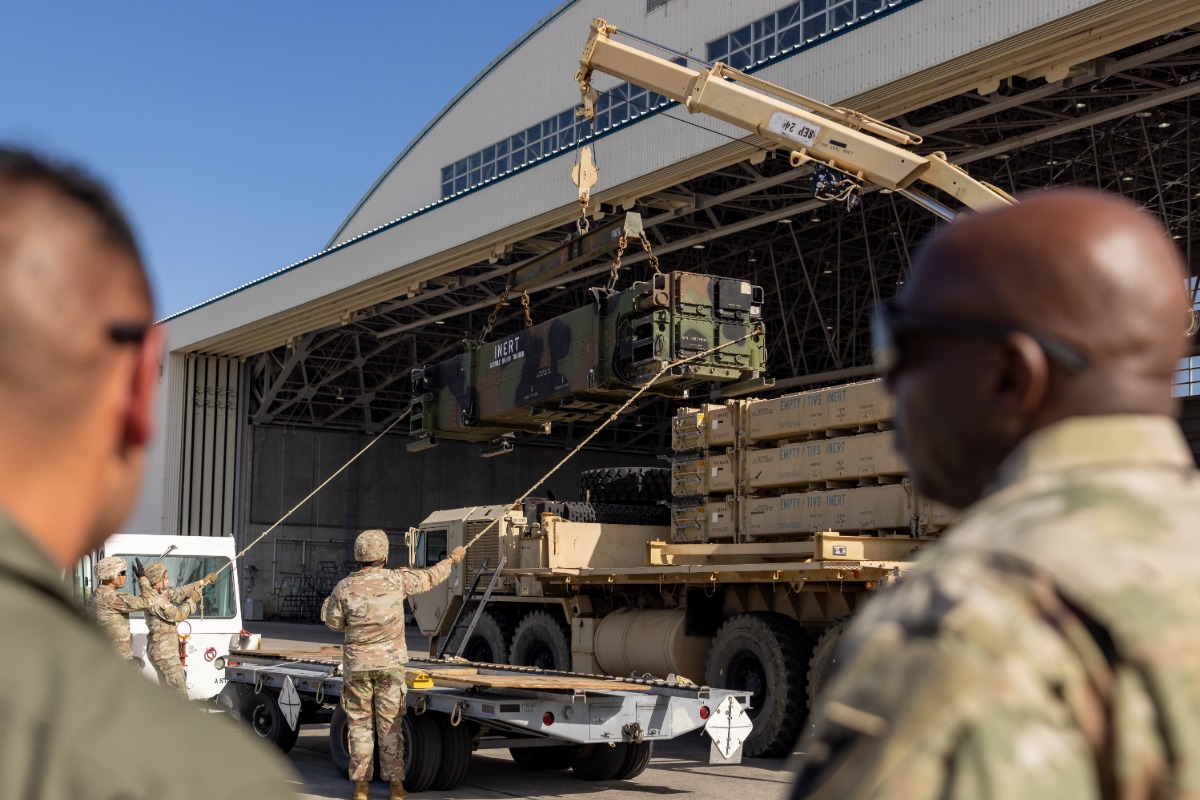
The signatories matter. Germany, the Netherlands and Poland are not casual Patriot users; they sit on the part of Europe that has had to relearn air and missile defence under Russian pressure. Sweden is newer to NATO but not new to the logic of hardened northern defence. The United States still owns the deepest PAC-3 industrial knowledge, and Washington remains the gatekeeper for much of the missile ecosystem.
Lockheed says the proposed facility would support both PAC-3 Missile Segment Enhancement interceptors and older PAC-3 Cost Reduction Initiative missiles. The MSE variant adds a larger dual-pulse rocket motor and bigger control fins, giving it greater range and altitude reach than earlier PAC-3 rounds. The key design feature remains the same: it is a hit-to-kill interceptor, built to destroy ballistic missiles, cruise missiles and aircraft by direct impact rather than by throwing fragments near the target.
That engineering choice gives PAC-3 its value. It also makes sustainment unforgiving. Guidance sections, propulsion components, certification and inspection are not things a national army can improvise in a warehouse because a launcher is short of ready rounds.
Ukraine Changed the Maintenance Math
Everyone in Washington likes to talk about production capacity. That is understandable. Interceptor demand has exploded. Lockheed said in its July 7 statement that global PAC-3 demand is being driven by combat-proven performance, and noted two recent moves: a January framework agreement with the U.S. Department of War to triple PAC-3 MSE production capacity, and an April $4.7 billion U.S. government contract to accelerate production this year.
But production is only half the story. Ukraine has shown that modern missile defence is an attrition business. Patriot batteries have been used to intercept Russian ballistic missiles and high-end air threats that older Soviet-era systems cannot reliably handle. Every successful intercept protects a city, an airfield, a power plant or a command node. Every interceptor fired also deepens the sustainment burden.
The uncomfortable lesson is that a Patriot force is not simply a launcher, radar and stockpile. It is a logistics machine. If Europe has to ship missiles back to the United States for specialised maintenance, the effective magazine is smaller than the inventory spreadsheet suggests.
Lockheed Martin said the proposed facility would provide in-region maintenance and sustainment capabilities to keep PAC-3 missiles ready, reliable and rapidly deployable against evolving threats.
That is corporate language, but the operational translation is blunt: if Russian strikes come in waves, Europe cannot afford a repair loop measured in transatlantic shipping time.
The Real European Gap
There is a popular assumption in NATO capitals that the alliance can solve its air defence shortage by buying more launchers and ordering more missiles. The short answer is no.
Launchers are visible. Missiles are countable. Maintenance capacity is boring until it becomes the reason a battery has fewer certified interceptors than expected. This is the kind of gap that does not photograph well at a summit, but it decides whether deterrence survives contact with a long campaign.
The proposed PAC-3 hub also fits a wider shift in European defence industry. On the same day, Lockheed Martin and Rheinmetall announced plans to co-produce ATACMS missiles at Rheinmetall's Unterluess site in Germany, according to Defense News. That separate deal points to the same structural problem: Europe wants American combat-proven weapons, but it no longer wants every critical industrial bottleneck to sit in the United States.
There is nothing anti-American about that. It is what a serious alliance should do. Dependence is tolerable in peacetime and dangerous in a crisis. If the next European war coincides with a Pacific emergency, Washington will have priorities that Europeans do not control.
What This Does Not Solve
A European maintenance facility will not conjure thousands of new interceptors. It will not fix the cost problem. PAC-3 MSE rounds are expensive enough that commanders will still face ugly choices about what is worth defending. It will not make Ukraine's air defence needs disappear, and it will not give every NATO member a Patriot shield.
It also remains exploratory. The July 7 agreement commits the five governments to examine the facility, not to open one tomorrow morning. Location, funding, workshare, security controls and technology-transfer terms still have to be negotiated. Anyone who has watched NATO industrial projects move from summit communique to concrete floor knows that this can take time.
Still, the direction is right. The alliance is moving from a showroom model of defence procurement toward a wartime model of availability. That means repair, spares, testing, certification, trained technicians and regional depots. It means accepting that the quiet back end of a weapons system may matter as much as the missile launch video.
The Bottom Line
The PAC-3 repair hub idea is not glamorous. That is why it matters.
If it happens, Europe will shorten one of the most fragile links in its air defence chain. If it stalls, NATO will have learned the Ukrainian lesson and then chosen to file it away. The next thing to watch is whether Ankara's announcement turns into a funded site with a timeline, or whether it becomes another summit promise waiting for the next missile crisis to make it urgent.
The real question is not whether Europe needs more Patriots. It does. The harder question is whether Europe is finally willing to maintain the ones it already depends on as if a real war could last longer than a press conference.
NATO countries, including the United States, Germany, Netherlands, Poland, and Sweden, signed an agreement on July 7 to establish a PAC-3 Missile Maintenance Facility in Europe. This facility aims to provide in-region maintenance for Patriot interceptors, addressing logistical challenges highlighted by the ongoing conflict in Ukraine. The initiative reflects a shift towards ensuring rapid repair capabilities to enhance air defense readiness.
- NATO signed an agreement for a PAC-3 Missile Maintenance Facility in Europe on July 7.
- The facility aims to provide in-region sustainment for Patriot interceptors.
- The proposed facility will support both PAC-3 Missile Segment Enhancement and older PAC-3 missiles.
- The establishment of the facility is a response to increased demand for missile defense due to the conflict in Ukraine.
- The agreement involves the United States, Germany, Netherlands, Poland, and Sweden.