
Trump Says Troops Will Be Withdrawn "Soon," Iran Denies Request for Ceasefire, Emphasizes Control Over the Strait of Hormuz
On April 1 local time, U.S. President Trump stated that U.S. troops would "soon" withdraw from the conflict in Iran and proposed "specific requirements," such as the reopening of the Strait of Hormuz by Iran, as conditions for a ceasefire. The Iranian side emphasized that the Strait of Hormuz is under its "full control" and reiterated that it would block the strait as a countermeasure.
On the same day, Israel claimed to have launched airstrikes on approximately 400 Iranian targets over the past two days, while the Iranian military stated it had struck Israeli military industrial enterprises, with both sides' conflicts continuing to escalate.
Trump states U.S. troops will soon withdraw from the conflict in Iran
Ceasefire conditions must meet U.S. "specific requirements"
Trump sets ceasefire conditions: must meet U.S. "specific requirements"
On April 1, U.S. President Trump stated that the U.S. would "fairly quickly" end military operations against Iran, but may continue to attack Iran with "targeted strikes" if necessary.
Trump claimed that U.S. military actions had made it so that Iran "cannot have nuclear weapons," and stated that if the situation changes after withdrawal, the U.S. may still re-engage.
Sources indicated that President Trump has instructed Vice President Pence to privately convey to Iran that as long as the "specific requirements," such as reopening the Strait of Hormuz, are met, he is open to a ceasefire.
It is understood that as of March 31, Pence was still discussing the Iran issue with "intermediaries." Pence conveyed a "tough" message, stating that Trump was "impatient." He also warned that unless Iran reaches an agreement, Iranian infrastructure would face increasing pressure from strikes.
U.S. officials say U.S.-Iran discussions on ceasefire agreement conditional on reopening the Strait of Hormuz
On April 1 local time, several U.S. officials stated that the U.S. and Iran are discussing a potential agreement that includes a ceasefire in exchange for Iran reopening the Strait of Hormuz.
It is unclear whether the discussions are direct dialogues or conducted through intermediaries, and there remains significant uncertainty about whether an agreement can be reached. However, President Trump has discussed this possibility with multiple parties both inside and outside the government.
On April 1, Trump stated on social media that Iran "just requested a ceasefire from the U.S." However, he indicated that the U.S. would only "consider" it if the Strait of Hormuz is reopened. In response, an Iranian Foreign Ministry spokesperson stated on the 1st that President Trump's claim about Iran requesting a ceasefire is false and baseless.
U.S. military deploys 18 A-10 attack aircraft to the Middle East
On April 1, U.S. Department of Defense officials revealed that the U.S. military is deploying 18 A-10 attack aircraft to the Middle East, doubling the number of A-10s stationed in the region.
Reportedly, these A-10s, which took off from the U.S., made a stopover at the RAF Lakenheath base in the UK on their way to the Middle East combat zone. These aircraft may assist U.S. ground forces in seizing coastal areas of the Strait of Hormuz or be used to capture Iran's main oil hub, Khark Island.
Previously, the U.S. military had already deployed a dozen A-10 attack aircraft in the Middle East. Chairman of the Joint Chiefs of Staff General Milley stated at a recent press conference that U.S. forces have utilized this type of aircraft to conduct patrols in the Strait of Hormuz, searching for and destroying Iranian armed speedboats.
Iran claims "full control" over the situation in the Strait of Hormuz
Reiterates intention to block the strait as a countermeasure
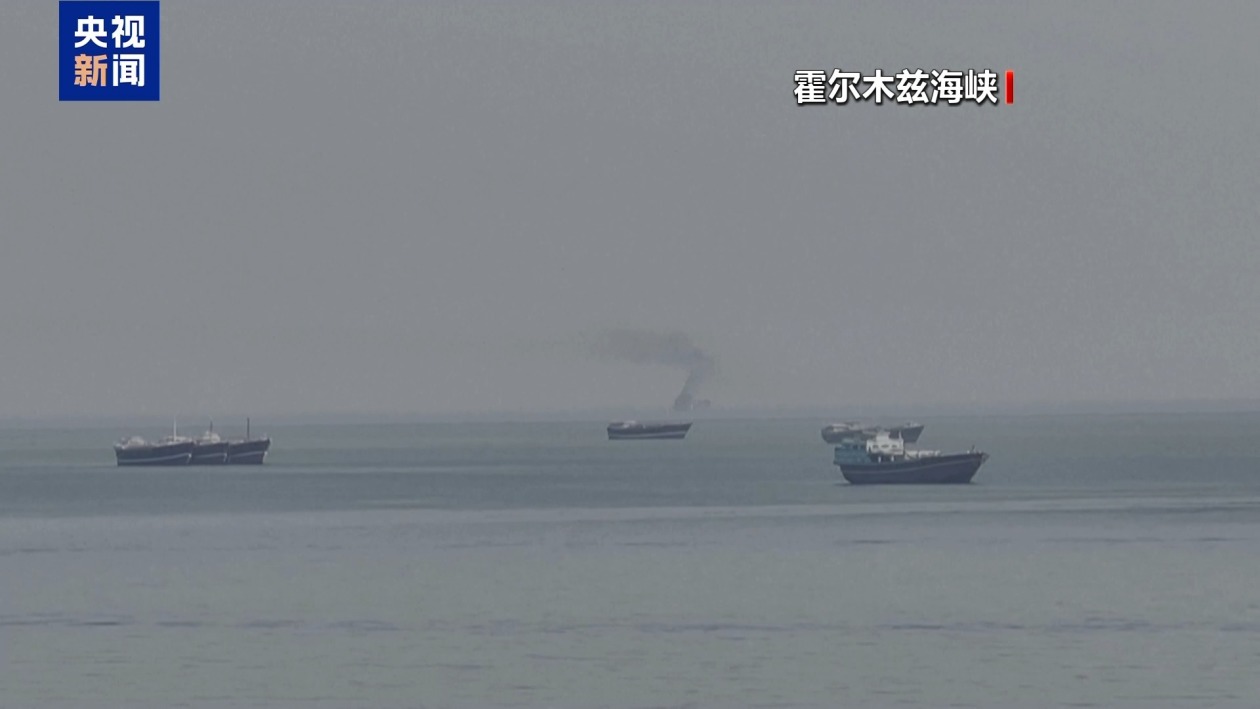
On April 1, the Islamic Revolutionary Guard Corps of Iran issued a statement claiming that its navy had struck multiple targets, asserting that the situation in the Strait of Hormuz is under its "full control."
The statement refuted claims from the U.S. and Israel regarding a decrease in the intensity of Iranian strikes. It stated that since dawn that day, Iran had used ballistic missiles, cruise missiles, and drones in a new round of military operations to strike relevant targets. This is also part of the 89th wave of Operation "Real Commitment-4."
The Revolutionary Guard stated that its targets included some U.S. radar facilities in the Gulf region, an Israeli oil tanker, and several military facilities. Iran also launched suicide drones at the U.S. aircraft carrier group "Lincoln" deployed in the northern Indian Ocean, claiming that the group had withdrawn from its original position.
The statement emphasized that the situation in the Strait of Hormuz is "firmly controlled" by the Revolutionary Guard navy, and that the strait will not be opened to hostile parties due to the "performative actions" of the U.S. president.
Iran reiterates intention to block the Strait of Hormuz as a countermeasure
On April 1, the office of Iran's Supreme Leader released excerpts from a speech by Supreme Leader Ali Khamenei on social media, reiterating the continuation of blocking the Strait of Hormuz as a countermeasure.
The office also stated that Iran is studying the opening of "other potential fronts," believing that its opponents lack experience and have obvious weaknesses in related areas. If the conflict continues, after comprehensive consideration of relevant factors, "these fronts will be activated."
Additionally, sources from Iran indicated that Iran's request for ceasefire negotiations with the U.S. must be premised on ensuring a permanent end to the war.
Iran: U.S. war command system has turned into a media show
On April 1, the intelligence agency of the Islamic Revolutionary Guard Corps stated on its social media platform that in the current situation, the U.S. has suffered setbacks in battlefield logistics, while "politicians have lost their decision-making ability."
The Revolutionary Guard also stated that the so-called narrative of "war progress exceeding expectations" indicates that the war command system has turned into a media spectacle.
Iranian president writes to the American people: "See through the fog of propaganda war"
On April 1 local time, Iranian President Ebrahim Raisi stated in an open letter to the American people that Iran holds no hostility towards ordinary Americans, urging them to "see through the fog of propaganda war" and reject "manufactured threats."
Raisi questioned whether the U.S. government truly practices "America First" or merely acts as "an agent of Israel."
Israel claims to have launched airstrikes on approximately 400 Iranian targets in two days
Iran claims to have struck Israeli military industrial enterprises
On April 1 afternoon local time, air raid sirens were sounded in several areas of central Israel. According to Israeli sources, Iran launched approximately 10 ballistic missiles at Israel on the afternoon of the 1st. The Israeli military stated that most of the incoming missiles were intercepted by air defense systems, and there were no reports of casualties. It is reported that this was the largest missile attack Israel has faced in the past three weeks.
The Israel Defense Forces issued a statement on the evening of the 1st, stating that they had launched airstrikes on approximately 400 Iranian targets over the past two days. The statement claimed that the Israeli military struck about 15 weapons manufacturing bases in Iran, including a central complex of the Iranian Ministry of Defense. This complex houses missile production and research and development facilities. Additionally, the Israeli military also targeted Iranian air defense systems, launch sites, and missile storage facilities.
Iranian military claims to have struck Israeli military industrial enterprises
On April 1 local time, the Iranian military stated that it had recently conducted multiple drone strikes targeting the relevant infrastructure of the Israeli military industrial company Rafael, including weapons production and research and development centers, claiming that the attacks caused fires and damage.
Rafael is one of Israel's major military industrial enterprises, focusing on the development of high-precision defense systems, with its flagship product being the "Iron Dome" air defense system.
Iranian Foreign Ministry: Supreme Leader is healthy but has delayed public appearance due to war
According to Iranian sources on April 1, Iranian Foreign Ministry spokesperson Nasser Kanaani stated in a media interview that Supreme Leader Ali Khamenei is in good health but has delayed public appearances due to the war.
Kanaani told the media: "He (Khamenei) is in good health. I think, given the current wartime situation, it is not surprising that he may need some time before making a public appearance. But I assure you that the state, government administration, and defense are operating efficiently."
Iranian Revolutionary Guard: Will respond in kind if U.S. and Israel carry out "terrorist actions"
On April 1 local time, the Islamic Revolutionary Guard Corps of Iran stated that if assassination actions against Iran occur, it will strike relevant U.S. "intelligence companies." Subsequently, the U.S. Central Command issued a statement denying that its forces would attack civilian residences and denying any connection to the relevant actions.
In response, the Iranian side stated that the so-called "U.S. military does not violate civilian residences and civilian targets" is purely a lie, with irrefutable evidence confirming that attacks on the residence of the Supreme Leader of Iran, the residences of some Iranian officials, and the attack on the Minab school are clear examples of "terrorist acts" directly carried out by the U.S. military.
The Iranian statement also said that the U.S. military's open involvement and deep participation in the "terrorism alliance" means that the U.S. military must bear responsibility for the actions of that alliance.
The statement emphasized that regardless of whether the relevant actions are carried out by the U.S. or Israel, Iran will respond in kind and reiterated that the previous warning regarding 18 companies remains valid.
Reporters: Li Jiannan, Zhao Yuanfang, Wang Yin, Zhu Lei, Xu Xiao
U.S. President Trump announced plans for a rapid withdrawal of U.S. troops from Iran while discussing ceasefire conditions linked to the reopening of the Strait of Hormuz. Iran maintains it has full control over the Strait and continues military operations, including missile strikes against Israeli targets. Concurrently, Israel has conducted airstrikes on numerous Iranian military sites, escalating tensions in the region.
- U.S. President Trump announced a potential withdrawal of U.S. troops from Iran.
- Iran claims full control over the Strait of Hormuz and threatens to block it as a countermeasure.
- Israel conducted airstrikes on approximately 400 Iranian targets in the past two days.
- The U.S. is deploying 18 additional A-10 attack aircraft to the Middle East.
- Iranian military operations include missile strikes against Israeli military infrastructure.