
Trump Sends Mixed Signals, Iranian Speaker Refutes "Fake News," Intense Mutual Attacks Continue Between China and Iran Amid Negotiation Fog
[Global Times Special Correspondent Li Yong, Global Times Reporter Bai Yunyi, Xian Yifan] According to reports from CNN and Axios, on the 23rd, after announcing a "5-day suspension of strikes on Iranian power stations" and having "productive dialogue" with Iran, U.S. President Trump also sent other signals regarding the situation in the Middle East to reporters that day. According to him, the U.S. and Iran have reached a "significant consensus," including Iran's commitment not to possess nuclear weapons and the reopening of the Strait of Hormuz soon. However, Tehran has not confirmed these "consensus." In response to foreign media reports that the U.S. is in dialogue with Iranian Islamic Parliament Speaker Qalibaf, the latter also denied it. Why is the U.S. releasing information about "dialogue with Iran" at this time? Is it a "sincere" hope to find a way out of the current predicament, or is it to provide a buffer for the turbulent market, or perhaps to cover for the next phase of military action? International media have offered complex interpretations.
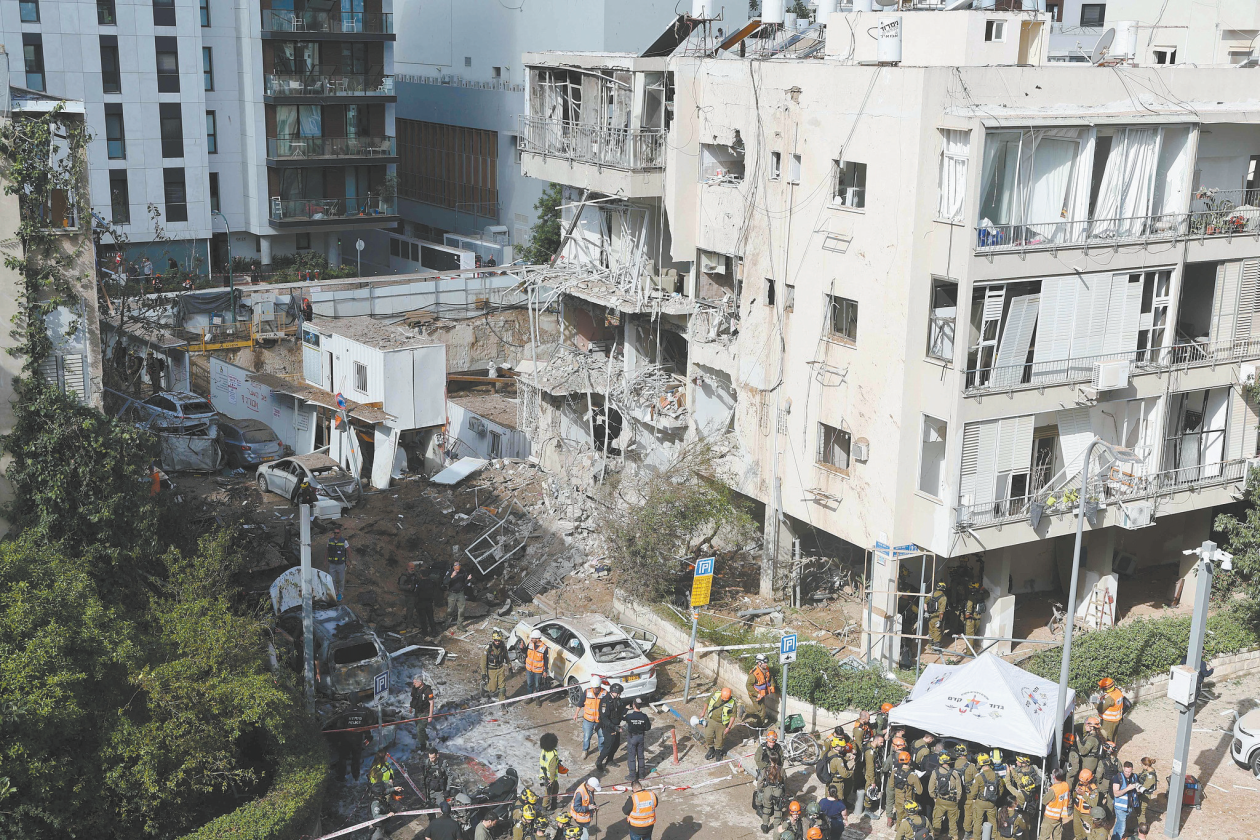
U.S. media: Israel surprised by U.S. statement on the 23rd
On the 23rd, Trump stated that the U.S. had engaged in dialogue with an Iranian "leader," and key points of an agreement had been formed, although the counterpart was not Iran's Supreme Leader. According to Israeli media reports on the 23rd, the U.S. is in dialogue with Qalibaf. However, Axios quoted informed sources saying that Egypt, Pakistan, and Turkey acted as intermediaries on the 22nd, relaying messages between the U.S. and Iran, and attempted to arrange a call between Qalibaf and Trump's team on the 23rd, but direct dialogue between the two sides seems not to have occurred.
The report cited an Israeli official as saying that some mediating countries are trying to facilitate talks between the U.S. and Iran in Islamabad, Pakistan. The U.S. representatives would be presidential envoy Witte, presidential son-in-law Kushner, and Vice President Pence may also participate, with talks possibly scheduled for later this week. The official also stated that Israel was surprised by Trump's statement on the 23rd, saying, "We did not know things were progressing so quickly."
Qalibaf denied on the 23rd that any negotiations were taking place with the U.S., believing that spreading "false news aims to manipulate financial and oil markets, thereby allowing the U.S. and Israel to extricate themselves from their deep quagmire." The Iranian Fars News Agency quoted sources on the 23rd saying that the purpose of fabricating false news about Qalibaf negotiating with the U.S. includes creating conditions for his assassination, causing divisions within Iran, and inciting public sentiment.
Iranian Foreign Ministry spokesman Baghaei stated on the 23rd that Iran had received messages from some friendly countries in recent days regarding the U.S. request to end the war through negotiations and had responded appropriately based on principled positions. He emphasized that since the U.S. and Israel launched large-scale attacks on Iran 24 days ago, Iran has never engaged in any negotiations or consultations with the U.S.
U.S. "Politico" reported on the 23rd, citing anonymous government officials, that some in the White House are indeed considering Qalibaf as a potential dialogue "partner." However, the White House wants to conduct "pressure tests" on multiple candidates before finalizing whom they are willing to negotiate with. This approach also indicates the U.S.'s "desire" to find a way out of the current predicament.
"He is clearly buying time"
As the conflict between the U.S. and Israel with Iran enters its fourth week, observers express caution about the prospects for successful diplomatic mediation. The Financial Times quoted informed sources as saying that current diplomatic efforts are still in a very early stage of message relaying and have not yet entered a substantive phase. The New York Times reported on the 23rd that even if the U.S. makes concessions on a certain military option, U.S. and Israeli officials have indicated that they continue to launch other strikes against Iran.
Four Iranian officials interviewed by The New York Times stated that Iran has informed Witte that it is not only seeking a short-term ceasefire but hopes to reach a sustainable peace agreement and obtain guarantees that the U.S. and Israel will not launch further attacks. At the same time, Iran seeks specific measures from Washington to alleviate economic sanctions. However, in negotiations before the outbreak of conflict, the U.S. had stated that it would only consider this after Iran fulfills its nuclear and other commitments. The head of the Iran project at the International Crisis Group, Vaez, stated that Iran will not participate in high-level talks until the U.S. abandons its "maximum demands."
A Gulf state official with contacts in the White House told "Politico" that Trump "exaggerated" the progress of negotiations as an excuse to retract his own set "48-hour deadline," saying, "He is clearly buying time and trying to stabilize the market." The official stated, "It is harder to judge whether the U.S. genuinely wants to find a way out or is intentionally making unrealistic demands to provoke Iran's rejection."
Iran's Islamic Revolutionary Guard Corps: The U.S. psychological warfare has been exposed
"Why Trump may not be able to implement the TACO (Trump Always Cuts and Runs) strategy on the Iran issue." CNN commented on the 24th, "Unlike illegal tariffs (actions), war cannot be 'started or stopped' at the president's will or to support a 'free-fall' market."
The article stated that the most optimistic interpretation of the latest developments is that both the U.S. and Iran have realized that the costs of continuing to escalate the conflict will be very heavy, and both sides need to find a way out. However, there are many reasons to doubt that breakthrough progress can come quickly. The statements made by the U.S. government in recent days have been erratic and contradictory; they cannot consistently articulate the reasons for waging war, nor can they formulate a strategy for withdrawal, which means that any statement from Washington lacks credibility.
"Politico" stated, "There is no guarantee that any negotiations will once again end with strikes against Iran." CNN also mentioned that the U.S. may have another reason to delay: the U.S. military has not yet fully assembled for seizing Iran's oil export hub, Khark Island, or occupying islands and coastal areas in the Strait of Hormuz. The Wall Street Journal reported that the U.S. Marine Corps' 31st Expeditionary Unit and its amphibious assault ships are set to arrive in the Middle East on the 27th. Additionally, The New York Times reported that the Pentagon is considering reallocating about 3,000 troops from the Army's 82nd Airborne Division to support military operations against Iran, which may be used to seize Khark Island.
According to the Iranian Islamic Republic News Agency on the 23rd, the Iranian Islamic Revolutionary Guard Corps announced that it has launched the 77th wave of the "Real Commitment-4" operation and stated that Trump's psychological warfare has been exposed. Following this, Iran launched the 78th and 79th waves of operations. The Guardian reported that Iran launched an attack on Israel on the 24th, and U.S. and Israeli aircraft continued to strike Tehran and other Iranian targets. AFP reported that there are no signs of de-escalation in the war. Furthermore, the Iranian Fars News Agency released multiple sets of satellite comparison images on the 24th, showing that U.S. military bases in Bahrain, Saudi Arabia, and Kuwait have been accurately targeted by Iran.
The U.S. and Iran are engaged in intense mutual attacks, with Trump announcing a pause in strikes against Iran's power stations. Diplomatic dialogues are ongoing, but Iran's parliamentary speaker denied any negotiations with the U.S. Meanwhile, Iran has launched attacks against Israel, indicating escalating tensions in the region.
- Trump announced a five-day pause in strikes against Iran's power stations.
- Iran's parliamentary speaker denied negotiations with the U.S.
- Iran launched multiple attacks against Israel following U.S. statements.