
Trump's 5,000 Soldiers for Poland Expose Europe's NATO Dependence Before Ankara 2026
 Dr. Klaus Weber
Trump's 5,000 Soldiers for Poland Expose Europe's NATO Dependence Before Ankara 2026
5,000 American soldiers are set to come to Poland, after 4,000 soldiers of the same American rotational logic were not supposed to come to Poland just a few days earlier. This arithmetic absurdity is not a communication problem. It is a strategic problem. On May 21, President Donald Trump announced additional US troops for Poland on Truth Social; the Associated Press simultaneously reported that the withdrawal of at least 5,000 soldiers from Germany and the cancellation of the rotation of the 2nd Armored Brigade Combat Team, 1st Cavalry Division, remain unclear. Two days later, NATO foreign ministers discussed the path to the Ankara summit in July in Helsingborg, regarding five percent defense spending, industrial production, and reliable support for Ukraine. The simultaneity is revealing: Europe is negotiating about predictability, while Washington treats predictability as a political gesture.
The Polish Rotation is More Than a Personnel Number
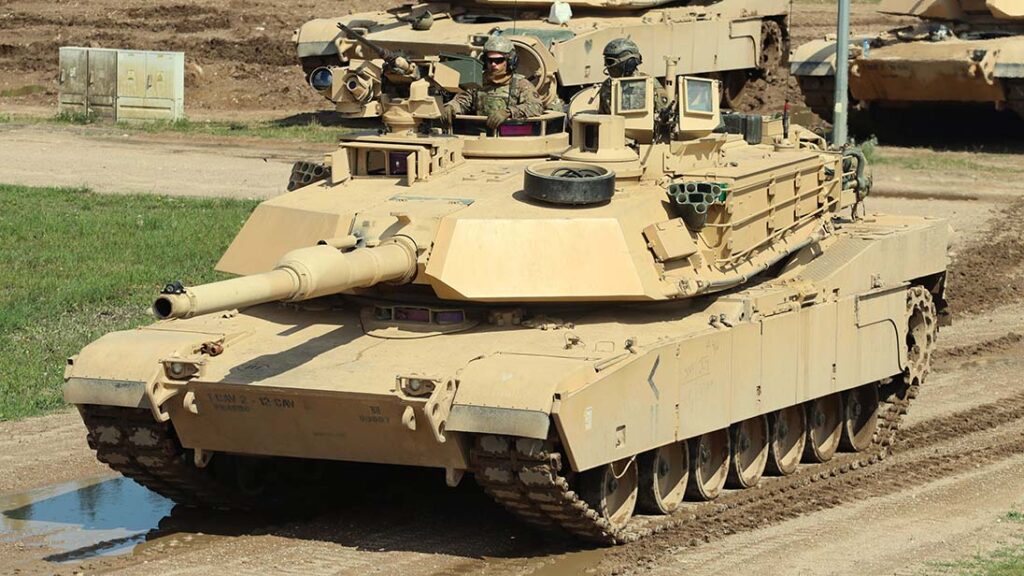
An Armored Brigade Combat Team is not an interchangeable contingent of 4,000 to 5,000 people. It is a logistical, operational, and political package: M1A2 Abrams tanks, M2 Bradley infantry fighting vehicles, artillery, engineering capabilities, command and maintenance elements, ammunition, spare parts, and a synchronized rotation cycle. The 2nd ABCT of the 1st Cavalry Division was important not because it could defend Poland alone. What mattered was that its scheduled deployment was factored into NATO defense planning. When such a rotation is first stopped and then replaced by a presidential number, it does not create a stronger deterrent signal, but rather uncertainty about the chain of command.
This is the core of the European situation. Poland can politically welcome more American soldiers; Warsaw has understandable reasons for this. But deterrence does not work through surprising announcements, but through credible connectivity: Which brigade, which mission, what duration of deployment, what pre-positioning, what integration into NATO regional plans? The AP reported that even American defense officials did not know what the new announcement meant on Friday. For European planning staffs, this is more devastating than a clear reduction. A reduction can be compensated. Unpredictability can only be countered with double planning, and double planning is expensive.
Helsingborg Showed the Institutional Counterworld
The NATO statement from Helsingborg reads like an attempt to set an institutional grammar against political improvisation. Mark Rutte spoke on May 22 about a credible path to five percent defense investments, stronger industrial production, and sustainable support for Ukraine. He emphasized that the aid must remain substantial, predictable, and oriented towards the critical needs of Kyiv. These are not platitudes, but minimum conditions for military planning.
At the same time, Rutte made visible a problem that European capitals prefer to hide in the formula of transatlantic unity. According to Ukrainian reports, he said in Helsingborg that only six or seven European allies currently bear the main burden of acquiring American weapons for Ukraine through PURL, the Prioritized Ukraine Requirements List. This means: Even where Europe pays more, it often buys American systems. It finances access, not autonomy. This is precisely why American troop policy is so relevant. Those who tie their air defense, long-range precision, and parts of the deterrence architecture to Washington cannot treat American personnel decisions as a footnote.
Poland Benefits in the Short Term, Germany Loses Politically
For Poland, the announcement is initially a gain. President Karol Nawrocki receives a visible sign of American closeness; the eastern flank receives, if the deployment is actually implemented, additional American presence. But this personalization is precisely the problem. Trump explicitly justified the decision with Nawrocki's election and his relationship with him. This transforms stationing policy from alliance planning into political reward. For NATO states, this is a dangerous precedent. Those who politically harmonize with Washington receive troops; those who oppose lose them. This is not an alliance logic, but patronage.
Germany is the negative mirror of this mechanism. The announced withdrawal of at least 5,000 US soldiers from Germany followed the dispute between Trump and Chancellor Friedrich Merz over the Iran war. Militarily, a withdrawal of this magnitude from Germany is not automatically catastrophic; the Federal Republic remains a central hub for US command structures, air transport, casualty care, and supply. Politically, however, the damage is considerable. Berlin cannot credibly sell its new military strategy "Responsibility for Europe" if American troop movements appear as a sanction for German criticism. The Zeitenwende was supposed to make Germany more capable of action. However, it does not yet make Germany immune to American whims.
Five Percent Do Not Resolve a Command Question
The upcoming NATO summit in Ankara is expected to be dominated by the question of how allies can present a path to five percent defense investments. This debate is necessary, but it is too coarse. More money does not automatically create reliable command structures. A European state can spend five percent of its GDP and still rely on American leadership capability, satellite reconnaissance, air refueling, strategic transport, or Patriot missile systems. Conversely, an American brigade can be present on paper and be less operationally valuable if its rotation is politically questioned at any time.
The real lesson from the Polish episode is therefore not that Europe must replace the USA. That would be unrealistic in the short term and not necessarily desirable in the long term. The lesson is that Europe must create its own minimum planning capability: regional ammunition reserves, European command structures, binding rotational contributions for the eastern flank, joint air defense procurement, and a political agreement that support for Ukraine does not remain concentrated on six or seven states. When Rutte calls for more burden-sharing in Helsingborg, he is not only talking about fairness. He is talking about the functionality of the alliance.
The Uncomfortable Conclusion
Trump's 5,000 soldiers can arrive in Poland and still have a strategically destabilizing effect if no one can explain which previous decision is being replaced, corrected, or overlapped by this. Deterrence thrives on repeatability: The opponent must expect that what is planned today will apply tomorrow. In Europe, the opposite is currently too often the case. An American brigade can be stopped, a German contingent withdrawn, a Polish reinforcement announced, and a NATO summit simultaneously prepared as proof of unity.
The paradox is therefore bitter. Europe still needs American power, but it can no longer treat American unpredictability as a temporary irritation. Higher European defense spending is inevitable. But if it only serves to buy American weapons and fill American rotational gaps, Europe remains a paying spectator of its own security order.
Source Situation
- Associated Press, May 21, 2026, report on the announcement of 5,000 additional US soldiers for Poland and the confusion over the American troop footprint in Europe.
- NATO, May 22, 2026, final statement of the foreign ministers' meeting in Helsingborg on Ankara preparations, five percent defense investments, industrial production, and Ukraine support.
- Kyiv Independent and Ukrainska Pravda, May 22-23, 2026, reports on Rutte's call for broader European burden-sharing in Ukraine aid and PURL procurement.
- Swedish Government, May 21, 2026, host notes for the NATO foreign ministers' meeting in Helsingborg and the significance of the Øresund for NATO security.
On May 21, 2026, President Trump announced the deployment of 5,000 U.S. soldiers to Poland, following confusion over the withdrawal of troops from Germany. This decision has significant political implications for NATO, as it raises questions about the reliability of U.S. military commitments in Europe. The NATO foreign ministers also discussed defense spending and support for Ukraine during their meeting in Helsingborg.
- 5,000 U.S. soldiers are to be deployed to Poland as announced by President Trump.
- The deployment follows confusion regarding the withdrawal of 5,000 soldiers from Germany.
- The NATO foreign ministers discussed defense spending and support for Ukraine during their meeting in Helsingborg.
- The announcement raises concerns about the reliability of U.S. troop rotations in Europe.
- Poland's acceptance of more U.S. troops is politically motivated, linked to its leadership's relationship with Trump.