
Trump's Patriot Opening for Ukraine 2026 Exposes Europe's Air Defense Gap
 Dr. Klaus Weber
Trump's Patriot Opening for Ukraine 2026 Exposes Europe's Air Defense Gap
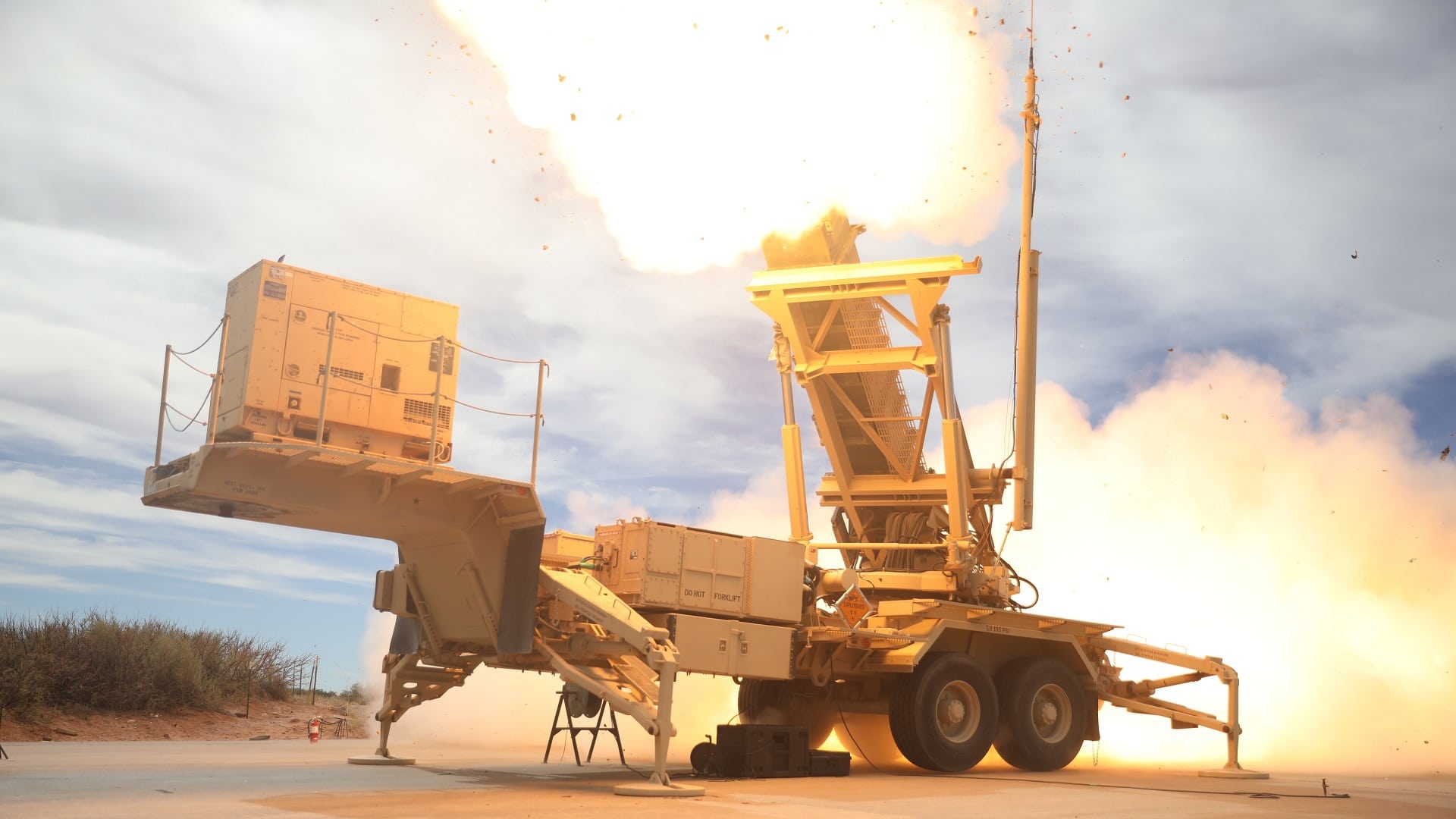
60 to 65 Patriot interceptors per month. This number is smaller than some European press releases suggest, but it describes more accurately than any summit declaration why Ukraine's air defense and thus Europe's security continue to hinge on an American bottleneck. According to Defense News, Donald Trump told Volodymyr Zelenskyy at the G7 meeting in Évian that he would consider for the first time whether Ukraine could build its own Patriot interceptors. Zelenskyy subsequently mentioned that licenses for Ukrainian missile production were being viewed positively in Washington for the first time.
This sounds like a breakthrough. Institutionally, it is more of a late acknowledgment. Four years after the start of the large-scale Russian invasion, Europe's most pressing air defense problem is no longer whether money is available. The problem is who is allowed to produce critical interceptors in sufficient numbers, who controls the technology, and who sets production line priorities in case of an emergency. Europe can provide billions, but a Patriot interceptor remains an American-regulated product.
Ukraine Suddenly Offers More Than Just Requests
The crucial political shift is not that Washington has become more generous. It lies in the fact that Kyiv is no longer just acting as a recipient of Western arms. Kyrylo Budanov expressed it unusually directly to Defense News: Ukraine is not an actor that merely asks, but a partner that has something to offer. This does not refer to battle tanks or fighter jets, but to a capability package developed in war: affordable interceptor drones, operational data, strike images, improvised production processes, and tactical software.
The numbers explain why this card works. The Ukrainian Ministry of Defense reported a total of 8,351 Russian air attack assets for May 2026. Of these, 7,588 were intercepted. The interception rate for Shahed, Gerbera, Italmas, and similar drones was 91.73 percent; for cruise missiles and ballistic missiles, it was just over 53 percent. This difference is at the core of the European debate. Against cheap mass threats, Ukraine is increasingly developing its own, cost-effective responses. Against ballistic threats, it still needs PAC-3 interceptors for Patriot systems.
This creates a new negotiation logic. Kyiv can offer the U.S. technology and combat experience in the lower cost segment while demanding production rights or additional supplies in the upper segment. A Ukrainian interceptor drone approach costing $1,000 to $2,500 per unit is not the functional equivalent of a Patriot interceptor used against ballistic missiles. But it changes the political balance. Those who deny Ukraine Patriot licenses simultaneously forfeit a partner that possesses more operational experience in the cheapest and most rapidly scalable part of air defense than many NATO states combined.
Germany's New Role Remains Unclear
Two days after Zelenskyy's conversation with Trump, the Ukrainian Defense Minister signed a separate agreement with Germany in Brussels, according to Defense News, for the joint development of systems against ballistic missiles. This is more important for Berlin than it may seem at first glance. Since 2022, Germany has positioned itself as the main organizer of European air defense, particularly through the European Sky Shield Initiative. However, Sky Shield has so far been more of a procurement framework than a genuine European production architecture.
Berlin buys, bundles, coordinates, and finances. This is useful, but it does not yet create strategic autonomy. If Germany now develops ballistic missile defense with Ukraine, the focus shifts from procurement to co-production. This is where it becomes politically uncomfortable. Because co-production involves not just a memorandum, but export rights, confidentiality, industrial division of labor, liability issues, intellectual property, and the question of whether German companies can truly translate Ukrainian combat experience into serial products.
The Federal Republic has the money for this, but not automatically the speed. The special fund has closed many gaps, but it has not transformed the German armaments bureaucracy into a war economy. If a German-Ukrainian program against ballistic missiles is announced in 2026, the sober question must be: Will it deliver operational mass before 2028, or will it first produce working groups, standards, and jurisdictional conflicts?
Patriot Licenses Do Not Solve Europe's Structural Problem
Washington's possible opening regarding Patriot licenses is therefore important, but it is not proof of European emancipation. It initially shows how extremely dependent Europe remains on American approvals. The U.S. can enable or block a Ukrainian production pathway. They control the central technology, the software, the supply chain, and the export conditions. Even if Trump agrees, no European autonomy is created; rather, an American-licensed expansion of the production base occurs.
This is better than nothing. But it is not the same as strategic independence. Europe has been talking about air defense architectures for years while Russia has changed the threat curve in reality: larger drone swarms, more ballistic missiles, altered Kh-101 versions, combined attack waves. The Ukrainian ministry described the attack on May 24 as a mix of 600 UAVs, 30 conventional ballistic missiles, Kinzhal and Tsirkon missiles, more than 50 cruise missiles, and two Oreshnik medium-range systems. Such a salvo is no longer a theoretical scenario for NATO planners, but a Ukrainian workday.
European defense policy still reacts too strongly with financial instruments. SAFE loans, national special funds, and NATO percentage targets can generate demand. However, they do not produce interceptors when production rights are lacking, supply chains are tight, and industrial capacities have not been pre-financed. The Patriot debate is therefore a lesson on the difference between solvency and availability.
The Real Lesson for NATO
For NATO, the lesson is not that Ukraine has now become a normal arms partner. That would be too simple. Ukraine is a partner under existential pressure, whose innovative performance arises from necessity. Precisely for this reason, its data and processes are valuable but difficult to fit into Western procurement cycles. A German ministry thinks in terms of certification, parliamentary control, and budget years. A Ukrainian brigade thinks in terms of hours, supply windows, and loss rates.
The challenge is to productively connect both systems without transferring the Ukrainian pace into European slowness. If Berlin and Washington treat Ukrainian experience only as a source of inspiration, everything will remain the same: Europe buys American high-value systems and admires Ukrainian improvisation. If they turn this into real joint production, a hybrid model could emerge for the first time: American key technology, German financial and industrial integration, Ukrainian combat experience, and scaling pressure.
But is that enough? Only if Europe is willing to talk about ownership and control. As long as air defense is treated politically as a question of solidarity and industrially as national location policy, the systems will remain too expensive, too scarce, and too slow. Patriot licenses for Ukraine would be a step forward. But they would also serve as a reminder that Europe has not closed its most important defense gap itself. It had to wait until Kyiv could offer Washington something that Washington itself needs.
The paradoxical conclusion is: Ukraine could help Europe become more independent, precisely because Europe was not independent enough to help Ukraine in time.
Trump discussed with Zelensky the potential for Ukraine to produce its own Patriot interceptors, highlighting Europe's reliance on U.S. technology for air defense. In May 2026, Ukraine intercepted 7,588 of 8,351 Russian aerial threats. Germany signed an agreement with Ukraine for joint development against ballistic missiles, indicating a shift in defense collaboration. This situation underscores the evolving role of Ukraine as a partner in military capabilities rather than just a recipient of aid.
- Trump discussed with Zelensky the possibility of Ukraine producing Patriot interceptors.
- Ukraine intercepted 7,588 out of 8,351 Russian aerial threats in May 2026.
- Germany signed an agreement with Ukraine for joint development against ballistic missiles.
- The report highlights Europe's dependency on U.S. technology for air defense systems.
- Ukraine is transitioning from a recipient of military aid to a partner offering capabilities.