
Tu-95 at Engels Base Shows the Price of Russian Strategic Aviation in 2026
 Dmitri Volkov
The Tu-95 at Engels Base Shows the Cost of Russian Strategic Aviation in 2026
One burned Tu-95MS costs less than the annual air defense program around all Russian long-range aviation airfields. But this is precisely the unpleasant arithmetic of July 2026: Ukraine is not obliged to destroy dozens of strategic bombers to change the risk calculation for the Russian General Staff. It is enough for it to periodically prove that the aircraft, designed to launch cruise missiles at distances of thousands of kilometers, is vulnerable on a concrete parking lot in the Saratov region.
On July 19, Defence Blog, citing a satellite image from Planet Labs published by the open monitoring community AviVector, reported that the image apparently confirms the destruction of a Russian strategic bomber Tu-95 at the Engels airbase. The wording is important: a satellite image is not equivalent to an official act of decommissioning the aircraft, and in normal military bureaucracy, there is a long folder of documents between them. But for the analysis of the war, another fact is sufficient: independent observers see signs on the parking lot consistent with the loss of a heavy aircraft, and the Ukrainian leadership had previously claimed that the strike on Engels was successful. This is no longer just information noise, but an element of operational reality.
Why One Tu-95 Matters
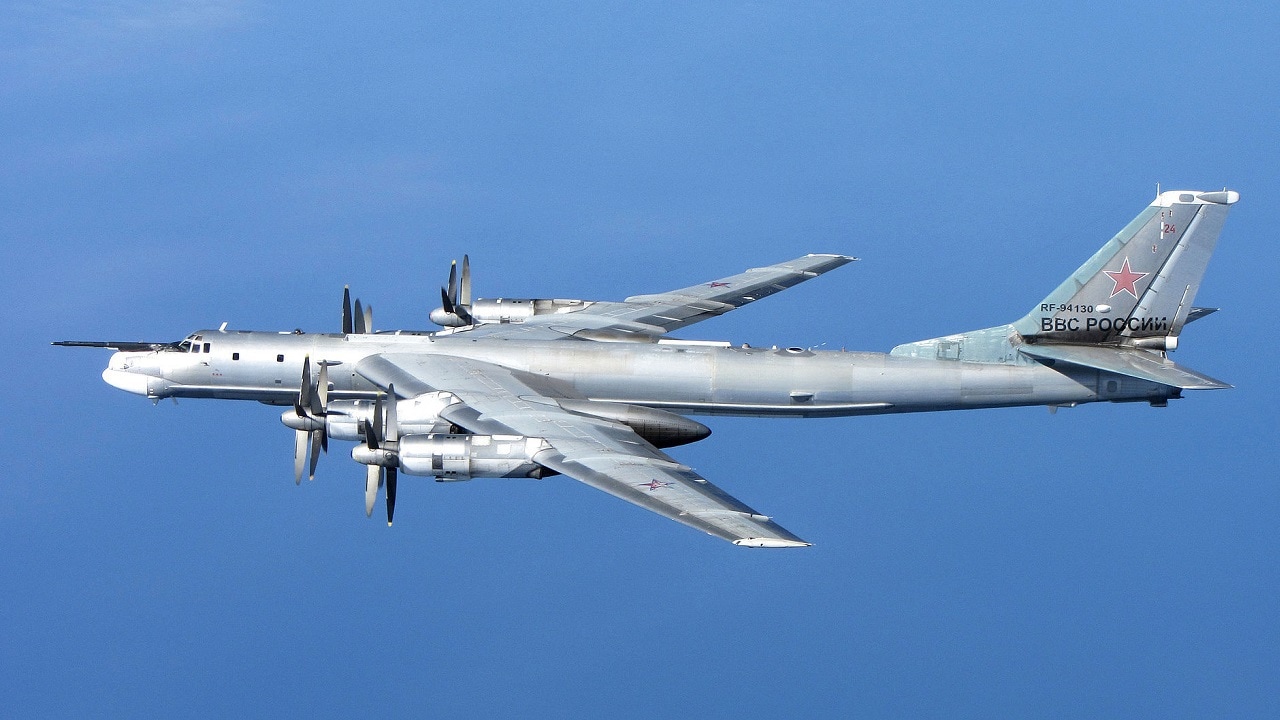
The Tu-95MS is a paradoxical machine. Its design lineage goes back to the 1950s, but in the current war, these aircraft remain one of the main carriers of X-101 and X-555 missiles. Russia uses them not as a museum exhibit, but as a working tool for strategic pressure on Ukrainian energy, industry, and cities. According to open estimates, the fleet of operational Tu-95MS is limited to several dozen aircraft; the exact number varies depending on the counting methodology, as some aircraft are undergoing repairs, some serve as sources of components, and some are listed as operational more due to accounting inertia. Therefore, the loss of even one airframe is not a catastrophe, but it is not a trivial matter either.
Soviet long-range aviation was built on the assumption of deep rear areas. Engels was not just an airfield, but part of a larger geography of security: distance, layered air defense, dispersion, backup runways, railway logistics, repair capabilities. After 2022, this assumption turned out to be outdated faster than Russian staff culture could adapt. A drone does not negate strategic aviation; it negates the comfortable illusion that strategic aviation exists in a special, almost inviolable space.
The Airfield as a Weak Link
Russian official rhetoric often speaks of interceptions, suppression, and repelling attacks. In this lexicon, there is an old Soviet habit: to consider successful not what the object has retained combat capability, but what the report looks manageable. But a long-range aviation airfield is not an abstract point on a map. There are open parking areas, fuel systems, warehouses for aviation munitions, servicing vehicles, crews, technical personnel, and flight schedules. Even if a strike destroys one aircraft, it forces changes in storage modes, increases camouflage, relocates aircraft, builds shelters, or keeps equipment in the air and at backup sites. All of this costs money, time, and engine resources.
Here, the institutional problem of the Russian army manifests itself. Over two and a half years of war, Moscow has learned to produce more drones, repair more armored vehicles, and adapt frontline tactics. But protecting strategic airfields requires not only technology but also the discipline of infrastructural thinking. A shelter cannot be announced in a press release. It must be built, equipped, integrated into operational modes, and protected from the corrupt temptation to make the concrete thinner than in the project. In Russia, this is always the most challenging point between military necessity and economic practice.
Ukrainian Logic of Long-Range Strikes
On the same day, Ukrainian sources reported a series of strikes on Russian military and economic infrastructure: Ukrainska Pravda, citing President Volodymyr Zelensky, wrote about the destruction of four fuel facilities in the Stavropol region and three vessels of the Russian shadow fleet in the Black Sea. Separately, the SBU announced a strike by the maritime drone Mamai on the tanker Avero and attacks on three oil depots approximately 600 kilometers from the Ukrainian border. These reports require the usual caution of wartime, but their cumulative effect shows the direction: Kyiv is expanding the battlefield concept from the contact line to the chain of fuel, missiles, ports, airfields, and export revenues.
From the perspective of a Russian planner, the picture is unpleasant. A missile campaign against Ukraine requires not only aircraft and missiles but also predictable infrastructure. The Tu-95MS can take off from Engels, launch missiles from a safe zone, and return, but the entire preparation cycle remains tied to the ground. The Ukrainian strategy does not have to break through all levels of Russian air defense simultaneously. It can seek repeatable, cheap, and psychologically painful points: the bomber's parking area, oil depot, tanker, substation, repair shop. In Soviet terminology, this would be called impacting the operational support system. Today, this is done not by frontline armies, but by a combination of UAVs, maritime drones, reconnaissance, and public OSINT.
What This Changes for Russia
One must not exaggerate: one confirmed Tu-95 loss will not collapse the Russian long-range strike campaign. Russia still has Tu-160s, Tu-22M3s, ground systems, naval platforms, strike drones, and a growing industrial base for producing munitions. But wars rarely change solely through absolute losses. More often, they change through the rising cost of each subsequent operation. If every long-range aviation sortie requires additional dispersion, if every airfield needs denser air defense coverage, if every security report must be verified with enemy satellite images, then strategic aviation retains its striking power but loses some freedom.
For Russian military culture, this is a painful shift. Long-range aviation has always been a symbol of a great power, a legacy of an era when Moscow could think in intercontinental distances and a nuclear triad. Now this symbol finds itself in the same logic of a war of attrition as a tank near Pokrovsk or an ammunition depot in Crimea. The high status of the branch of the armed forces no longer guarantees a high level of protection. There is almost a Chekhovian irony in this: an aircraft designed for flights to the oceans is forced to lose an argument to a small device that reached its parking area.
The main conclusion is not that Russia has lost one bomber. The main conclusion is that Ukrainian long-range strikes are transforming the Russian deep rear from a space of confidence into a space of constant risk accounting.
In the coming months, Moscow will likely strengthen the security of Engels and other long-range aviation bases, accelerate the construction of shelters, and be more active in dispersing aircraft. This is a rational response, but it is delayed and costly. Russian strategic aviation will retain the ability to strike Ukraine; however, the cost of this ability will rise not only in rubles but also in the scarce resource of attention, air defense technology, and managerial discipline. And this resource in the Russian system usually runs out faster than metal.
A Tu-95MS was reportedly destroyed at Engels airbase on July 19, 2026, indicating vulnerabilities in Russian strategic aviation. This incident reflects Ukraine's expanding operational capabilities to target Russian military infrastructure. The loss of the aircraft may lead to increased security measures at Russian airbases, impacting their operational effectiveness.
- A Tu-95MS was reportedly destroyed at Engels airbase on July 19, 2026.
- The loss of the aircraft impacts Russian strategic aviation capabilities.
- Ukraine is expanding its operational reach to target Russian military infrastructure.
- The report highlights the vulnerabilities of Russian airbases to drone strikes.
- The Russian military is likely to increase security measures at strategic airbases.