
Turkey's Arms Swap to Exchange Russian S-400 Missiles for US F-35 Fighter Jets Stirs Multiple Countries
[Global Times Special Correspondent Chen Yang] Turkey recently plans to resell the Russian-made S-400 long-range air defense missile system it acquired, in exchange for the United States to reinstate its approval for the export of F-35 stealth fighter jets. This plan has caused a stir among the U.S., Russia, and several countries in the Middle East.
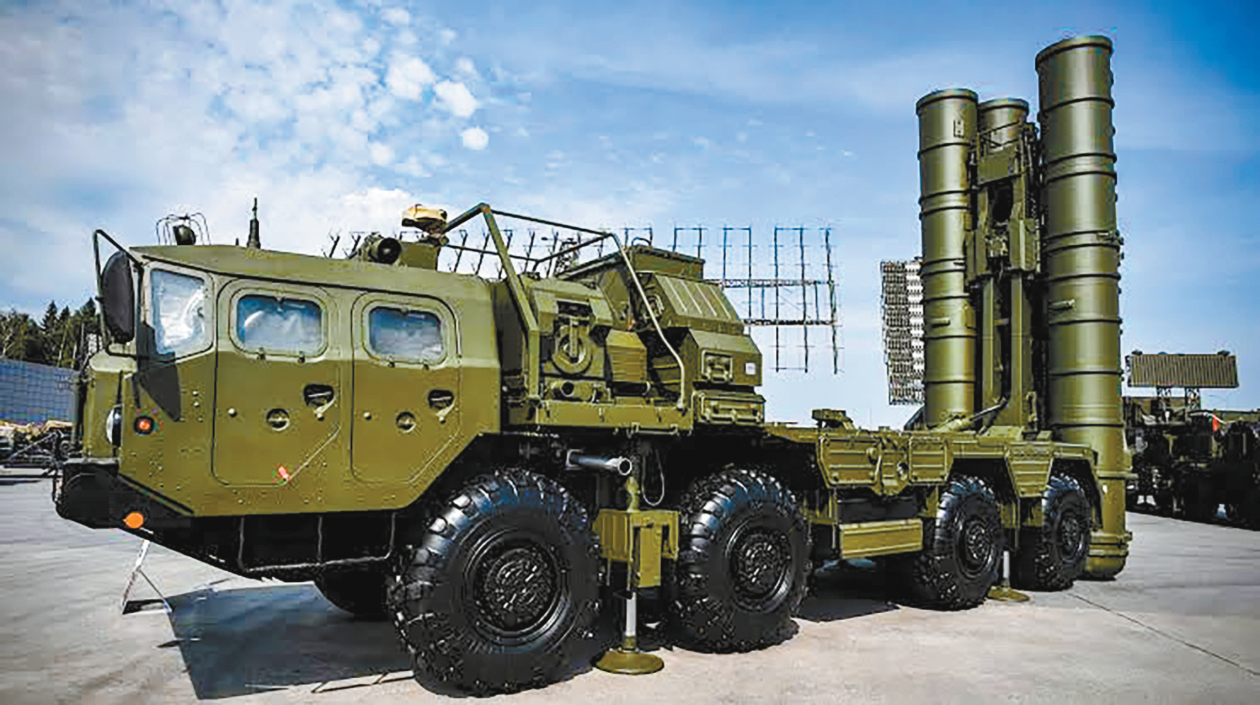
Turkey: A Dilemma Over the S-400
According to a report from the "Today Turkey" website on the 13th, U.S. Ambassador to NATO Matthew Whitaker stated that he believes Turkey's re-engagement in the F-35 fighter jet program "is feasible," provided that Turkey can abandon the Russian-made S-400 long-range air defense system it purchased in 2019. He revealed that U.S. President Trump and Turkish President Erdogan are in close consultations on this matter.
The report mentioned that Turkey, as a NATO member, had long sought to purchase the "Patriot" air defense system from the U.S. but did not receive a positive response. Against this backdrop, Turkey turned to Russia and signed an agreement to purchase the S-400. On paper, the S-400 has clear advantages over the "Patriot" in terms of range and multi-target interception capabilities, and the Russian side also offered more attractive loan conditions and technology transfer. At that time, Turkey's choice to procure the Russian air defense system was also intended to express dissatisfaction with the U.S. CNN reported that after the failed coup in Turkey in 2016, Turkey felt that the U.S. had an ambiguous stance, further undermining trust in the U.S. The procurement of the S-400 was seen by Erdogan's government as a symbol of achieving defense autonomy and breaking away from dependence on a single source of Western weapons.
However, after introducing the S-400 air defense system, it could not be integrated with Turkey's NATO weapon systems, and thus did not fulfill its expected role. The U.S. then used the excuse that "if Turkey simultaneously equipped the Russian S-400 air defense system and the U.S.-made F-35 stealth fighter, it could allow the Russian side to obtain core F-35 secrets," to exclude Turkey from the F-35 joint development and procurement program, and in 2020, sanctioned Turkey's defense industry under the Countering America's Adversaries Through Sanctions Act (CAATSA). Turkey was originally a partner in the F-35 program, participating in component production and having already paid part of the procurement costs, but to date, several F-35s originally scheduled for delivery to Turkey have been withheld by the U.S. This has severely impacted the modernization of the Turkish Air Force and the overall defense industry.
In December 2025, the Turkish Ministry of Defense stated that Turkey and the U.S. are negotiating Turkey's re-entry into the F-35 fighter jet program. During the NATO summit in early July this year, after a meeting between Trump and Erdogan, it was hinted that if Turkey could properly resolve the S-400 issue, the U.S. would consider lifting the sanctions imposed on Turkey and would be open to Turkey's return to the F-35 program. Turkish media revealed that as a countermeasure, the country is considering selling the S-400 air defense missile system to a Gulf country, possibly the UAE or Qatar.
U.S.: Concerns and Opposition Remain
However, Turkey's plan to resell the S-400 air defense missiles in exchange for the U.S. restoring its provision of F-35s faces many uncertainties. CNN reported that according to U.S. congressional legislation, as long as Turkey is still equipped with the S-400 system, the U.S. government cannot approve the resumption of F-35 stealth fighter sales. Therefore, even if the White House lifts sanctions on Turkey, military sales cannot be directly restored without submitting a written notification to Congress and obtaining approval.
Both parties in the U.S. Congress generally hold a skeptical attitude towards this. Turkey's purchase of the S-400 itself is seen as an attempt to break free from U.S. control and seek strategic autonomy. Many U.S. lawmakers no longer view Turkey as a "like-minded partner," but rather as a "hedger" balancing between the U.S. and Russia. In this context of trust deficit, handing over advanced weapons like the F-35 to Turkey is considered too risky by the U.S.
Additionally, as Turkey's regional rivals, Greece and Cyprus actively oppose any actions that would enhance Turkey's military power through their strong lobbying networks in the U.S. Congress. For this reason, when the U.S. State Department previously notified Congress about exporting dozens of F110 jet engines for Turkey's domestically produced "Khan" stealth fighter, several U.S. lawmakers expressed opposition.
Russia: Maintaining Close Contact
Due to the "end user" clause in the arms sale agreement, Turkey's resale of the S-400 must receive formal consent from Russia. Currently, Russia's attitude is one of the biggest unknowns. The Russian satellite news agency reported that the Russian government confirmed it is "maintaining close contact" with Turkey regarding the final destination of the S-400. Kremlin spokesman Dmitry Peskov recently stated in an interview that this matter is "very sensitive" and confirmed that negotiations with Turkey are still ongoing.
Regarding Turkey's plan to resell the S-400 to other countries, Russian military expert Yuri Knutov stated that long-range air defense systems require special maintenance, "the S-400 is not the kind of tank that can be continuously used for decades after delivery." Turkey itself does not have the capability to cultivate specialized personnel or conduct complex maintenance work, so without approval from the Russian side, the S-400 resold to other countries would "quickly become scrap metal."
However, a Middle Eastern official stated that Gulf countries such as Qatar, the UAE, and Saudi Arabia have multiple important U.S. military bases and are also using advanced U.S. weapons. "If the S-400 can collect and steal secrets of U.S. weapons during operation, then deploying it to Gulf countries also poses a risk of sensitive information leakage."
The Israeli newspaper "Jerusalem Post" reported on the 12th that Russia may also choose to repurchase the four S-400 air defense systems sold to Turkey. The report mentioned that in the Russia-Ukraine conflict, the Russian military has lost a large number of air defense weapons, including the S-400, and currently urgently needs to replenish its air defense capabilities.
The "Jerusalem Post" also speculated that Turkey might transfer the S-400 air defense system to Syria, "which would be the worst-case scenario for Israel." The report stated that from a technical standpoint, Turkey's transfer of the S-400 to Syria does not violate U.S. legal restrictions, but after obtaining such advanced air defense missiles, Syria may have the capability to track Israeli F-35 stealth fighters.
Israel: Firmly Opposed to Turkey Gaining F-35s
The fundamental purpose of Turkey's resale of the S-400 is to rejoin the F-35 program. However, Israeli Prime Minister Netanyahu stated in an interview on July 7 that he opposes the U.S. plan to sell F-35 fighter jets to Turkey, claiming that this move would "disrupt the balance of power in the Middle East."
The "Jerusalem Post" stated that typically, the F-35s sold by the U.S. abroad come with performance limitations to ensure that the models used by the U.S. military and those equipped by Israel maintain air superiority. However, Israeli defense officials believe that if Trump decides to sell F-35 stealth fighters to Turkey, the country's technical experts would be able to bypass the U.S. restrictions on these aircraft. The report also mentioned that this means Turkey obtaining the F-35 fighter jets "could limit Israel's ability to conduct preemptive strikes against regional threats." It further noted that "if Turkey decides to attack Israel," it could theoretically launch an attack without any warning, while Israel has no clear defensive measures to respond to an assault from stealth fighters.
Turkey is negotiating to sell its Russian-made S-400 missile system to acquire U.S. F-35 fighter jets, amid significant political and military implications. The U.S. has expressed concerns about Turkey's S-400 system preventing the sale of F-35s, while Israel opposes the deal, fearing it would disrupt regional power dynamics. Discussions with Russia regarding the resale of the S-400 are ongoing, adding complexity to the situation.
- Turkey plans to sell S-400 to acquire F-35 jets from the U.S.
- U.S. Congress has concerns about Turkey's S-400 system preventing F-35 sales.
- Turkey's purchase of S-400 was seen as a move towards strategic autonomy from the U.S.
- Russia is involved in discussions regarding the resale of the S-400 system.
- Israel opposes the sale of F-35s to Turkey, citing regional power balance concerns.