
Turkish air defense missiles spotted in Khartoum combat zone
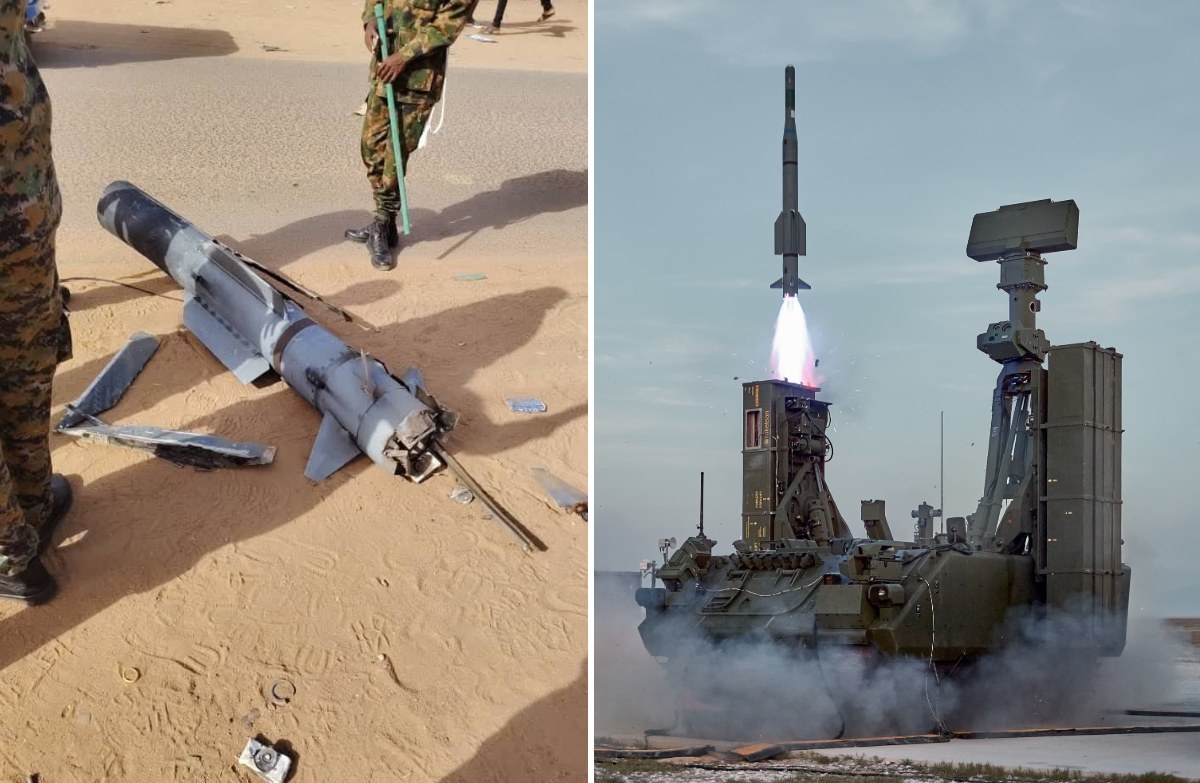
Sudan’s military appears to have used a Turkish-made HİSAR-A surface-to-air missile during an attempt to repel a drone attack over Khartoum, offering open-source evidence that Turkish-made HİSAR-A air defense missiles may be in use by the Sudanese Armed Forces.
Rich Tedd, an OSINT analyst who tracks military hardware through imagery and wreckage identification, published photographs on Tuesday of missile debris recovered in Khartoum.
“Wreckage of a Turkish-made HİSAR-A surface-to-air missile (SAM) found in Khartoum, Sudan,” Tedd wrote. “The missile was reportedly used by the Sudanese Armed Forces (SAF) during this morning’s attempt to repel a drone attack launched by the RSF.”
The RSF in Tedd’s account refers to the Rapid Support Forces, the paramilitary organization that has been fighting the Sudanese Armed Forces since April 2023 in one of the world’s most destructive ongoing conflicts. The RSF, which grew out of the Janjaweed militias responsible for atrocities in Darfur in the early 2000s, launched a power struggle against Sudan’s military leadership that rapidly escalated into full-scale urban combat. Khartoum, Sudan’s capital, has been a primary battleground, with large parts of the city devastated by fighting that has displaced millions of civilians and triggered one of the world’s worst humanitarian crises.
The RSF has made extensive use of drone warfare, deploying commercially modified unmanned aircraft for surveillance and attack missions against SAF positions, infrastructure, and in some reported cases civilian areas. The possible deployment of a dedicated surface-to-air missile system to counter those drones represents a significant development in the air defense dimension of the conflict.
The HİSAR-A is Turkey’s first domestically developed low-altitude surface-to-air missile system, produced by the defense companies Aselsan and Roketsan. The HİSAR-A family was developed by Aselsan and Roketsan, with HİSAR-A+ entering the Turkish Armed Forces inventory in 2021. The system is designed to protect military bases, ports, airports, and mobile ground forces against aircraft, helicopters, cruise missiles, and unmanned aerial vehicles flying at low altitudes. The HİSAR-A system is normally associated with a mobile launcher, radar, electro-optical sensors and fire-control architecture, but the available imagery shows missile wreckage, not the full system. The vertical launch configuration of the missile, where rounds fire straight upward before maneuvering toward their targets, gives the system 360-degree engagement coverage without the launcher needing to rotate to face a threat, a significant tactical advantage in urban environments where threats can approach from any direction.
Turkey has been expanding its defense export relationships across Africa and the Middle East over the past decade, with the HİSAR family of air defense systems forming part of a broader portfolio that includes the Bayraktar TB2 drone, which has seen combat use in Libya, Ethiopia, Azerbaijan, and Ukraine. The reported appearance of HİSAR-A wreckage in Sudan would point to the presence of Turkish-made air defense missiles in the conflict, though no acquisition terms have been disclosed. The Sudanese Armed Forces have not issued an official statement confirming the system’s deployment or use, and Turkey has not publicly commented on any defense supply relationship with Sudan in connection with this incident.
The drone threat the HİSAR-A missile was apparently used to counter reflects a pattern that has emerged across multiple recent conflicts. The RSF has demonstrated increasingly sophisticated use of unmanned aircraft over the course of the war, using drones for reconnaissance of SAF positions, targeting of military infrastructure, and direct attack missions. The SAF has struggled to develop effective countermeasures against this threat using its existing Soviet-era and Chinese-supplied air defense systems, which were designed for different threat categories and different operational environments than the low-altitude, slow-moving, commercially derived drones that the RSF has been fielding. A dedicated low-altitude air defense missile optimized for exactly this threat category addresses that gap in a way that legacy systems cannot.
Sudan’s conflict has received far less international attention than its scale warrants. The United Nations has described the humanitarian situation as one of the worst in the world, with more than ten million people displaced.
Content preview only. Full article available at source. View Full Article
The Sudanese Armed Forces used a Turkish-made HİSAR-A surface-to-air missile to repel a drone attack in Khartoum. Photographic evidence of missile debris was published by OSINT analyst Rich Tedd, confirming the missile's deployment. This development highlights the SAF's efforts to counter the RSF's drone warfare capabilities amid an ongoing conflict that has displaced millions.
- Turkish-made HİSAR-A missile was used by Sudanese Armed Forces to repel a drone attack.
- Missile debris was identified in Khartoum by OSINT analyst Rich Tedd.
- The RSF has been using drones extensively in the conflict against SAF.
- The HİSAR-A is designed for low-altitude air defense against various aerial threats.
- Sudan's conflict has resulted in a severe humanitarian crisis with millions displaced.