
Turkish naval gun system shoots down jet drone in live-fire test
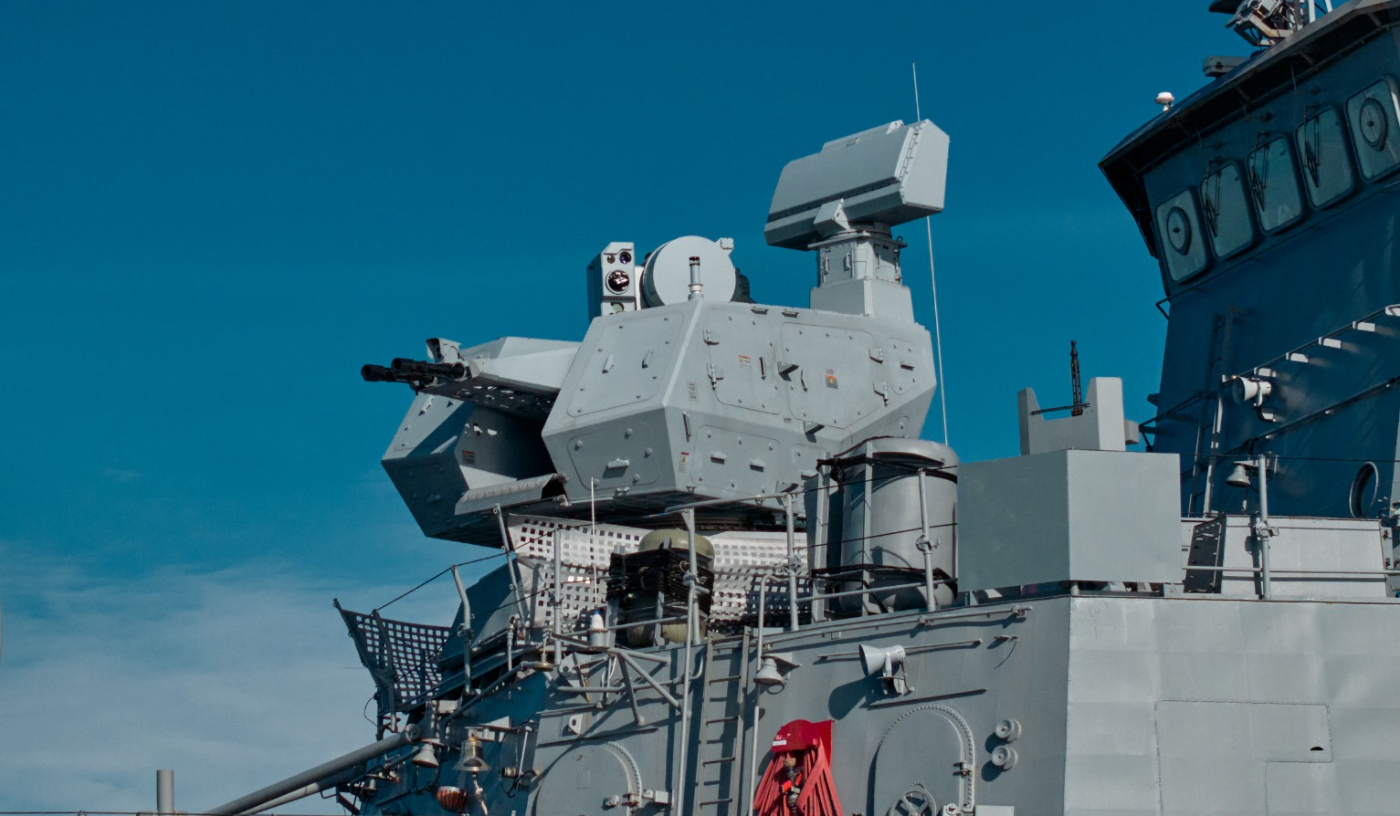
A Turkish twin-cannon ship defense system shot down a fast jet-powered drone off Türkiye’s northern coast, and its operator only had to press one button. ASELSAN released video of the test on Monday.
The company said its GÖKDENİZ, the naval version of the KORKUT land-based air defense system, “detected, tracked, engaged and destroyed” a moving aerial target during the live-fire demonstration. The target was “a representative high speed jet engine UAV.”
GÖKDENİZ is a close-in weapon system, the last line of defense on a warship. It pairs radar and electro-optical sensors with twin 35 mm cannons that together fire 1,100 rounds per minute. With ASELSAN’s ATOM airburst ammunition, which releases a cloud of tungsten pellets just ahead of the target, it has an effective range of about 4 km (2.5 miles). The same 35 mm round arms the land-based KORKUT, which ASELSAN showed on an 8×8 vehicle for the first time in 2024.
ASELSAN said the system ran in semi-autonomous mode during the test. It detected and tracked the target on its own and set priorities for multiple engagements, while “the operator’s involvement was simplified to authorizing the firing through a single button press.” The ship kept moving at 5 to 10 knots throughout.
The target flew a low-altitude, maneuvering profile meant to imitate drones and cruise missiles, the company said. According to ASELSAN, the test showed the system’s ability to deal with “small, fast-moving and maneuverable targets.”
GÖKDENİZ also has a fully autonomous mode. In it, the company said, the system “can independently execute the entire engagement sequence, including firing for multi target interception, without operator interaction.”
The company has been building out a counter-drone family around the KORKUT design. Last year it unveiled the KORKUT 100/25 SB, a mobile system built to take down mini and micro drones, including swarms.
ASELSAN unveiled GÖKDENİZ at the IDEF exhibition in Istanbul in 2019, and the system is now going onto Turkish Navy warships. The first Turkish Navy unit was integrated into the lead Istanbul-class frigate after factory acceptance testing.
The gun is one piece of a wider naval push by the company, which in May introduced the KILIÇ underwater strike system and TUFAN unmanned surface vessel.
ASELSAN is also pitching GÖKDENİZ beyond warships. Earlier this month at the EURONAVAL show in Paris, it introduced a containerized version that can be installed on commercial ships without permanent modifications.
That configuration, ASELSAN said, can “provide advanced close-in defense capabilities for commercial vessels, expanding the protection of maritime assets against emerging aerial threats.”
Content preview only. Full article available at source. View Full Article
A Turkish naval gun system, GÖKDENİZ, successfully shot down a fast jet-powered drone off Türkiye’s northern coast during a recent live-fire test. The system, which operates in semi-autonomous mode, demonstrated its capability to engage small, fast-moving aerial targets. ASELSAN released video footage of the test, showcasing the system's effectiveness and its potential for broader applications, including on commercial vessels.
- A Turkish naval gun system shot down a fast jet-powered drone.
- The GÖKDENİZ system operates in semi-autonomous mode.
- The system can fire 1,100 rounds per minute using 35 mm cannons.
- The test demonstrated the system's capability against small, fast-moving targets.
- ASELSAN is expanding the GÖKDENİZ system for use on commercial vessels.