
Russia's Three Missiles Turn Poland Into NATO's Next Test
 Alexandra Reeves
Russia's Three Missiles Turn Poland Into NATO's Next Test
Three Russian cruise missiles entered Polish airspace, and NATO's response exposed the alliance's real problem: not a lack of promises, but the distance between detecting a threat and deciding to destroy it.
The Incursion Was More Than a Navigation Error
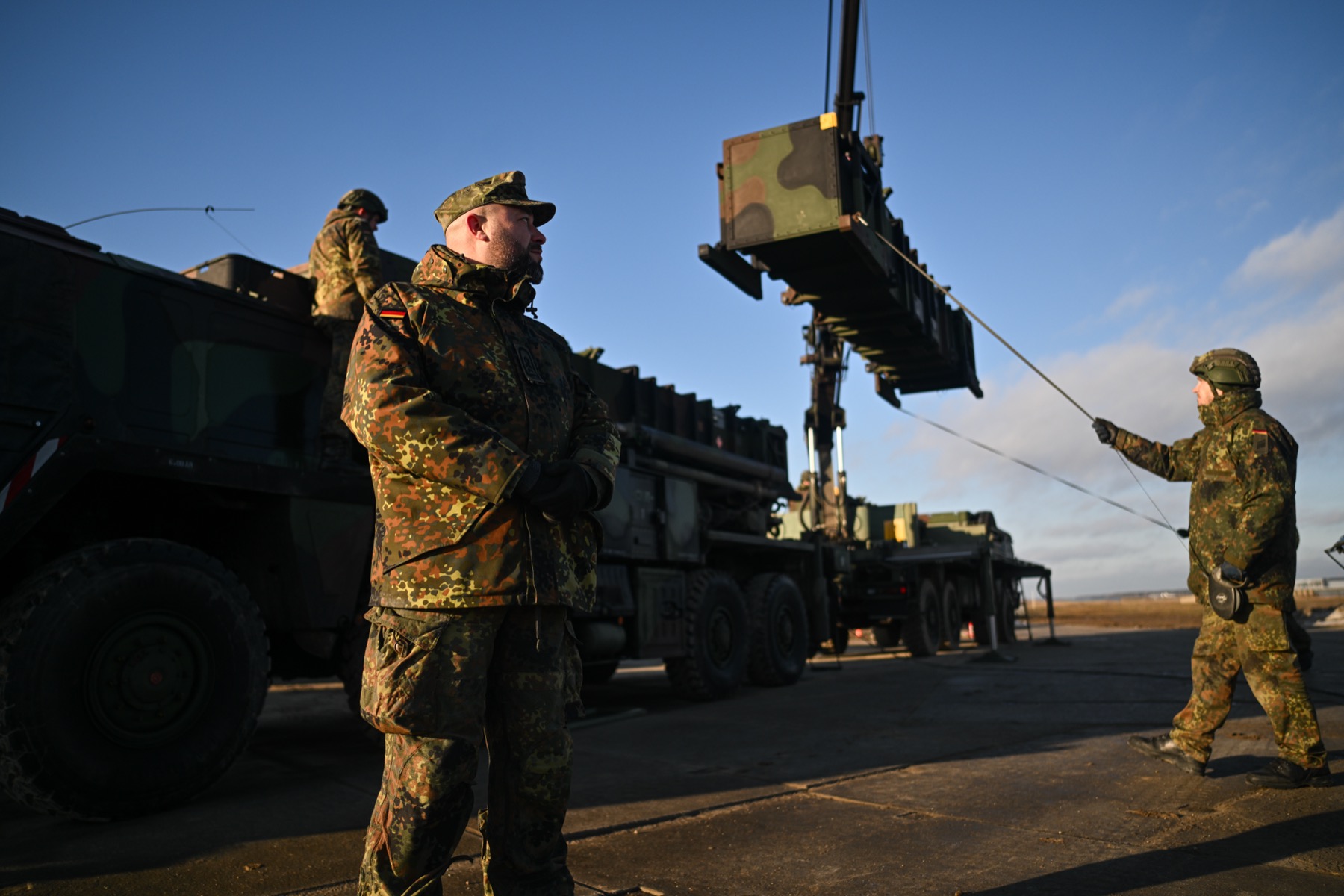
Polish authorities said on November 23 that three objects which struck or fell on Polish territory were Russian missiles. The debris was found at three separate sites after Russia launched another large strike against Ukraine. Reuters reported that Polish prosecutors identified the weapons as Russian, while Poland's government described the episode as a provocation. NATO subsequently convened emergency discussions, and Secretary General Mark Rutte said the alliance would defend “every inch” of Polish territory.
That language is politically necessary. It is also strategically incomplete. Article 5 is not an automatic button that converts every airspace violation into war with Russia. It is a commitment to consult and to decide what action is necessary. The practical question is therefore much harsher: when a Russian missile is inside NATO territory for minutes, who makes the decision to shoot?
Why the Kh-101 Creates a Difficult Air-Defense Problem
Open-source assessments identify the missiles as Kh-101s, Russia's long-range conventional air-launched cruise missile. The weapon is designed to fly at low altitude, use terrain masking and alter its route, making it harder to detect and track than a high-flying ballistic missile. Public estimates put its range at roughly 4,500 kilometres, although the exact performance of operational variants is not transparent.
- Type: air-launched subsonic cruise missile
- Guidance: inertial navigation supported by satellite and terrain-reference systems
- Flight profile: low-altitude, route-variable penetration
- Range: commonly estimated at approximately 4,500 kilometres
Those specifications matter because Poland is not choosing between a perfect radar picture and a clean intercept. A low-flying cruise missile can disappear behind terrain, appear late to local sensors and generate uncertainty about its exact track. The defender must distinguish a genuine attack from debris, a decoy or a weapon that will leave the country's airspace seconds later.
That helps explain why Polish forces did not simply fire at every object. Reporting by the Kyiv Independent said a Swedish Gripen was cleared to engage a suspected missile but could not identify the target, with poor weather complicating the decision. The episode is a reminder that air defence is not just a missile inventory. It is a chain of sensors, weather data, rules of engagement, command authority and available aircraft—all of which must work at once.
NATO's Promise Is Stronger Than Its Intercept Architecture
Rutte's “every inch” pledge is designed to reassure Warsaw and deter Moscow. But reassurance is not the same thing as coverage. NATO's integrated air and missile defence network links national radars, airborne early-warning aircraft, fighter patrols and ground-based systems such as Patriot. It does not create a single continental shield with unlimited capacity.
Patriot is formidable against many aircraft and ballistic-missile threats, but no battery can cover an entire country against a massed, low-level cruise-missile attack. A defender must decide which sites to protect, where to place launchers and how many interceptors to reserve for the next wave. The system also faces the uncomfortable economics of modern war: a missile costing millions of dollars may be aimed at a target whose destruction costs far more, while an interceptor is itself a scarce resource.
The Polish incident therefore tests NATO at the point where deterrence becomes operational. If Warsaw waits for certainty, Russia can exploit the hesitation. If Warsaw shoots at every ambiguous track, it risks a civilian accident or an escalation based on a misidentified object. Moscow does not need to launch a deliberate attack to create this dilemma. It only needs to keep presenting NATO with decisions it must make under pressure.
The Strategic Signal Is Bigger Than the Physical Damage
Poland has already learned that the war next door does not stay neatly inside Ukraine. The missile episode arrived as European officials were warning that the conflict was spilling into NATO territory. A Russian cargo ship was also reported hit by drones in the Baltic, while Ukrainian attacks against Russian naval assets were reported far beyond the Black Sea. These events are not identical, and they should not be collapsed into one story. Together, however, they show how the geography of the war is expanding.
Russia can portray an airspace violation as an accident. Poland can call it a provocation. Both descriptions can be politically useful, but neither resolves the military calculation. The relevant fact is that Russian strike activity created a direct NATO air-defense crisis without requiring Moscow to announce an attack on the alliance.
That is precisely why the response must be measured but visible. NATO should publish a clearer common framework for cruise missiles that cross allied borders: who has authority to engage, what evidence is required, how national air forces hand off a track and what happens when weather or identification failures make an intercept impossible. Quiet coordination is valuable. Quiet coordination that leaves Moscow guessing about NATO's threshold is not.
Poland Is Now the Alliance's Test Case
The immediate danger may have passed, but the strategic problem has not. Poland is likely to demand more sensors, more layered air defence and faster allied reinforcement. Those demands will collide with the same shortages exposed by the war in Ukraine: limited interceptor stocks, insufficient production capacity and too few crews trained for sustained air-defense operations.
The next incident will be judged against this one. If NATO responds only with another statement, Russia will learn that “every inch” is mostly rhetorical. If the alliance improves the chain from detection to decision—and demonstrates that improvement publicly—Poland becomes a stronger shield for the eastern flank.
The uncomfortable conclusion is simple. NATO does not need a new slogan for Polish security. It needs the authority, ammunition and sensors to make an irreversible decision before the next Kh-101 reaches the ground.
Sources
- Reuters reporting on the three Russian missiles entering Poland and NATO Secretary General Mark Rutte's response.
- Notes From Poland reporting on Polish authorities identifying the objects as Russian missiles.
- The Kyiv Independent reporting on the Swedish Gripen interception decision and weather conditions.
- NATO material on integrated air and missile defence and the alliance's eastern flank.
Three Russian cruise missiles entered Polish airspace on November 23, striking Polish territory. Polish authorities confirmed the missiles were Russian, prompting NATO to hold emergency discussions. The incident highlights challenges in NATO's air defense capabilities against low-flying cruise missiles like the Kh-101.
- Three Russian cruise missiles entered Polish airspace on November 23.
- Polish authorities identified the missiles as Russian and described the incident as a provocation.
- NATO convened emergency discussions following the incident.
- The missiles were identified as Kh-101s, designed for low-altitude flight and difficult to detect.
- The incident raises questions about NATO's air defense response capabilities.