
Two Foreign Vessels in the Black Sea Became Part of Russia's Logic of Retribution 2026
 Dmitri Volkov
Two foreign vessels in the Black Sea have become part of Russia's logic of retribution 2026
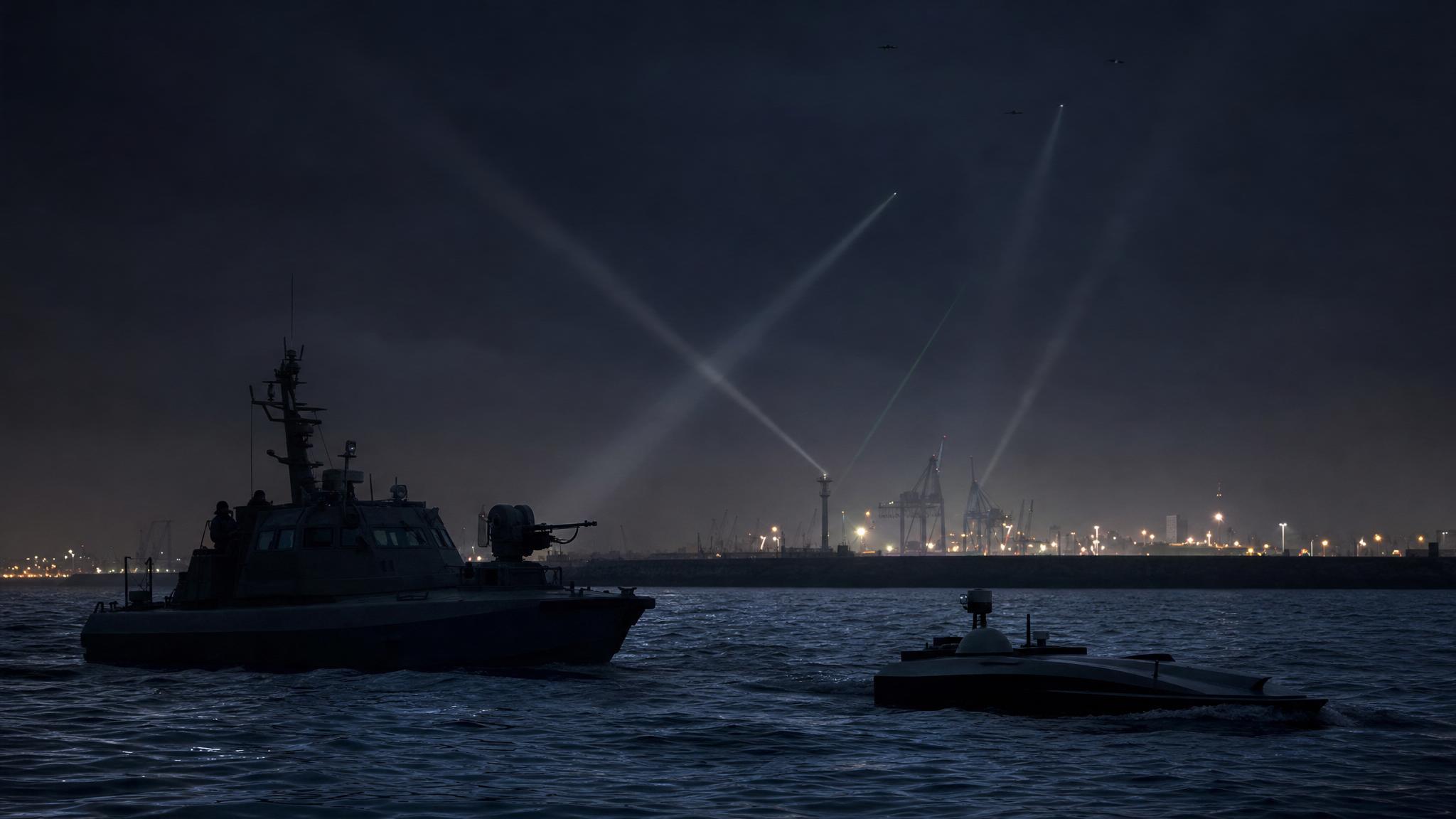
One dead sailor and five injured — too small a number for the military statistics of a great war, but too large for commercial shipping, which exists only under one condition: the sea must be more predictable than the front. On the morning of June 19, Ukrainian authorities reported that Russian drones attacked two civilian vessels flying the flags of Panama and Saint Kitts and Nevis in the Black Sea. According to Deputy Prime Minister Alexey Kuleba and the Odessa regional administration, one crew member died on the Panamanian vessel, two others were injured, one seriously; on the second vessel, three sailors sustained minor injuries. Vessel movement, as claimed by the regional head, then resumed with consideration of the security situation. In this last clarification lies the essence: the corridor operates, but no longer as civilian logistics, but as a military-political risk, daily reassessed by insurance companies, captains, and port administrations.
Maritime attack as a continuation of the strike on Moscow
The event cannot be separated from the previous days. On June 18, Ukraine delivered the largest strike on Moscow during the war, according to Russian data and Western assessments, involving hundreds of drones; the main target was the oil refinery in Kapotnya. The Guardian reported that this refinery supplies up to 40% of Moscow's gasoline and about half of the capital's diesel fuel, and the scale of the raid overwhelmed the dense air defense system around the city. ISW noted in its assessment for June 18 that repeated strikes on deeply echeloned areas like Moscow demonstrate Russia's inability to fully protect its own rear. The Russian political reaction was expected: Sergey Lavrov warned of regular mass coordinated strikes on Ukraine, and state media immediately shifted the discussion to the language of punishment and inevitable response.
However, the strike on foreign commercial vessels is not just another episode of a nighttime attack. It is a transfer of the logic of retribution from Ukrainian energy and cities to a space where third countries are present. The flag of Panama or Saint Kitts and Nevis does not in itself imply real control of these states over the vessel, but in maritime law, the flag creates a legal framework. When a drone strikes such a vessel, even if it serves a Ukrainian export route, Moscow is effectively telling not only Kyiv but also the market: the Ukrainian port corridor is not a normal commercial zone. This is an old Russian practice, familiar from Soviet pressure on maritime communications, but in a new technical form — a cheap UAV instead of a cruiser on the horizon.
Why Russia is once again pressuring shipping
From a military point of view, the strike on civilian vessels appears irrational: the tonnage does not destroy the Ukrainian army, and the international resonance is almost guaranteed. However, Russia's strategy in the Black Sea has long been built not on classic naval victory but on risk management. After the loss of the cruiser "Moskva," strikes on Sevastopol, and the gradual expulsion of the Black Sea Fleet from the western part of the sea, Russia has lost the ability to reliably control the water area with surface forces. Missiles, aviation, mines, drones, and information threats remain. In other words, the fleet as an instrument of presence is being replaced by the fleet as a source of danger.
For Ukraine, the maritime export corridor is significant, extending beyond grain. It demonstrates that a state, lacking a full-fledged fleet, is capable of opening and maintaining communication under fire. For Russia, this is politically humiliating: a country with a Black Sea Fleet is forced to watch as the enemy organizes commercial shipping near Odesa without large ships. Therefore, attacks on vessels should be read not only as an attempt to physically disrupt shipments but also as an attempt to restore the market's memory of the blockade of 2022. At that time, fear of Russian control was almost automatic; now it has to be produced anew, through nighttime strikes and reports of injured sailors.
The economic mechanism here is simple. If the risk of a voyage increases, insurance becomes more expensive; if insurance becomes more expensive, some shipowners demand a premium or refuse the route; if the route becomes irregular, Ukrainian export revenue and port infrastructure lose predictability. Russia does not need to sink dozens of vessels to achieve the effect. It is enough to maintain the probability of an attack above a level acceptable to commercial operators. In Soviet staff calculations, this would be called impacting the enemy's communications. In the reality of 2026, it looks like a strike by a small drone on the crew of a civilian vessel.
Drones are changing the meaning of the Black Sea war
The technical side requires caution: Ukrainian reports mention Russian UAVs, but open data does not yet allow for confidently identifying the type of aircraft. They could have been strike drones used against port infrastructure or munitions targeting an area along the route. What is important is something else. The Black Sea war is increasingly resembling a competition of cheap autonomous systems, coastal reconnaissance, and long-range strikes rather than a confrontation of ships. Ukraine uses maritime and aerial drones to pressure Russian bases, oil logistics, and ships; Russia responds with aerial drones targeting ports, warehouses, energy facilities, and now, according to reports from Kyiv, commercial vessels.
Here arises an asymmetry that is not readily acknowledged in Moscow. Ukraine, deprived of a traditional fleet, is forced to innovatively disrupt the rules of naval warfare; Russia, possessing a fleet, is forced to simulate control with means that poorly distinguish military targets from civilian ones. This is not technological superiority but institutional degradation of naval power. The Black Sea Fleet formally exists, but its political function is increasingly performed not by ships but by threats, mine warnings, and drone strikes.
The strategic effect will be measured not by the number of hits
The main question in the coming weeks is not how many vessels will be damaged, but whether Ukraine and its partners can maintain commercial routine. If movement quickly resumes after an attack, the Russian signal weakens: the market acknowledges the risk but does not capitulate to it. However, if insurance rates and refusals from shipowners begin to rise, Moscow will achieve a partial effect without the need to declare a formal blockade, which would require significant resources and create a direct confrontation with third countries.
There is also a diplomatic limit. Strikes on foreign flags are convenient for pressure as long as they remain a gray area and as long as the flag states do not have political weight comparable to Turkey, the United Kingdom, or the United States. But each such hit expands the circle of participants for whom the war ceases to be a land problem for Ukraine. Maritime trade does not favor heroism; it favors schedules. If Russia systematically attacks vessels heading to or from Ukrainian ports, the question will gradually shift from the category of Ukrainian air defense to the category of international shipping security.
My forecast is cautious. The Kremlin will likely continue targeted pressure on Black Sea routes, especially after painful Ukrainian strikes deep into Russia. But a full maritime blockade is currently unlikely: Russia lacks sufficient free surface force and the risk of political confrontation with neutral carriers is too great. Therefore, we will see not a blockade in the old sense, but its drone version — cheap, nervous, legally blurred, and therefore particularly dangerous. The war at sea is becoming not more extensive, but dirtier.
On June 19, 2026, Russian drones attacked two civilian vessels in the Black Sea, resulting in one death and five injuries among the crew. The vessels, flagged from Panama and Saint Kitts and Nevis, were targeted as part of Russia's strategy to disrupt maritime operations and exert control over shipping routes. This incident follows a significant Ukrainian drone strike on Moscow, indicating escalating tensions in the region.
- Two foreign vessels were attacked by Russian drones in the Black Sea.
- One crew member died and five were injured in the attack.
- The vessels were flagged from Panama and Saint Kitts and Nevis.
- The attack is part of a broader Russian strategy to exert control over maritime routes.
- Ukrainian authorities reported the incident and its implications for maritime safety.