
Two India carriers secure safe passage through Strait of Hormuz
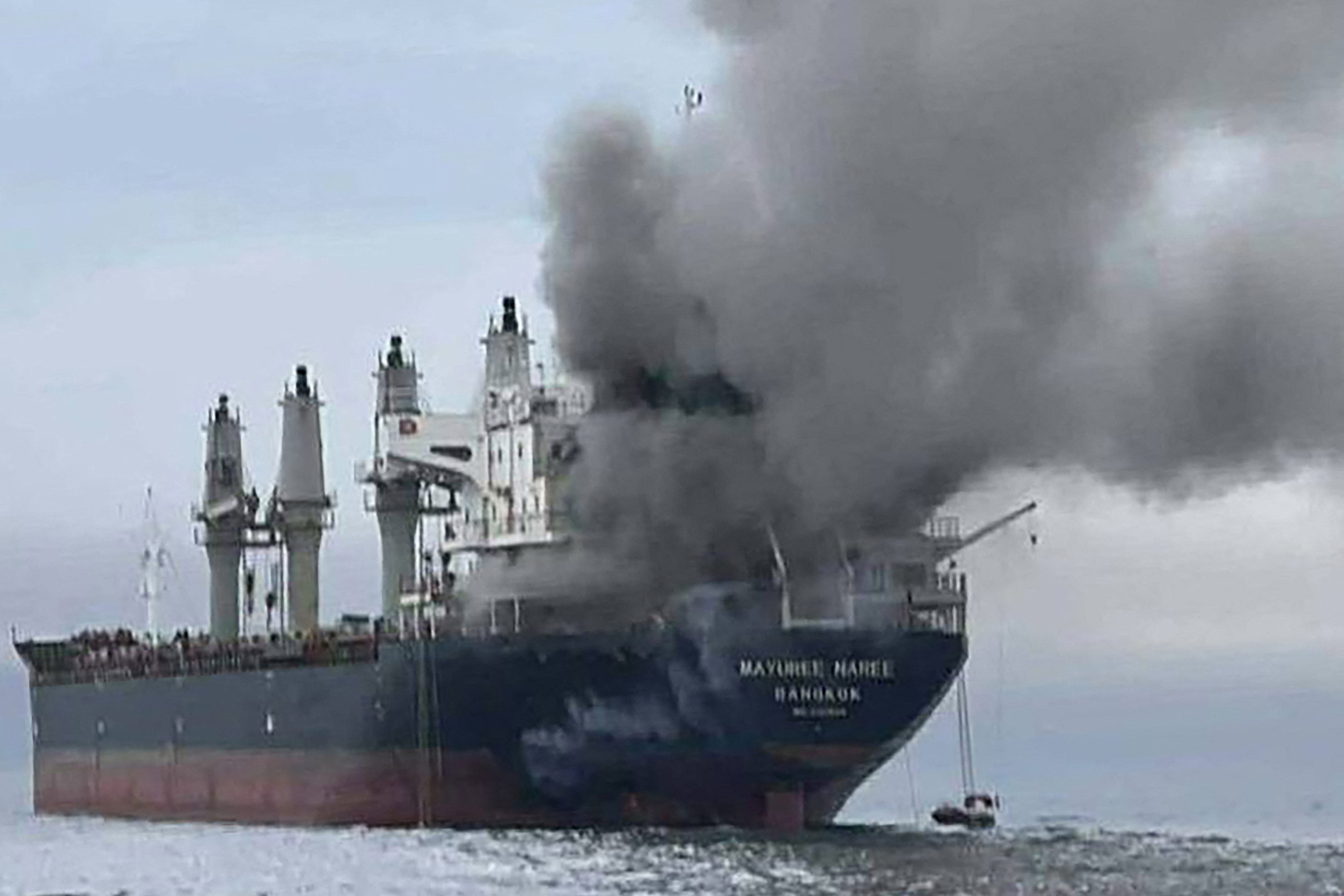
NEW DELHI — India secured the safe transit of two Indian flagged carriers carrying liquified petroleum gas through the Strait of Hormuz, which Iran has largely blockaded for commercial shipping as the conflict between the United States, Israel and Iran enters its third week.
The tankers crossed the strait Saturday after New Delhi stepped up diplomatic engagement to secure its energy imports.
India is also seeking safe passage for 22 of its vessels that remain stranded west of the strait, according to officials in New Delhi and Indian Foreign Minister Subrahmanyam Jaishankar has said that he is hopeful that talks with Iran will begin to ease shipping disruptions for the country’s vessels.
India has been grappling with severe shortages of cooking gas supplies since the targeting of several cargo vessels effectively shut off the narrow strait leading to the largest crude oil supply disruption in decades. Roughly half of India’s crude oil and liquified natural gas imports come through this waterway, which lies between Iran and Oman.
New Delhi, which has good relations with the United States, Israel and Iran, has maintained a neutral position on the conflict.
But it has intensified dialogue with Tehran amid the energy squeeze that it faces.
In an interview with the Financial Times, Jaishankar cited the passage of the tankers through the strait as an example of what diplomacy could achieve.
“I am at the moment engaged in talking to them, and my talking has yielded some results,” he said.
However he clarified that there is no formal “blanket arrangement” for Indian-flagged ships and that “every ship movement is an individual happening.”
“Certainly, from India’s perspective, it is better that we reason and we coordinate and we get a solution than we don’t,” Jaishankar said. “So if that sort of allows other people to engage, the world is better off for it.”
U.S. President Donald Trump said Sunday that his administration is talking to seven countries to send warships to keep the Strait of Hormuz open. “I’m demanding that these countries come in and protect their own territory because it is their territory,” Trump told reporters aboard Air Force One on the way from Florida to Washington. “It’s the place from which they get their energy.”
Trump did not name the countries, but previously in a social media post he had urged China, France, Japan, South Korea, Britain and others to help secure the waterway.
India’s foreign ministry said Monday that New Delhi has not engaged in bilateral discussions with the U.S. regarding deploying naval vessels to protect ships through the Strait of Hormuz.
Meanwhile, India has repatriated about 180 crew members of an Iranian warship that had sought sanctuary in India.
It was one of three Iranian warships that were sailing in the Indian Ocean after taking part in naval exercises hosted by New Delhi when hostilities erupted in the Middle East. One was torpedoed by a U.S. submarine while two were given refuge in India and Sri Lanka.
“That was a goodwill gesture. India is not the warring party so it was India’s responsibility to ensure their safety,” according to Chintamani Mahapatra, chairman of the Kalinga Institute of Indo Pacific Studies. “Iran allowing Indian ships to get through the Strait of Hormuz is a vindication of India’s policy of neutrality.”
Sri Lanka has also sent back the bodies of 84 Iranian sailors who died when the warship was sunk. Their bodies were recovered during a rescue operation mounted by the Sri Lankan navy.
India secured the safe transit of two Indian flagged carriers carrying liquified petroleum gas through the Strait of Hormuz on Saturday. This action follows intensified diplomatic engagement by New Delhi to ensure energy imports amid regional tensions. Indian officials are also negotiating for the safe passage of 22 additional vessels stranded west of the strait, highlighting India's strategic interests in the area.
- India secured the safe transit of two carriers through the Strait of Hormuz.
- The carriers were transporting liquified petroleum gas.
- India is negotiating for the safe passage of 22 additional vessels.
- India has maintained a neutral position in the ongoing conflict.
- Indian Foreign Minister expressed optimism about easing shipping disruptions.