
Two Pilots of the Naval Aviation Force in the Southern Theater Command Sacrificed; 2026 High-Intensity Training Exposes Transformation Pressure
 Li Minghui
Two Pilots from the Southern Theater Command Naval Aviation Sacrificed, High-Intensity Training in 2026 Exposes Transformation Pressure
A detail disclosed by the South China Morning Post on July 10 is more noteworthy than the headline itself: both sacrificed PLA pilots were from the Southern Theater Command Naval Aviation, and both incidents occurred during flight training missions around June 10. Public information does not specify the aircraft type or whether it was the same incident, but local government obituaries, Hefei Daily, and subsequent reports piece together a clearer picture—this was not ordinary flight hour accumulation, but high-intensity training close to frontline task environments.
The Training Portrait Behind Two Names
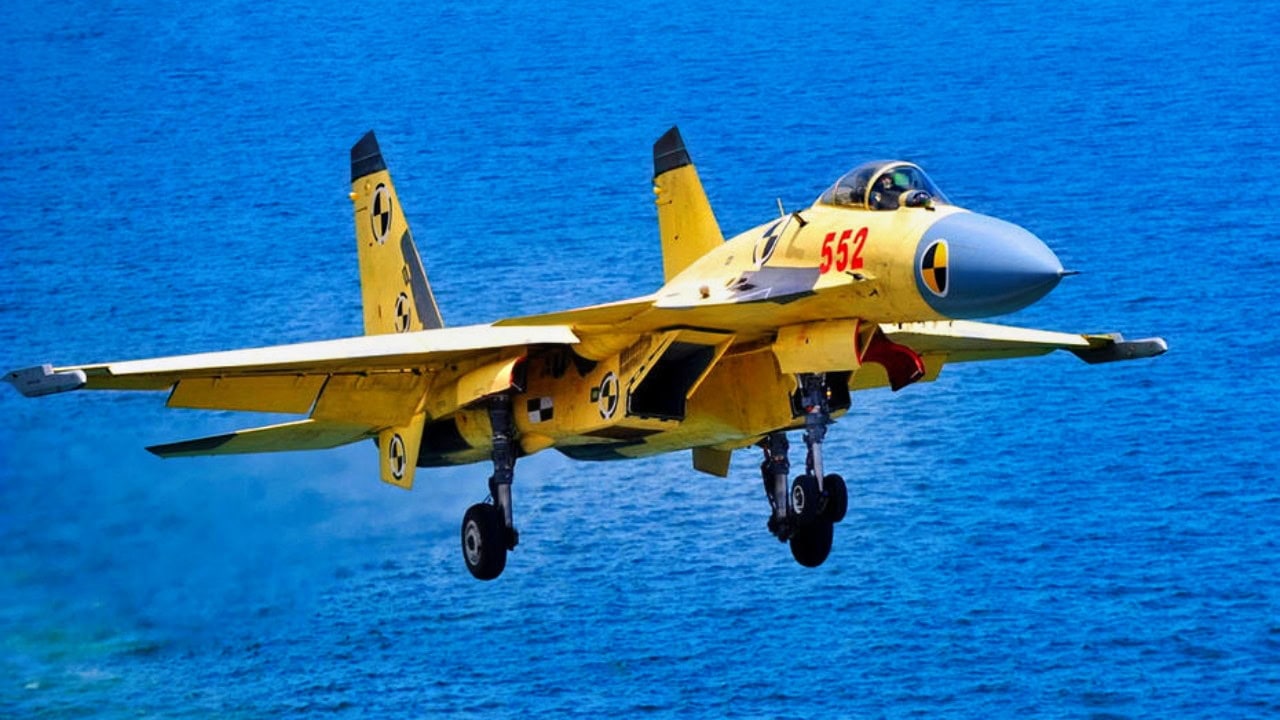
The first is Fang Ming, 38 years old, a naval colonel, who served as the tactical commander of a unit in the Southern Theater Command Naval Aviation. The Lujiang County government and local media revealed that he enlisted in 2006, was awarded third-class merit in 2018, and second-class merit in 2022 for combat readiness training. He recently sacrificed his life while executing a flight training mission and was posthumously recognized as a martyr by the political work department of the Southern Theater Command Naval Aviation. The second is Shi Shaoyong, 25 years old, a first-class pilot, belonging to the 91911 unit of the Southern Theater Command Naval Aviation. Reports indicate he sacrificed his life during nighttime flight training and had actively applied to participate in frontline tasks in the South China Sea.
When looking at these two profiles together, the amount of information is significant. Fang Ming was not just an ordinary flight instructor but a tactical commander, indicating that the training subjects likely involved formations, mission command, or complex air situation handling; Shi Shaoyong represents the new generation of pilots supplementing frontline units. One is a key commander, and the other is a new combat force; such losses are not light for any air power.
Why the Southern Theater Command Naval Aviation Faces the Greatest Pressure
The operational area of the Southern Theater Command Naval Aviation is inherently more complex than inland training grounds. The South China Sea direction includes subjects such as long-range patrols, island and reef support, maritime search, low-altitude penetration, nighttime navigation, and complex weather conditions; at the same time, it must coordinate with surface vessels, shore-based radar, electronic warfare, and anti-submarine forces. In simple terms, pilots are not just flying the aircraft but must complete missions under the backdrop of sea and sky, in a strong electromagnetic environment, and under long-duration pressure.
In the past, discussions about the PLA's air and naval transformation often focused on equipment nodes like the Fujian aircraft carrier, J-35, J-15T, and KJ-600. However, the truly challenging part for naval aviation is compressing new equipment, new tactics, and pilot training cycles into the same time window. Carrier aviation, shore-based naval aviation, helicopter anti-submarine operations, and unmanned reconnaissance are all accelerating, but the human experience curve cannot simply be extended like a production line.
Public Information Still Lacks a Key Link
Currently, public information leaves at least four gaps:
- It has not been confirmed whether the two died in the same incident.
- The aircraft type involved has not been disclosed; foreign media reports suggest that the 91911 unit may operate helicopters, but this can only serve as a clue, not a conclusion.
- The training subjects have not been made public, making it impossible to determine whether it was tactical low-altitude, nighttime navigation, maritime search, or complex formations.
- The cause of the incident has not been explained, and it cannot simply be attributed to equipment failure or human error.
The author believes that the most important thing to avoid is simplifying such events into the notion that "the more realistic the training, the more accidents will inevitably increase." This statement sounds reasonable but is too simplistic. The hallmark of a mature modern air force is precisely the ability to reduce accident rates under high-intensity training. The U.S. Navy, Russian naval aviation, and Indian carrier-based aircraft units have all proven that the bottleneck in complex maritime aviation training is often not the performance of individual aircraft, but rather maintenance support, flight safety culture, simulator quality, and the depth of the instructor pool.
After Equipment Modernization Comes Human Modernization
In recent years, Chinese military industry has resolved many "whether or not" issues: mass production of third-generation and a half aircraft, systematic deployment of early warning aircraft, updates to carrier-based aircraft, and enhanced long-range base support capabilities. However, the recent information leak from the Southern Theater Command Naval Aviation reminds us that the next challenge is whether they can "continuously and stably utilize" these capabilities. The training cycle for a tactical commander typically spans over ten years, and for young pilots to progress from qualified to independently executing missions in the complex environment of the South China Sea is not something that can be resolved in just a few hundred hours.
The South China Morning Post reported that Beijing has not issued a public statement regarding the sacrifice of the two pilots, and relevant information mainly comes from local government obituaries and regional media reports.
This also raises a management-level question. Moderately disclosing training accidents does not necessarily weaken the military's image; rather, it can allow the outside world to see training risks, institutional improvements, and respect for soldiers. What is truly worth observing is not whether this incident will be reported by more media, but whether the Southern Theater Command Naval Aviation will adjust its training rhythm in nighttime navigation, low-altitude maritime operations, and complex weather conditions.
Two pilots from the Southern Theater Command Naval Aviation died during high-intensity flight training near the South China Sea on June 10, 2026. One was a tactical commander, and the other was a first-class pilot who had requested frontline duty. The incident highlights the challenges faced by naval aviators in complex training environments.
- Two pilots from the Southern Theater Command Naval Aviation died during training on June 10, 2026.
- One pilot was a tactical commander, and the other was a young first-class pilot.
- The training involved high-intensity scenarios close to frontline conditions.
- The specific aircraft type involved in the incident has not been disclosed.