
Two U.S. Soldiers Killed as U.S.-Iran Conflict Escalates
[Global Times reporter Xian Yifan, Global Times special correspondent Yu Jian] After two U.S. soldiers were killed on the 17th by Iranian ballistic missiles and drone attacks in Jordan, the U.S. military began a new round of airstrikes against Iran on the 18th, Eastern Time. According to AFP, the Iranian military launched retaliatory actions on the 19th, and air defense alarms sounded in Kuwait, Bahrain, Jordan, and other countries that day. Prior to this, Iran's Supreme Leader Ayatollah Ali Khamenei issued a statement saying that the U.S. had repeatedly violated the memorandum of understanding signed with the Iranian president, proving that the U.S. president's signature was "worthless and invalid." "As the conflict escalates, the U.S. and Iran are gradually moving towards a larger-scale war," the Wall Street Journal reported, stating that the targets of U.S. strikes have become broader, and more aircraft are being urgently deployed to the Middle East. Iran, in turn, has launched attacks on U.S. facilities located in other Middle Eastern countries. "Even if both sides are unwilling, it is possible to fall into a full-scale war," the report quoted analysts as saying.
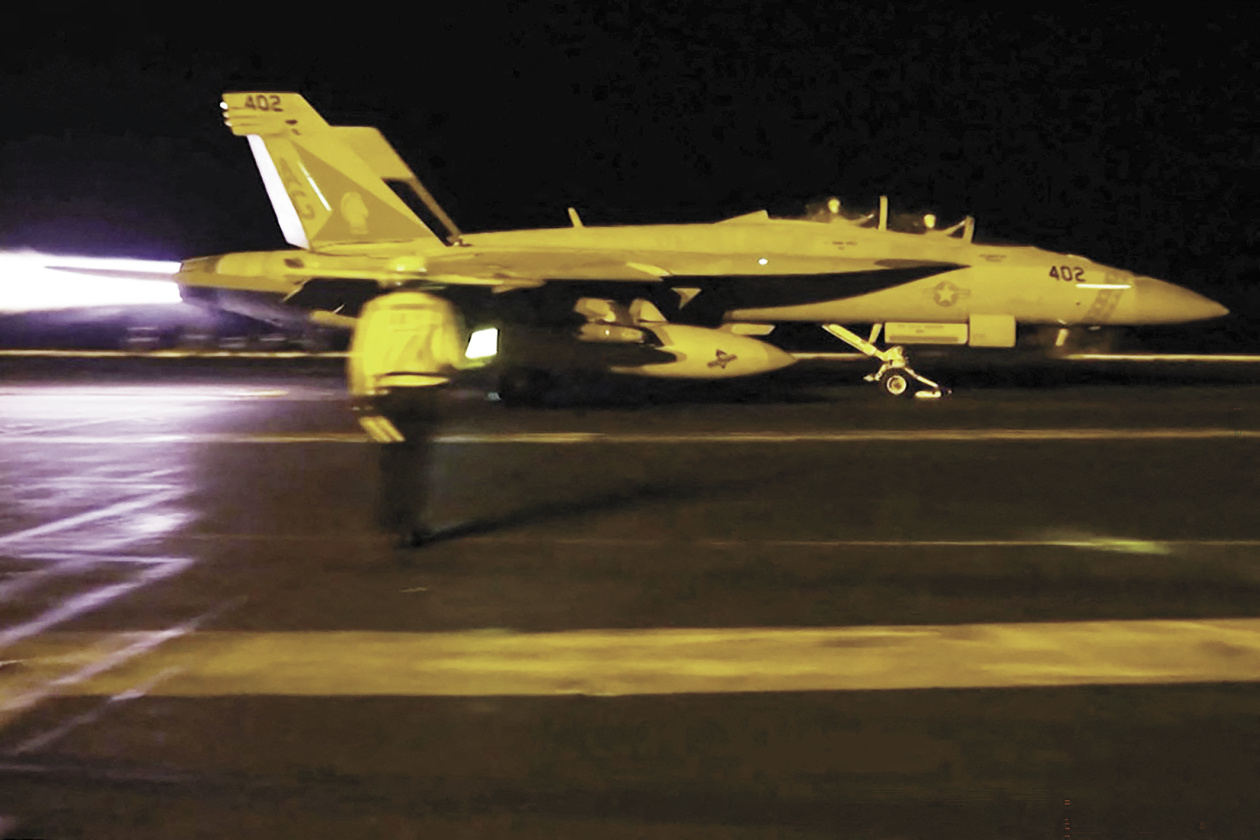
The number of U.S. military deaths rises to 16, with over 400 injured
The U.S. Central Command stated on the 18th that the airstrikes against Iran that day aimed to "further weaken Iran's ability to threaten shipping in the Strait of Hormuz and to swiftly punish the Iranian Islamic Revolutionary Guard Corps for the attack on the U.S. military base in Jordan on the evening of the 17th."
According to information released by the U.S., in the aforementioned Iranian attack, two U.S. personnel were killed, one was missing, and four were sent to the hospital for treatment. The New York Times reported that this was the fourth attack on U.S. forces in Jordan within five days and the first time U.S. soldiers had died from "hostile fire" since the ceasefire agreement with Iran took effect in early April. Since the large-scale military actions by the U.S. and Israel against Iran began in late February, the number of U.S. military deaths has risen to 16, with over 400 injured.
On the 18th, the U.S. State Department issued a global security alert, urging American citizens worldwide to remain vigilant, stating that tensions in the Middle East could lead to "unforeseen escalations." The alert also mentioned that U.S. diplomatic missions outside the Middle East have become targets for attacks. U.S. media reported that the last global security alert issued by the State Department was in March, during a time of intense U.S.-Iran conflict.
The Wall Street Journal quoted anonymous U.S. officials as saying that Iran has "adapted" to U.S. defense systems, with missiles flying at extremely high speeds and capable of maneuvering as they approach the ground. The New York Times on the 18th also cited U.S. officials stating that this series of attacks and the resulting damage indicate that the Iranian military not only still has ample missile stockpiles but has also improved its ability to evade U.S. air defense systems.
The report suggests that the ongoing expansion of attack ranges and intensification of strikes by both the U.S. and Iran shows "no signs of ending the fighting." According to Iranian media on the 18th, some bridges and roads in southern Iran were damaged. The seawater desalination plant located west of the city of Jask was attacked, leading to a complete interruption of drinking water supply for about 10,000 residents.
AFP reported that the Iranian military continued its operations on the 19th. The Kuwaiti and Bahraini militaries stated that they were responding to Iranian airstrikes that day. The Kuwaiti Ministry of Electricity, Water, and Renewable Energy announced that the country's power generation and seawater desalination plants were again attacked and caught fire. Additionally, the Israeli military stated that it and the Jordanian military intercepted missiles heading towards the southern Jordanian city of Aqaba.
The New York Times on the 18th stated that the U.S. has important air force bases in Jordan. On the eve of the outbreak of conflict and in the early stages after it began, the Pentagon transferred some troops stationed in Bahrain, the UAE, and Qatar to relatively safe locations in Jordan and Israel.
Iranian media: Time is not on Washington's side
Iran's Supreme Leader Ayatollah Ali Khamenei stated on the 18th that the U.S.-Iran memorandum of understanding has been violated again, further proving that "bullying, totalitarianism, and barbarism are an inseparable part of U.S. ideology and practice."
According to the Iranian Tasnim News Agency on the 18th, Iranian Deputy Foreign Minister Abbas Araghchi stated that Iran has stopped fulfilling the U.S.-Iran memorandum of understanding. He stated that the U.S.'s aggressive actions will yield no results. The Iranian news agency on the 19th reported that the commander of the Iranian Armed Forces' Khatam al-Anbiya Central Headquarters, Ali Abdollahi, issued a statement saying that the Iranian armed forces will deliver a devastating counterattack against any "barbaric actions" by the U.S.
The Iranian news agency recently published an article stating that the U.S. military does not have a complete military option to control the Strait of Hormuz. Time is not on Washington's side; if the U.S. military could waste unlimited time, the White House might be able to weaken Iran's ability to blockade shipping in the Persian Gulf to an acceptable level, but before achieving this goal, the economic and political costs incurred by the U.S. government would crush itself. The rise in crude oil prices, public aversion to war, and the depletion of advanced weapon reserves will all become core challenges that Washington must face.
CNN on the 19th analyzed that Gulf countries are increasingly worried about the ongoing escalation of U.S.-Iran conflict. The cycle of strikes and counterstrikes has become the norm, and tensions could evolve into a broader regional war.
Poll: Nearly 70% of Americans disapprove of the White House's handling of the Iran conflict
After confirming the deaths of two soldiers, Democratic Senator Jeanne Shaheen of the Senate Foreign Relations Committee wrote on social media, "The president must end this disastrous war through negotiation."
A recent poll conducted by The Washington Post/IPSOS shows that the American public generally holds negative views on Trump's handling of key issues such as the economy and Iran. Reports indicate that Trump's current overall approval rating is 37%, with a disapproval rating of 61%. Only 29% of respondents approve of his handling of the Iran conflict, while 69% disapprove. Additionally, only 28% of American respondents believe this war is worth fighting, while 68% hold the opposite view. Furthermore, a poll by The Economist/YouGov shows that nearly half of American respondents believe the war will last a year or longer.
"Trump owes the American people a better explanation regarding the Iran issue." The Atlantic published an article on the 19th with this title, stating that two more American soldiers have died, and the American public has the right to know why they died and how many more Americans the government will risk for this conflict. The war objectives in Washington have become unclear and chaotic, and it now has to deal with the crisis it has created itself. Georgetown University Qatar associate professor Masgrave told Al Jazeera that the U.S. is facing an unpopular and increasingly costly war.
Two U.S. soldiers were killed in Jordan by Iranian missile and drone attacks on October 17, prompting U.S. airstrikes against Iran on October 18. The U.S. military death toll in the conflict has risen to 16, with over 400 injured. Iranian military actions triggered air raid alerts in Kuwait, Bahrain, and Jordan, indicating a significant escalation in hostilities between the U.S. and Iran.
- Two U.S. soldiers killed by Iranian missile and drone attacks on October 17.
- U.S. conducted airstrikes against Iran on October 18.
- Total U.S. military deaths in the conflict rose to 16, with over 400 injured.
- Iranian military actions prompted air raid alerts in Kuwait, Bahrain, and Jordan.
- U.S. State Department issued global security alerts regarding the escalating conflict.