
UK firm tests TigerShark deep-strike drone
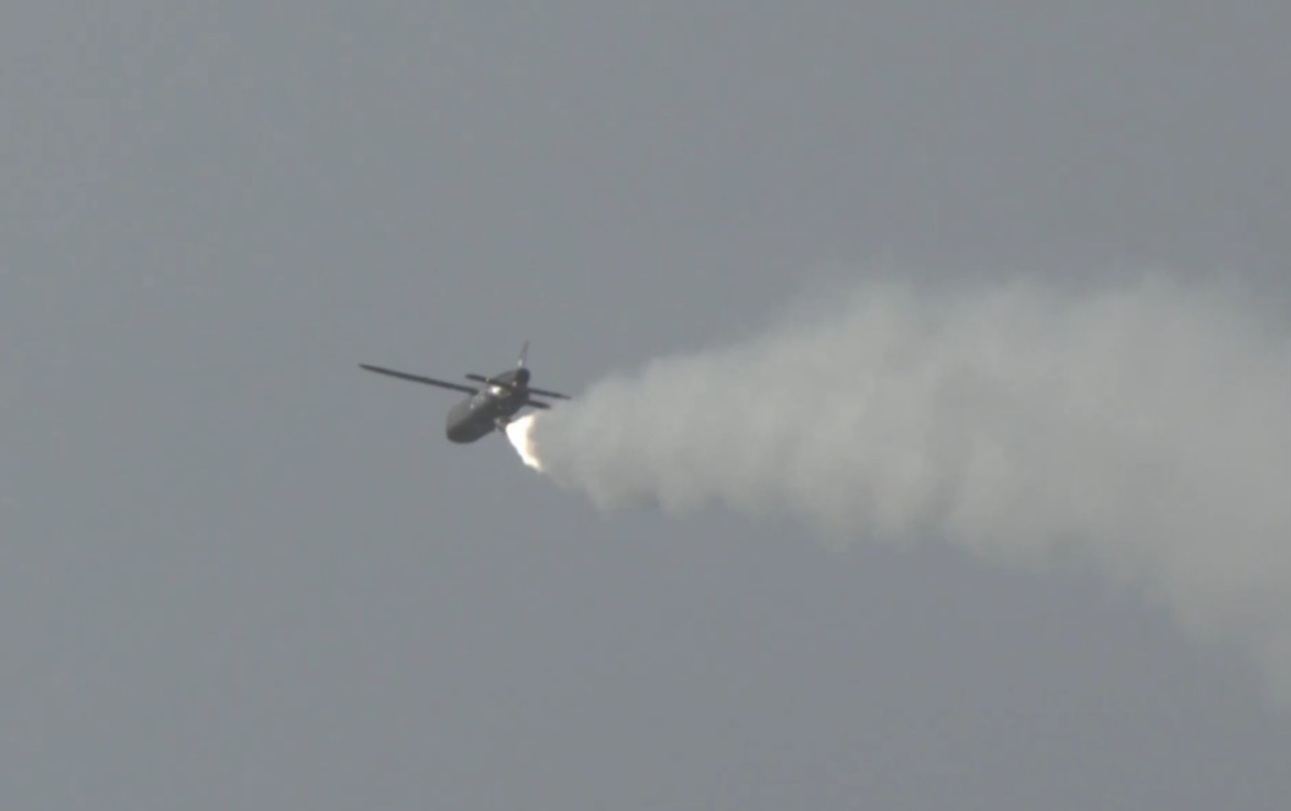
MGI Engineering said Tuesday it has completed the first successful flights of its TigerShark uncrewed deep-strike platform, marking a major milestone for a new long-range European autonomous strike system.
The first flights move the program beyond development and into active testing, introducing a platform built for long-range missions in high-intensity combat environments. MGI said TigerShark can reach speeds of 750 kilometers per hour, carry a 300-kilogram payload, and strike targets at ranges exceeding 1,000 kilometers.
One of the platform’s key features is its ability to operate in GNSS-denied environments, allowing it to continue missions even when satellite navigation signals are jammed or unavailable. That capability has become increasingly important as modern conflicts place heavy emphasis on electronic warfare and GPS disruption.
MGI developed the system in partnership with autonomy software firm Auterion, combining the air vehicle platform with an open, software-defined control architecture intended to support rapid updates and mission-specific reconfiguration.
“The successful launch of TigerShark is a defining moment for MGI,” said Mike Gascoyne, chief executive officer of MGI Engineering. “This platform exemplifies our approach to engineering excellence—rapid, agile, and mission-focused. Partnering with Auterion has allowed us to integrate world-class autonomous capabilities into a system designed from the ground up for flexibility and future growth. Together, we are delivering a solution that meets today’s needs while anticipating tomorrow’s challenges.”
Rather than locking the aircraft into a fixed configuration, the open-systems approach allows operators to integrate third-party payloads, sensors, and software more easily. That gives the platform broader flexibility for evolving mission requirements and shorter upgrade cycles.
Auterion said the software architecture is built to let the system evolve through software updates, a model increasingly favored in modern defense programs where capability upgrades are expected to move faster than traditional hardware redesign timelines.
“TigerShark marks a breakthrough moment for the development of European autonomous systems,” said James East, UK general manager at Auterion. “By combining MGI’s innovative platform design with Auterion’s open and secure software stack, we are enabling a new class of autonomous systems that can evolve at the pace of software. This partnership highlights how collaboration can drive meaningful advancements in capability, speed, and interoperability for end users.”
TigerShark is positioned as a deep-strike unmanned platform, meaning it is intended for long-range attacks against targets well beyond the immediate frontline. Such missions can include strikes on command sites, logistics hubs, air defense positions, or other high-value infrastructure.
Its combination of range and payload capacity places it in a category increasingly relevant to European defense planning, as armed forces across the region place greater emphasis on stand-off strike capabilities that reduce risk to manned aircraft and crews.
The platform is also being pitched for a broader set of defense and security missions beyond strike roles, with MGI emphasizing adaptability and ease of payload integration.
TigerShark’s first flights come at a time when long-range autonomous strike systems are becoming an increasingly important part of military modernization efforts, particularly in Europe, where demand for survivable deep-strike and GPS-resilient systems continues to grow.
Content preview only. Full article available at source. View Full Article
MGI Engineering successfully completed the first flights of the TigerShark drone in the United Kingdom. This unmanned deep-strike platform is designed for long-range missions, capable of speeds up to 750 km/h and payloads of 300 kg. It features the ability to operate in environments where satellite navigation is unavailable, making it suitable for modern military operations.
- MGI Engineering completed successful flights of the TigerShark drone.
- TigerShark can reach speeds of 750 km/h and carry a 300 kg payload.
- The drone is designed for long-range missions exceeding 1,000 km.
- It can operate in GNSS-denied environments, crucial for modern conflicts.
- The platform is intended for deep-strike missions against high-value targets.