
UK picks four firms to build autonomous wingmen for Apache helicopters
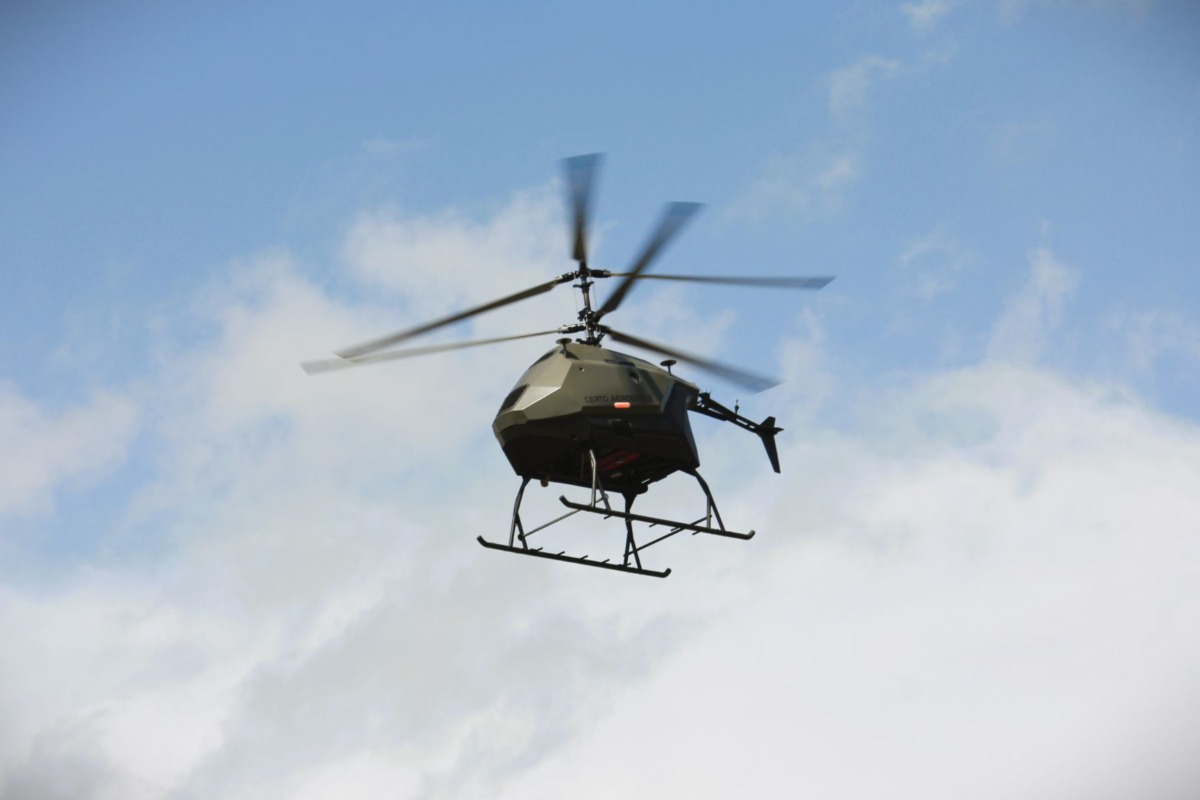
Britain’s Army is investing £10 million ($13.3 million) to develop autonomous drones that will fly alongside its Apache attack helicopters, with four industry partners selected Thursday to compete for a contract that could put loyal wingman technology in service by 2030.
The program, called Project NYX, represents the British Army’s most concrete step yet toward fielding fully autonomous unmanned aircraft as force multipliers for crewed aviation. Four companies secured contracts to develop competing drone designs: Anduril Industries (UK) Ltd, the British arm of the California-based defense technology firm that has built its reputation on autonomous systems; BAE Systems Operations Ltd, Britain’s largest defense contractor; Tekever Ltd, the Portuguese-British drone manufacturer that has supplied maritime surveillance systems to the Royal Air Force; and Thales UK Ltd, the British subsidiary of the French defense and electronics giant. All four will develop their designs over the coming months, with the Ministry of Defence intending to select up to two finalists to advance to prototype development in Autumn 2026.
The Apache helicopter that NYX drones will accompany is one of the most capable attack rotorcraft in service anywhere in the world. The British Army operates the AgustaWestland Apache AH-64E, a variant of Boeing’s AH-64 Apache built under license, armed with Hellfire missiles, a 30mm chain gun, and advanced targeting systems. A single Apache costs approximately £46 million, or around $61 million at current exchange rates, and carries a crew of two. Sending that aircraft and those personnel into contested airspace against adversaries equipped with modern air defense systems and drone swarms carries risks that the British Army is increasingly motivated to reduce, and Project NYX is the answer it has developed to that problem.
The concept of the loyal wingman, an autonomous or semi-autonomous aircraft that accompanies a crewed platform to extend its sensor reach, draw out enemy fire, and strike targets the crewed aircraft identifies, has been developing in air forces around the world for several years. Australia’s Ghost Bat program, developed by Boeing Australia and now designated the MQ-28A, is the most advanced publicly known example, designed to operate alongside F/A-18 Super Hornets and eventually F-35s. The United States Air Force has pursued similar concepts under its Collaborative Combat Aircraft program. Project NYX brings that logic to rotary wing aviation, a domain where the loyal wingman concept has seen less public development but faces the same threat environment as its fixed-wing counterparts.
According to the Ministry of Defence announcement, NYX drones will be capable of performing reconnaissance, precision strike, target acquisition, and electronic warfare in contested environments. The drones will operate fully autonomously, with Apache crews benefiting from the information they provide without needing to control them directly. The Ministry was explicit on one point that carries significant policy weight: all decisions resulting in the use of weapons will continue to be made by a human operator. That distinction keeps the program within the boundaries of the UK’s stated policy on autonomous weapons, which requires meaningful human control over lethal force decisions regardless of how autonomous the platform itself becomes.
The four selected partners bring meaningfully different technical approaches to the competition. Anduril, founded in 2017 by Oculus co-founder Palmer Luckey and now one of the most prominent new entrants in Western defense technology, has built its portfolio around autonomous systems including the Roadrunner interceptor and the Fury combat unmanned aircraft. BAE Systems brings deep institutional experience in British military aviation programs and the industrial infrastructure to sustain a fielded system at scale. Tekever, whose AR5 maritime patrol drone has operated with the RAF over the North Atlantic, offers proven autonomous endurance performance in operationally demanding conditions. Thales UK contributes expertise in sensors, electronic warfare, and human-machine interface design that will be directly relevant to how Apache crews interact with NYX systems in the air.
The program is being delivered in partnership with UK Defence Innovation, the Ministry of Defence’s delivery agent for rapid capability development, which is providing specialist engineering, commercial, and safety expertise alongside the industrial partners. The involvement of UKDI signals that Project NYX is being treated as a priority program rather than a long-cycle procurement, consistent with the urgency language in the Ministry’s announcement and the strategic defence review’s emphasis on autonomous technology as a core future capability.
Minister for Defence Readiness and Industry Luke Pollard framed the announcement in explicitly competitive terms, saying the UK is “not just keeping up with the future of warfare” but “driving it,” per the Ministry of Defence statement. Whether that claim holds up will depend on what the four partners produce by Autumn 2026 and which two the MOD selects to build prototypes.
Content preview only. Full article available at source. View Full Article
The British Army is investing £10 million to develop autonomous drones that will operate alongside Apache helicopters by 2030. Four companies, including Anduril Industries and BAE Systems, have been selected to compete for the contract. The NYX drones will enhance capabilities in reconnaissance and precision strikes while ensuring human control over weapon decisions. This initiative marks a significant step towards integrating autonomous systems into military operations.
- The British Army is investing £10 million to develop autonomous drones.
- Four companies have been selected to compete for the contract.
- The program aims to have drones operational by 2030.
- NYX drones will perform reconnaissance, precision strike, and electronic warfare.
- All weapon use decisions will remain under human control.