
Ukraine 2026 Patriot Shortage Gives Russia Its Last Real Argument
 Alexandra Reeves
Ukraine 2026 Patriot Shortage Gives Russia Its Last Real Argument
Russia has found the part of the war where Western rhetoric still outruns Western inventory. On 2 June, Moscow fired one of its heaviest combined missile and drone barrages of the year at Ukraine. The headline number was ugly enough: 729 long-range projectiles, according to Ukrainian air defence data reported by Le Monde, including 656 drones and 73 missiles. The more important number was narrower. Russia launched 33 Iskander-M ballistic missiles and eight 3M22 Zircon missiles. Only 11 of the Iskanders were intercepted. None of the Zircons were.
That is why Volodymyr Zelenskyy used his 3 June meeting with NATO Secretary General Mark Rutte in Kyiv to say the quiet part very loudly. Ballistic missiles, he argued, are Russia’s last remaining argument in the war. It was not a slogan. It was a procurement warning dressed as strategy.
The June 2 Attack Was a Test of Interceptor Depth
The attack killed at least 22 civilians and wounded more than 130, according to Associated Press reporting and Ukrainian officials. Kyiv and Dnipro took the worst of it. But this was not only terror from the air. It was a deliberate experiment in saturation, timing, and cost exchange.
Ukraine still performs well against slower targets. The Ukrainian Air Force reported very high results against Shahed-type drones and cruise missiles during the same strike package. Le Monde cited 26 interceptions out of 27 Kh-101 cruise missiles, three out of five Kalibr missiles, and roughly 92 percent of long-range attack drones destroyed or diverted. That is not a broken air defence system. It is a system being forced to fight the wrong mix with too few of the right interceptors.
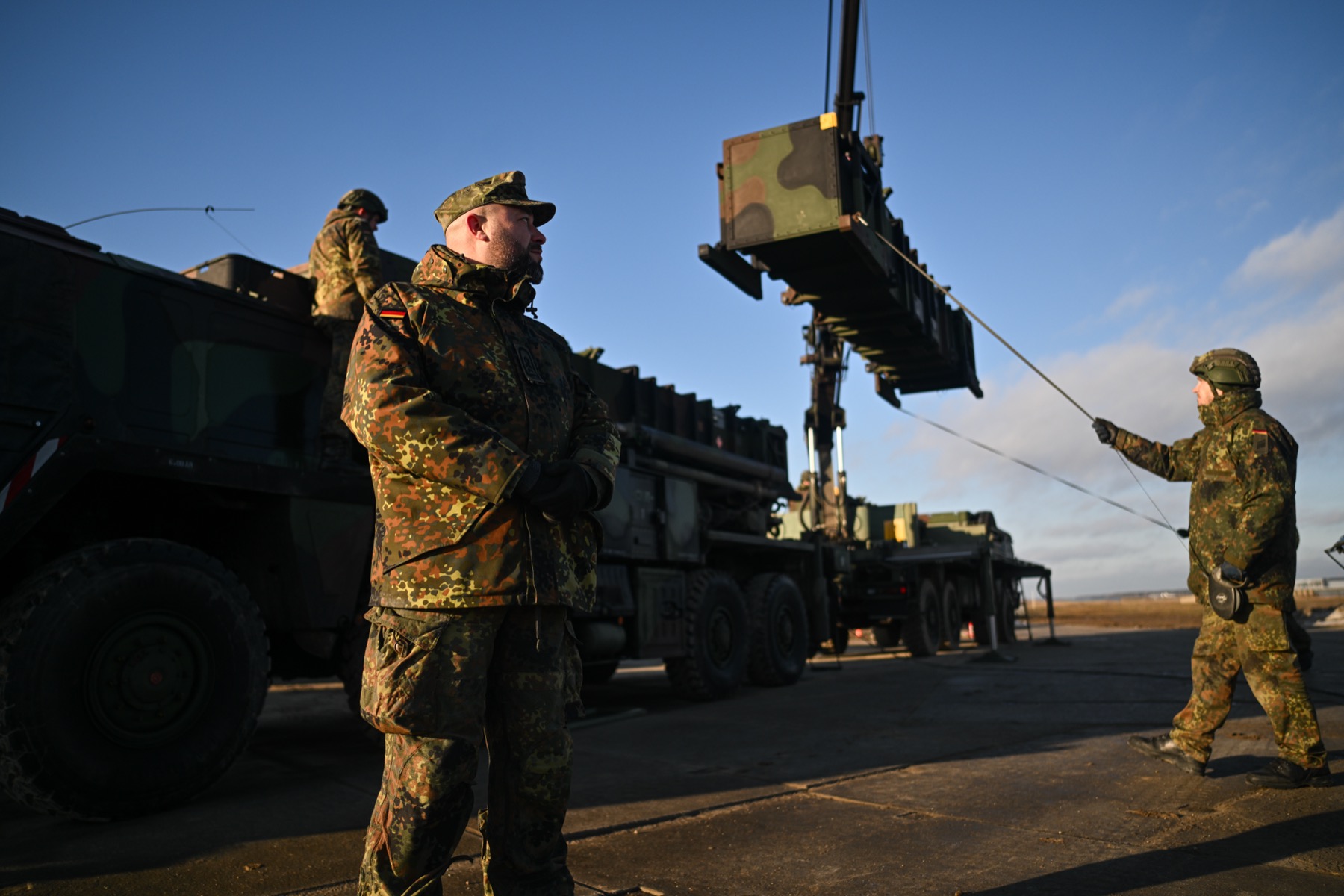
The gap sits around high-end ballistic and quasi-ballistic targets. Patriot PAC-3 and the Franco-Italian SAMP/T family are among the few systems that give Ukraine a credible shot against Iskander-M, Kinzhal, and now Zircon-class threats. They are also expensive, scarce, and politically slow. The ugly arithmetic is simple: Russia can choose when to spend missiles; Ukraine must choose which city gets the interceptor.
Zircon Changes the Psychology More Than the Map
Zircon is often treated like a wonder weapon, which is usually a mistake. No missile wins a continental war by itself. But speed changes the defensive problem. Ukrainian officials told Le Monde that the 2 June strike included two salvos of four Zircons each, launched from occupied Crimea and Russia’s Kursk region, converging on Kyiv. The missile can reportedly reach around three kilometres per second in its terminal phase. Even when Western systems can engage it, the reaction window is brutal.
That matters because Moscow does not need Zircon to be decisive. It needs Zircon to make Ukrainian and NATO planners behave as if every high-value city, command node, power station, and air defence radar might require a top-tier protective bubble. That is an impossible standard for Ukraine and an uncomfortable one for Europe.
Everyone in Washington and Brussels likes to talk about integrated air and missile defence. Here is the thing: integration is not a substitute for stockpiles. A beautiful command network cannot fire an interceptor that was never produced, never funded, or still sits in a national reserve because a government is saving it for its own crisis.
PURL Helps, But It Is Not Fast Enough Yet
The Kyiv meeting on 3 June was not symbolic theatre. NATO confirmed that the North Atlantic Council visited Ukraine with Rutte and held a NATO-Ukraine Council meeting in Kyiv. The Ukrainian presidency said partners made contributions to the PURL initiative in May and that more are expected in June. Six countries confirmed contributions that day, according to the presidential readout. Zelenskyy also thanked partners for Patriot missiles supplied through PURL and pushed for more speed and volume.
PURL matters because it channels allied money into priority US weapons for Ukraine. In practice, that often means air defence missiles, the least glamorous and most politically important category of aid. A tank delivery can be photographed. An interceptor prevents a destroyed apartment block from becoming tomorrow morning’s headline.
But the programme does not remove the basic constraint. Europe has spent years underbuying air defence. The United States has global obligations, including the Middle East and Indo-Pacific. Ukraine is spending USD 45-50 billion annually on weapons production, according to Zelenskyy, but it cannot domestically manufacture its way into Patriot-class coverage overnight. Talks on producing Patriot systems in Ukraine or jointly with NATO partners are important. They are also a medium-term answer to a problem measured in nightly alerts.
Ukraine Is Answering Deep Strike With Deep Strike
The other half of the story is that Ukraine is no longer only absorbing punishment. Reuters reported, through The Star, that Zelenskyy said long-range strikes inside Russia allow Kyiv to negotiate from equal footing. The comment came after Ukrainian drones struck an oil terminal and naval base hundreds of kilometres away, with Associated Press reporting drones flying more than 1,000 kilometres to hit the St Petersburg area before Russia hosted its economic forum.
This is not revenge for its own sake. Kyiv is trying to make Russian energy infrastructure and military logistics pay a direct price for the missile campaign. That approach has strategic logic. Russia funds the war through hydrocarbons, feeds the front through rail and depot networks, and signals domestic strength through the idea that the war is distant from ordinary Russian life. Ukrainian deep strikes challenge all three.
Still, deep strike cannot replace air defence. It can impose costs, raise insurance rates, disrupt refining, and make Russian officials look less in control. It cannot intercept an Iskander over Dnipro. The uncomfortable answer is that Ukraine needs both: more capacity to hit the Russian war machine at depth and more Western interceptors to deny Moscow the payoff from ballistic coercion.
The Strategic Point NATO Should Not Miss
Rutte said in Kyiv that Russia is losing around 30,000 personnel each month and that pressure is meant to bring Moscow to negotiations. That may be right. Russia is bleeding men and money. But attrition does not automatically produce restraint. Sometimes it produces a search for narrower tools that still work.
For now, ballistic missiles are that tool. They let Moscow bypass much of the tactical failure on the ground and present Ukrainian civilians with a daily bill for Western slowness. They also test NATO credibility in a very specific way. Not whether the alliance supports Ukraine in principle. Whether it can move enough interceptors, production licenses, and anti-ballistic systems quickly enough to make Russian missile math stop working.
The next things to watch are concrete: June PURL pledges, actual Patriot and SAMP/T missile flows, any movement on licensed Patriot production, and whether Russia repeats the June 2 Zircon-Iskander mix. If the answer from NATO is another carefully worded promise, Moscow will understand it perfectly. It will fire again.
Sources
- Office of the President of Ukraine, 3 June 2026, Zelenskyy and Rutte statements on ballistic missile defence, PURL, and defence production.
- Le Monde, 3 June 2026, reporting on Russia’s June 2 Iskander-M and Zircon strike package and Ukraine’s interception rates.
- Associated Press, 2-3 June 2026, casualty figures and reporting on Ukrainian long-range drone strikes near St Petersburg.
- NATO, 3 June 2026, media advisory confirming the North Atlantic Council visit to Kyiv and NATO-Ukraine Council meeting.
- Reuters via The Star, 4 June 2026, Zelenskyy remarks on deep strikes and negotiating leverage.
On June 2, 2026, Russia launched a barrage of 729 long-range projectiles, including Iskander-M and Zircon missiles, targeting Ukraine, resulting in significant civilian casualties. Ukraine's air defense intercepted some missiles but struggled against the Zircon threat. NATO confirmed support for Ukraine's air defense during a meeting in Kyiv, emphasizing the need for more interceptors to counter Russian missile capabilities.
- Russia launched 729 long-range projectiles on June 2, 2026, including 33 Iskander-M and 8 Zircon missiles.
- Ukraine's air defense intercepted 11 Iskander missiles but none of the Zircon missiles.
- The attack resulted in at least 22 civilian deaths and over 130 injuries.
- Ukraine reported high interception rates against slower targets but struggles with high-end ballistic threats.
- NATO confirmed contributions to Ukraine's air defense initiatives during a meeting in Kyiv.