
Ukraine Can Build SCALP in 2026 but Volume Is the Real War
 Alexandra Reeves
Ukraine Can Build SCALP in 2026 but Volume Is the Real War
Everyone in Europe wants to call this a breakthrough. It is one, but not in the way the headlines suggest. Britain’s decision to let MBDA release classified information on the British-made components inside SCALP finally removes the legal and political choke point that had stalled Ukrainian assembly. According to the British prime minister’s office, that decision lets France and Ukraine move ahead with local assembly lines. The important word there is not SCALP. It is assembly.
That matters because Ukraine does not need another symbolic permission slip nearly as much as it needs repeatable industrial output under wartime conditions. Defense News reported this week that Kyiv now has the intellectual property and permissions needed to build the missile domestically after France provided a production license in July and Britain agreed to release the sensitive design details for its share of the system. That is a serious shift. It means the Western debate has moved from whether Ukraine should be allowed to build deep-strike weapons to whether Europe can help it produce them at useful scale before the next phase of the war hardens into a long industrial contest.
The political veto is gone
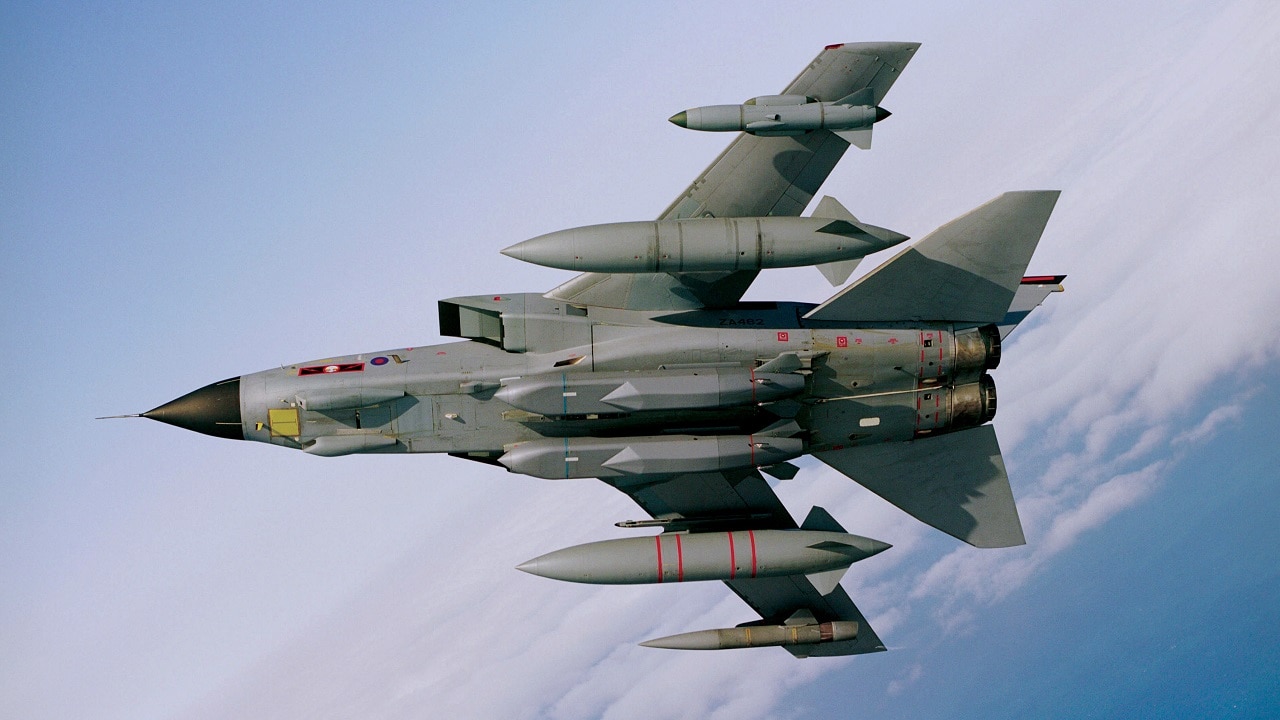
For months, the French-Ukrainian plan to assemble SCALP in Ukraine was constrained by one awkward fact: SCALP and Storm Shadow are effectively the same family of long-range cruise missile, and the British side of the technology stack could not simply be waved through. Burnham’s government has now done exactly what Ukraine needed most from London. It did not just pledge support in general terms. It approved the release of the protected design information that had turned a political promise into an industrial dead end.
That is why this story is bigger than one missile program. It shows the United Kingdom and France are no longer thinking only in terms of transfer packages. They are thinking in terms of licensed wartime production inside Ukraine. Those are different mental worlds. Transfers assume the donor remains the centre of gravity. Co-production assumes the war will last long enough that Ukraine must become part of the supply base itself.
The bottleneck has moved to the factory floor
This is where the hype runs ahead of reality. Defense News also noted that Ukraine is unlikely to produce large numbers of Storm Shadows in the near term because it lacks the specialized high-precision manufacturing equipment and protected industrial depth needed for this class of weapon. A SCALP is not a workshop drone. It is a complex long-range cruise missile that depends on high-end guidance, propulsion integration, quality control, and a supply chain that can survive Russian pressure. Permission is hard. Production is harder.
Britain’s own Project Brakestop is a useful reality check here. The Ministry of Defence says the program is trying to field low-cost ground-launched strike weapons with a range above 500 kilometres, a 225-kilogram warhead, speeds above 600 kilometres per hour, a target unit cost around £400,000 excluding the warhead, and output of at least 20 weapons a month within months of an order. In other words, even London’s lower-cost strike project is being judged by monthly production rates and cost discipline, not just by whether the missile works. Europe has finally started learning the obvious lesson from Ukraine: the relevant metric in a long war is not whether you can make one impressive weapon, but whether you can make the fifteenth batch on time.
Moscow understands the real meaning of this move
Russia’s response makes clear that the Kremlin sees the same thing. Reuters reported that Moscow warned it could strike British military targets in response to Ukrainian use of British missiles, while a Kremlin-linked adviser told the BBC that factories supporting Ukraine could face a “semi-military” response from unknown sources. That is not just nuclear theatre or diplomatic noise. It is a reminder that production chains are now targets. If missile assembly moves into Ukraine, the assembly line itself becomes part of the battlefield. If critical support remains in Britain or France, then sabotage, intimidation, cyber pressure and covert disruption become the cheaper Russian answer.
That is why the real escalation here is industrial, not just operational. A donated missile can be counted, photographed and eventually exhausted. A production line is different. It threatens to turn Ukraine from a customer into a producer. Moscow can live with periodic Western deliveries more easily than it can live with a Ukrainian strike complex that replenishes itself.
What this means for Europe
There is also an uncomfortable NATO lesson. European governments still talk as if long-range strike is mainly a policy question about permissions and red lines. It is not. It is increasingly a manufacturing question about tooling, component security, repairability, and protected throughput. Europe has spent too much of this war arguing over release authority and not enough time building the kind of dispersed missile industrial base that makes release authority strategically sustainable.
Ukraine’s SCALP assembly push exposes that weakness. The West’s most sophisticated answer to Russian mass has often been a boutique weapon in short supply. That can produce tactical shock. It does not automatically produce strategic endurance. If Ukraine can assemble SCALP domestically, Europe gains something valuable: a more resilient strike ecosystem and a smaller gap between political will and battlefield effect. But if output stays tiny, then this week’s announcement will be remembered as another European habit of confusing access with scale.
The hard question comes next
The easy part was saying yes. The hard part is whether Britain, France and Ukraine can protect the tooling, source the components, train the workforce and keep production moving under attack. That is the test that matters now.
The short answer is that this decision improves Ukraine’s long-term position, but it does not change the near-term balance by itself. It removes one Western bottleneck and reveals three industrial ones. Watch for three things next: whether MBDA-linked component flows become more explicit, whether Project Brakestop starts influencing Ukrainian strike production methods, and whether Russia shifts from public threats to a more aggressive sabotage campaign against the missile supply chain. Europe has cleared the licensing hurdle. Now it has to prove it can do the boring part of war better than Russia can disrupt it.
Ukraine is set to assemble SCALP missiles domestically by 2026 after Britain released classified information and France granted a production license. This development marks a significant shift in Ukraine's military production capabilities, although challenges remain in scaling up manufacturing. Russia has responded with warnings of potential strikes on British military targets related to the missile assembly.
- Ukraine can build SCALP missiles by 2026.
- Britain released classified information allowing Ukrainian assembly.
- France provided a production license for SCALP.
- Ukraine lacks high-precision manufacturing equipment for large-scale production.
- Russia warned of potential strikes on British military targets in response.