
Ukraine develops low-cost ballistic interceptor for pan-European defense
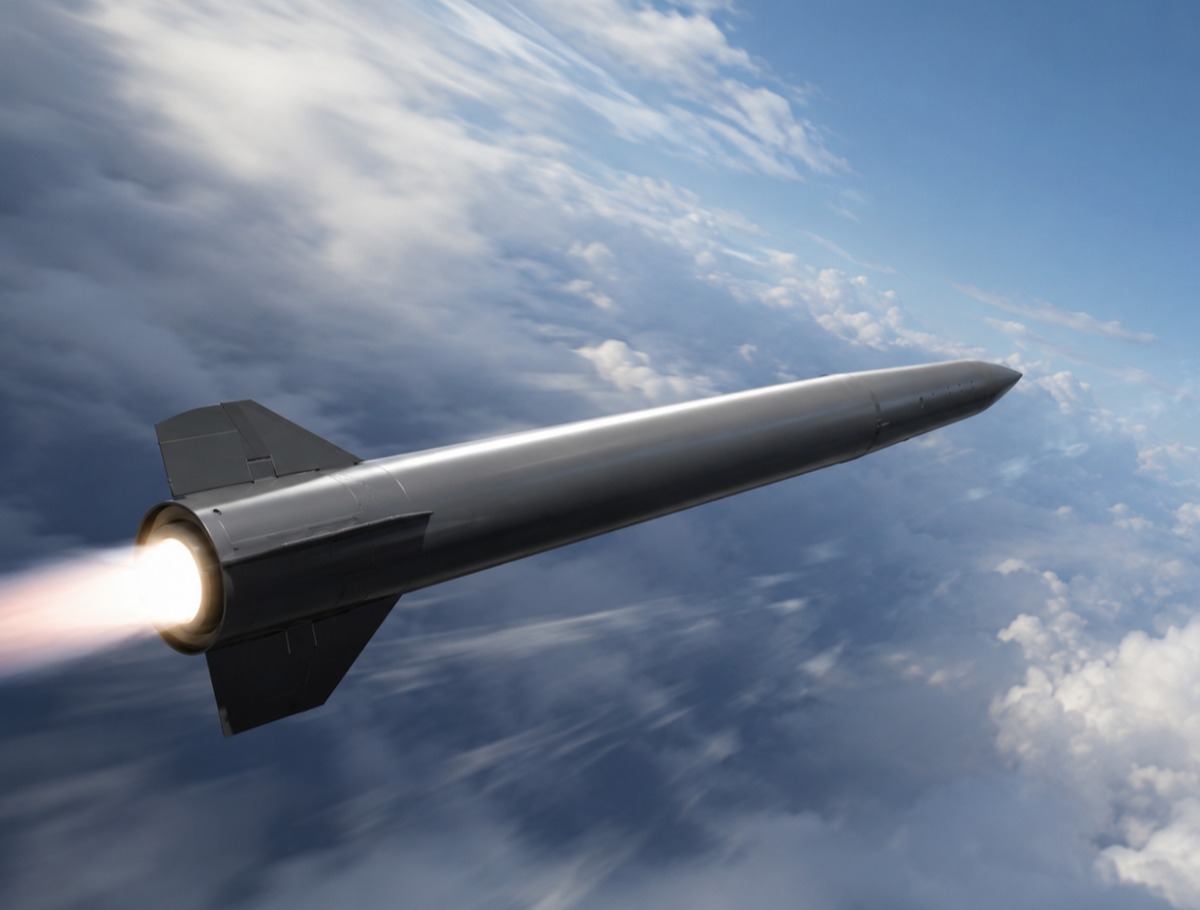
Ukrainian defense company Fire Point has joined an anti-ballistic missile coalition and unveiled a pan-European ballistic missile defense project called Freya, presenting a system architecture built around a domestically developed interceptor missile and designed to integrate with NATO-standard protocols and existing Western and Ukrainian air defense infrastructure.
“Despite attempts to interfere and many distracting factors, our caravan moves on,” Fire Point co-founder and chief designer of Fire Point Denys Shtilierman wrote. “Fire Point joins the anti-ballistic coalition. Soon interceptor missiles will be in the sky not only over Ukraine, but over all of Europe.”
The presentation materials attached to his post provide the most detailed public disclosure of the Freya project to date, covering the interceptor’s specifications, the system architecture, and the integration protocol.
The Freya project’s stated goal is to create a unified protected air and missile defense system focused on ballistic missile interception, independent of any single component manufacturer, according to the presentation. The core design principles are protection against ballistic threats as the primary mission, use of open-source technologies to minimize vendor dependency, horizontal and vertical scalability, and significantly reduced cost per intercept, particularly against ballistic threats. That cost reduction objective addresses one of the most acute operational problems Ukraine has faced throughout the war: the asymmetric economics of using expensive interceptor missiles against cheaper ballistic and drone threats at the volume Russia has been deploying them.
The interceptor at the center of the system is the FP-7.x, described in the presentation as a light, compact, and innovative ballistic threat interceptor manufactured from composite materials that significantly reduces the cost per shot. The specifications visible in the presentation are concrete: speed of 1,500 to 2,000 meters per second, length of 7.25 meters, outer diameter including the aerodynamic drag reducer of 1.15 meters, fuselage diameter of 0.53 meters, and an Image Infra-Red seeker for guidance. The semi-active homing seeker technology is supplied by Diehl Defence, a German defense company that produces guidance and fusing systems for a range of missile applications. The speed range of 1,500 to 2,000 meters per second, equivalent to roughly Mach 4.4 to Mach 5.9, places the FP-7.x in the high-velocity interceptor category necessary for engaging ballistic missiles during their terminal descent phase.
The system architecture surrounding the FP-7.x integrates components from multiple NATO-aligned suppliers across different functional roles. Long-range radar detection is planned using the SAAB Giraffe 8A/4A, the Thales Ground Master 400, or the Hensoldt TRML-4D, three established NATO-standard surveillance radars with different coverage and detection characteristics. Fire control and illumination radar options include the Weibel GFTR-2100/48 or the Leonardo KRONOS Land, both fire control radars capable of providing the continuous wave illumination that a semi-active homing missile requires to maintain its lock on a target. The launcher is described as a light mobile installation of the company’s own manufacture. The command center uses Kongsberg FDC with open technology architecture and Network Access Nodes — Kongsberg’s Fire Distribution Center is an established NATO fire control system used by multiple allied air defense programs.
The integration protocol that connects all these components is Link-16, the NATO standard tactical data link defined under STANAG 5516, which the presentation identifies as the key component for integrating the Freya system with Ukraine’s existing air and missile defense network. Ukraine signed a license agreement for use of the non-commercial NATO CRC System Interface on May 29, 2025, enabling Link-16 use, per the presentation. Ukraine’s Delta operational-tactical situational awareness system has already been integrated with the Link-16 protocol and connected to the network. The tactical communications channel uses the Asterix protocol for radar connectivity and a full-duplex datalink for FP-7.x course correction. The architecture also supports data exchange between components, weapons and military equipment, and voice and infantry communications.
The breadth of air defense systems already in Ukrainian service that the presentation lists as context for Freya’s development is striking: NASAMS, SAMP/T, Patriot, Crotale, IRIS-T, S-300, Buk, Gepard, Stormer, and others. The Kongsberg FDC’s open architecture, the presentation notes, allows Ukraine to implement its own integrations across that diverse inventory. This heterogeneous fleet of systems from different nations and technology generations is simultaneously Ukraine’s greatest air defense strength — redundancy and diversity make the network harder to defeat comprehensively — and its greatest integration challenge, since each system uses different protocols and command interfaces. Freya’s open-architecture approach directly addresses that challenge.
The presentation of Freya as a pan-European project rather than a purely Ukrainian national program is its most ambitious framing. Shtilierman’s assertion that interceptors will be in the sky over all of Europe, not just Ukraine, positions Fire Point as an aspirant to the broader European ballistic missile defense market at a moment when every NATO member is accelerating air and missile defense investment. The architecture’s use of standard components from SAAB, Thales, Hensoldt, Weibel, Leonardo, and Kongsberg alongside the Ukrainian-developed interceptor and launcher gives the system a genuinely multinational industrial character that supports that pan-European positioning.
Content preview only. Full article available at source. View Full Article
Fire Point has unveiled the Freya project, a pan-European ballistic missile defense initiative, aimed at developing the FP-7.x interceptor missile. This system is designed to integrate with NATO standards and existing air defense infrastructures across Europe. The project addresses the need for cost-effective interception of ballistic threats, leveraging open-source technologies and multinational components. A license agreement for Link-16 use was signed on May 29, 2025, enhancing Ukraine's air defense capabilities.
- Fire Point has joined an anti-ballistic missile coalition.
- The Freya project aims to create a unified air and missile defense system for Europe.
- The FP-7.x interceptor missile is designed to be cost-effective against ballistic threats.
- The system integrates NATO-standard components and protocols.
- Ukraine signed a license agreement for Link-16 use on May 29, 2025.