
Ukraine Gets More Patriot Batteries as Europe Pays the Bill
 Alexandra Reeves
Ukraine Gets More Patriot Batteries as Europe Pays the Bill
Ukraine did not just receive another air-defence system. It received a preview of how the next phase of the war will be financed.
President Volodymyr Zelenskyy said more U.S.-made Patriot systems are now in Ukraine and being put into operation. According to the Associated Press, he thanked Germany and Chancellor Friedrich Merz for the delivery, after Berlin said it would send two more Patriot systems once Washington agreed to prioritize replacement batteries for Germany. The BBC separately reported that the United States had resumed military supplies to Ukraine after a temporary pause, and that the new arrangement has NATO allies buying American Patriot systems before distributing them to Kyiv.
That sounds like a logistics story. It is not. It is a political settlement in hardware form: the United States keeps the production line, Europe carries more of the invoice, and Ukraine gets just enough protection to keep asking for more.
The Patriot Gap Is Now a European Problem
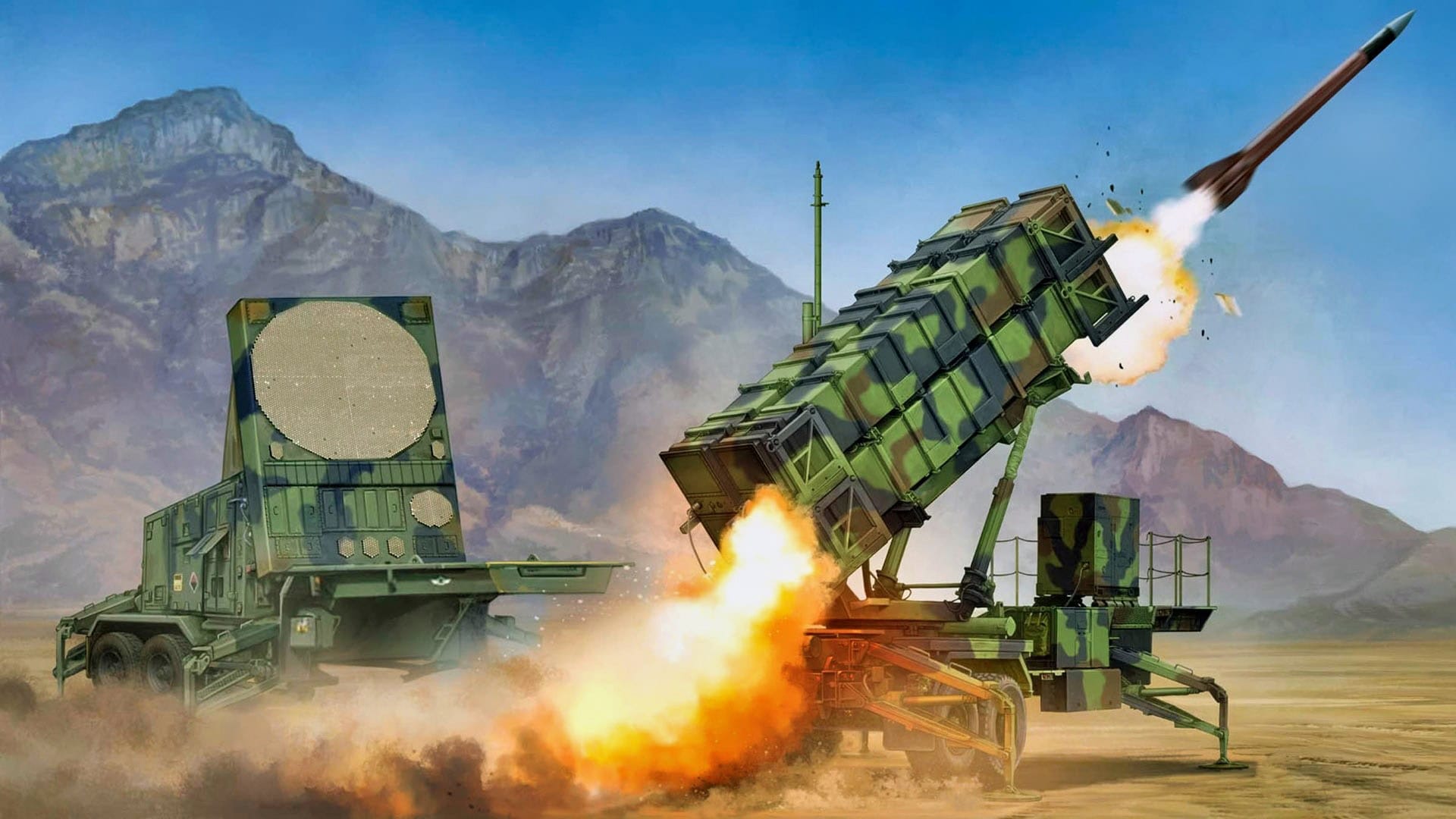
The Patriot matters because it occupies the narrowest layer of Ukraine's air defence. NASAMS, IRIS-T, Gepard, Soviet-era S-300s, mobile guns and electronic warfare can all help against aircraft, cruise missiles, and drones. But Russia's ballistic missile threat is a different category. Patriot is one of the few Western systems with a proven record against that problem in Ukrainian service.
The system is also brutally expensive and scarce. A Patriot battery is often described as roughly a billion-dollar capability once launchers, radar, control stations, support vehicles and missiles are counted. Interceptors are costly, production is limited, and every transfer creates a backfill problem for the donor. That is why the German move matters. Berlin was not simply giving Kyiv a battery; it was accepting that its own air-defence inventory could be temporarily thinned, provided the United States promised to replenish it.
Everyone in Washington likes to talk about burden-sharing until burden-sharing starts looking like this. Germany pays, Ukraine receives, the U.S. industrial base supplies, and NATO manages the political choreography. It is awkward, but it is probably the only model that scales.
Russia Has Forced the Alliance to Choose Quantity
The latest Patriot delivery comes after Russia intensified missile and drone attacks on Ukrainian cities and infrastructure. AP reported the new systems in the same context as overnight Russian drone strikes that killed a man and injured members of his family in Sumy. The BBC noted that Ukraine had recently been hit by a record 728 drones overnight, and that June produced the highest monthly civilian casualties in Ukraine in three years, citing UN figures of 232 killed and more than 1,300 injured.
Those numbers explain why Kyiv keeps asking for ten Patriot systems rather than one symbolic battery. Russia is trying to stretch Ukraine's defence across too many targets: Kyiv, Kharkiv, Dnipro, Odesa, energy nodes, drone factories, railway hubs, command sites, and civilian morale. A single Patriot battery can protect a high-value area. It cannot protect a country the size of Ukraine.
This is the uncomfortable part for NATO. The alliance has spent decades buying exquisite air-defence systems in small numbers. Russia is now testing whether small numbers can survive industrial-scale pressure. One Patriot battery in the wrong place is a billion-dollar monument to scarcity. Several batteries, backed by enough interceptors, become a defended network. Ukraine needs the second version. NATO mostly owns the first.
The Tomahawk Contrast Is the Point
The Patriot story is also worth reading alongside what Ukraine is not getting. CBC reported that President Donald Trump was not, for now, considering a deal that would allow Ukraine to receive long-range Tomahawk missiles, despite earlier discussion of a NATO-mediated purchase route. Tomahawks, with a range around 2,500 kilometres, would create a different escalation debate because they could reach deep inside Russia.
Patriots are politically easier. They are defensive, familiar, and tied to the protection of civilians and power infrastructure. But defensive does not mean strategically modest. By keeping Ukrainian cities and industry alive, Patriot batteries protect the war economy that produces drones, repairs armour, moves troops, and keeps the state functioning under bombardment.
That is why Russia keeps trying to overload the air-defence system rather than simply bypass it. Moscow understands that Ukraine's resilience is no longer just about trenches in Donetsk. It is about electricity, rail movement, repair plants, drone workshops, and the confidence of civilians who have to live under sirens. Air defence is home-front strategy.
Europe Is Buying Influence the Hard Way
The European role here is not charity. It is self-interest with a receipt attached. If Germany, Norway and other NATO members pay for U.S.-made systems, they are buying Ukraine time, but they are also buying themselves a say in the next phase of the war. A Europe that cannot provide air defence will not be taken seriously when it talks about security guarantees, ceasefire lines, or postwar deterrence.
There is a catch. Paying for American equipment does not fix Europe's own production problem. It may even make the dependence more visible. Patriot systems are manufactured in the United States, and European allies still need American backfill, American permissions, and American industrial capacity. The new model gives Europe more responsibility, but not full autonomy.
That is not a reason to dismiss it. It is a reason to be honest about what is happening. NATO is not suddenly becoming a self-sufficient European defence machine. It is improvising a wartime procurement arrangement because Ukraine cannot wait for Europe to relearn mass production.
What to Watch Next
The next indicator is not the headline number of batteries. It is interceptor flow. A Patriot launcher without enough missiles becomes a political photo opportunity. A steady pipeline of interceptors changes Russian planning, forcing Moscow to spend more drones and missiles for less effect.
The second indicator is backfill speed. If Germany receives replacement Patriots quickly, other European operators will be more willing to part with their own systems. If backfill drags, every future transfer will become a domestic political fight.
The third is whether Ukraine can integrate new batteries into a broader layered network rather than park them as isolated shields around obvious targets. Russia will probe seams, saturate sectors, and look for predictable deployment patterns. Kyiv's advantage comes from making those patterns harder to read.
The short answer is that Ukraine's new Patriots are good news, but not enough. The longer answer is less comforting: NATO has discovered that defending Ukraine from Russia now means putting European money into American factories at wartime speed. That may keep Ukrainian cities alive. It also tells us how thin the alliance let its own shield become.
Ukraine received additional U.S.-made Patriot air defense systems, with Germany agreeing to send two more. This follows intensified Russian missile and drone attacks on Ukrainian cities. The U.S. has resumed military supplies to Ukraine, indicating a shift in logistics and political dynamics within NATO regarding air defense support.
- Ukraine received more U.S.-made Patriot systems.
- Germany agreed to send two additional Patriot systems.
- The U.S. resumed military supplies to Ukraine after a pause.
- Russia intensified missile and drone attacks on Ukraine.
- Ukraine is requesting more Patriot systems to enhance air defense.