

Summary and Key Points: Expert Brandon J. Weichert profiles Russia’s Tu-160 “White Swan” Blackjack, the variable-sweep, 275-metric-ton, Mach 2-plus Tupolev bomber that first flew on December 18, 1981, and entered service in 1987. He tracks the 35-aircraft Soviet order, Ukraine’s 1999 transfer of eight bombers for energy debts, the Kazan Aviation Plant’s titanium vacuum-welding restart, the 2014 Tu-160M with NK-32 Series 2 engines, the Kh-555, Kh-101/102 and 6,500-kilometer Kh-BD missiles, and Moscow’s plan for 50 new airframes to wage BVR war.
Aviation History Still Flying: Russia’s Upgraded Tu-160 Blackjack White Swan Bombers are Distant Killers
Known as the “White Swan,” the Russian Tu-160 Blackjack strategic bomber first flew on December 18, 1981. It entered operational service in 1987. The Tu-160 has served in the Russian Air Force since then, surviving the collapse of the Soviet Union, the end of the Cold War, and Russia’s subsequent budgetary woes. But the Russians have been feverishly working on advancing the Tu-160 to make it better able to wage modern wars.
The four-engine aircraft features variable-sweep wings, allowing it to fly more efficiently at both higher and lower altitudes. Tu-160s have a maximum takeoff weight of around 275 metric tons and a top speed exceeding Mach 2. Unlike America’s B-2 Spirit long-range stealth bomber, or its replacement, the B-21 Raider, the “White Swam” was meant to deliver long-range missiles from outside of heavily defended airspace.
An Important Plane for Russia
That’s a particularly important feature of the Tu-160s, given the ongoing war in Ukraine and how beyond-visual-range (BVR) warfare has defined that conflict.
In fact, the Tu-160 has two internal rotary launchers that can carry up to 12 long-range cruise missiles.
The Soviet Union initially ordered 35 Tu-160s from the legendary Tupolev Design Bureau. Production ended once the USSR collapsed. Some Tu-160s remained in the newly formed, independent Ukraine after 1991. In 1999, the Ukrainians transferred eight bombers to Russia as part of an agreement involving energy debts. Ukraine dismantled some of the other Tu-160s. But the Russians, recognizing the strategic value of these planes, started modernizing their fleet during the early 2000s.
White Swans are, after all, the heaviest combat aircraft ever built and one of the world’s fastest operational strategic bombers. These planes are excellent. The Russians needed that capability. Moscow just needed to ensure those capabilities wouldn’t atrophy over time (hence the need for modernization).
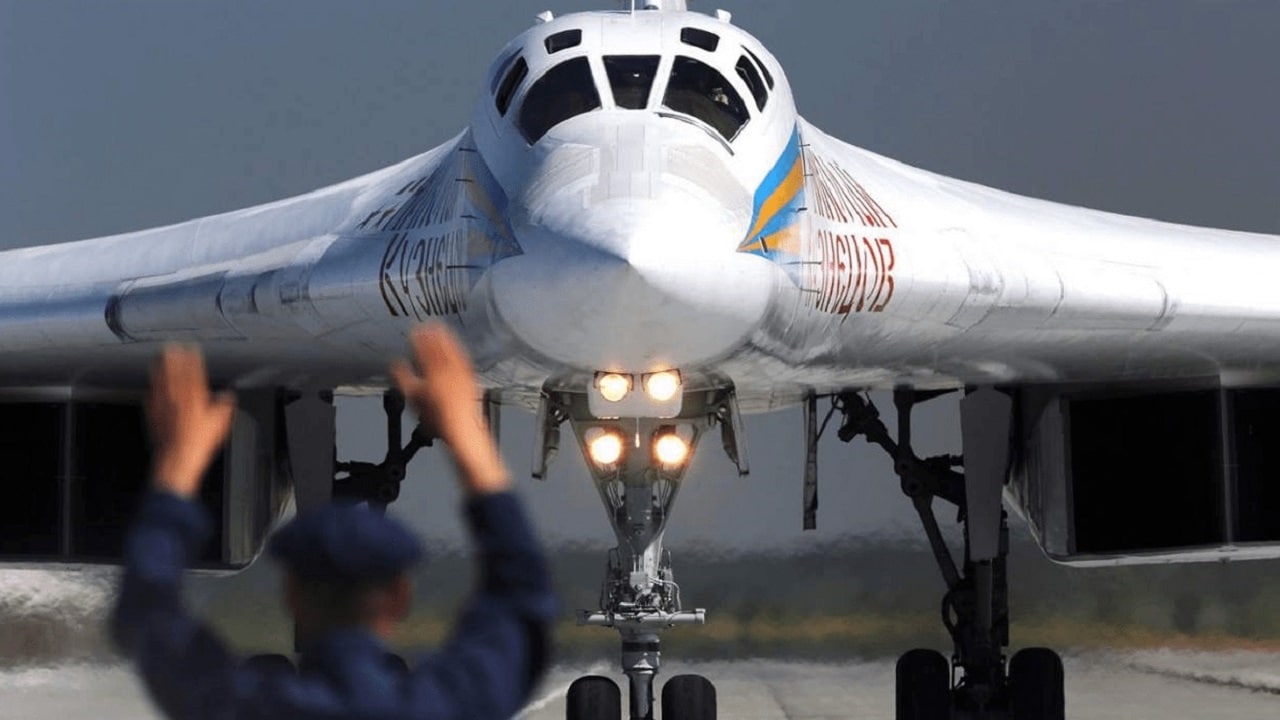
Russian Tu-160 bomber. Image Credit – Creative Commons.
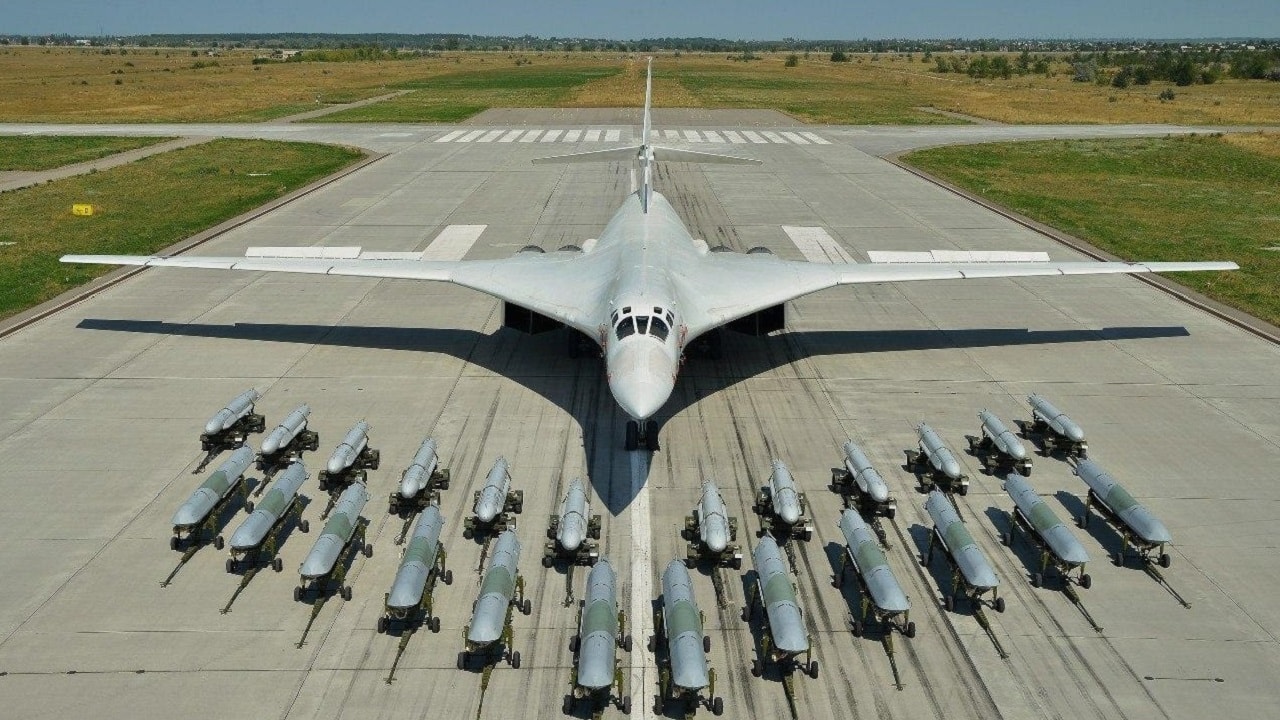
Russia’s Tu-160 bomber. Image Credit: Creative Commons.
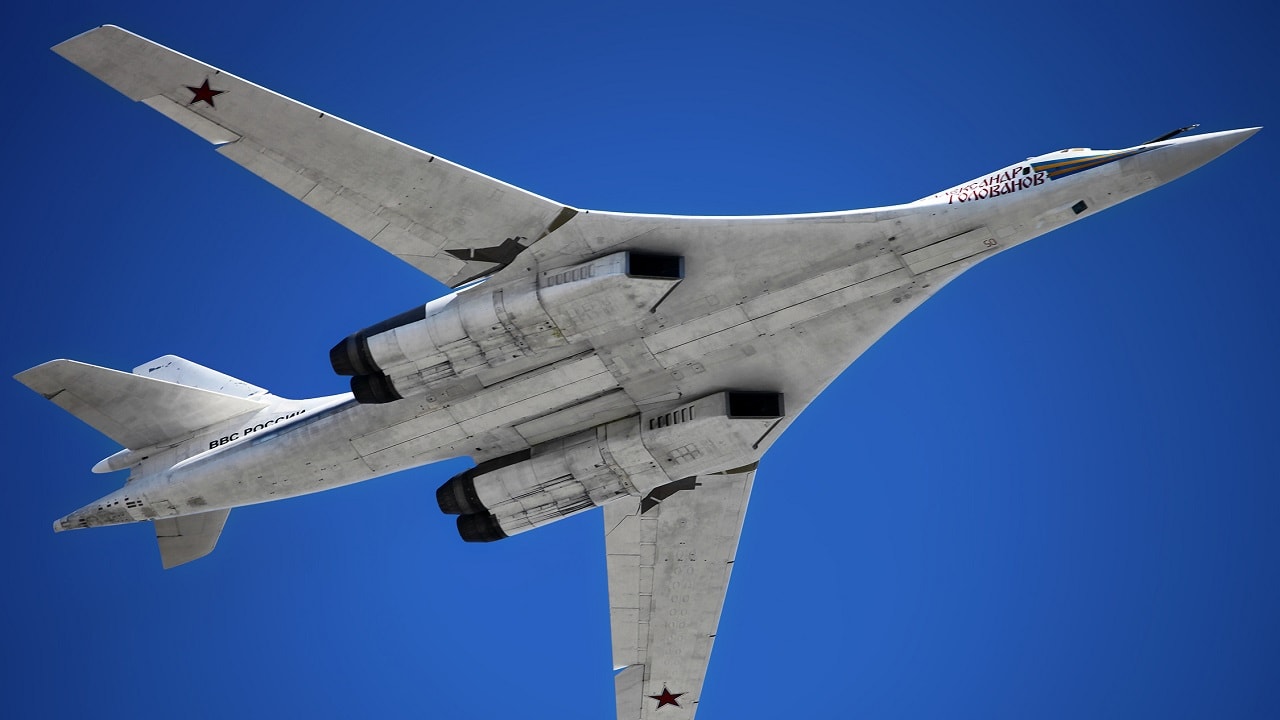
Tupolev Tu-160 at the 2013 Moscow Victory Day Parade.
Weapons for the Tu-160 Bomber
Russian engineers started upgrading the Tu-160’s navigation gear. They worked on the plane’s avionics. Engineers ensured the Tu-160 could carry Russia’s most modern cruise missiles, including the Kh-555, a conventionally armed derivative of the nuclear-capable Kh-55.
The Tu-160s are compatible with conventional/nuclear Kh-101/Kh-102 systems. Russian designers are also upgrading these birds to launch the long-range Kh-BD missile, with a reported range of up to 6,500 kilometers.
With the Tu-160’s operational range of roughly 12,000 kilometers, that’s quite impressive.
In 2006, the Kazan Aviation Plant delivered an early upgraded Tu-160 Blackjack. When the Kazan Aviation Plant restarted production, the Russians had to invest in specialized titanium vacuum-welding chambers to safely handle the Tu-160’s high titanium content. Given the added complexity and production costs, this shows how committed the Russians are to this plane.
After that, the Russians funded a more aggressive modernization campaign and produced the Tu-160M. These upgrades included improved navigation systems, digital flight-control equipment, and revised onboard electronics. In 2014, the first tranche of these upgraded planes entered active duty.
A second batch began modernization, introducing far more extensive changes. Upgrades included newer electronic countermeasures and better engines.
Russian engineers upgraded the NK-32 Series 2 turbofan engines, which offer about ten percent greater fuel efficiency and extend the bomber’s operational range to nearly 12,000 kilometers. They’ve fully rebuilt the cockpit into a digitized space, giving pilots and crews greater situational awareness.
Continuous Expansion Needed
Despite building around 35 original Tu-160s during the Cold War, Russia operates only about 10 to 18 modernized Tu-160M and newly built Tu-160M2 planes. Moscow desires a long-term plan to produce up to 50 new-build Tu-160M airframes while modernizing remaining Soviet-legacy airframes.
As the war in Ukraine rages, Russian long-range capabilities have been a key difference-maker in multiple battles. Ukrainian air defenses are better than the Russians anticipated, making it harder for Russian planes to operate with impunity above Ukraine, as Moscow had assumed they could before the war started. Now, it is clear that BVR warfare is the key element of the Russian air war. The Tu-160s offer that in spades. That is why the Russians are deeply committed to this Cold War-era platform (and why they want to modernize and expand the Tu-160 fleet so badly).
About the Author: Brandon J. Weichert
Brandon J. Weichert is the Senior National Security Editor at 19FortyFive.com. He also manages The Weichert Brief on Substack. Weichert also hosts “National Security Talk” on Rumble. He is the author of four bestselling national security books, most recently A Disaster of Our Own Making: How the West Lost Ukraine (Encounter Books). Follow him via Twitter/X @WeTheBrandon.