
Ukraine Hit Russia S-400 Shield Around Kerch in 2026
 Alexandra Reeves
Ukraine Hit Russia S-400 Shield Around Kerch in 2026
Kerch is supposed to be the protected hinge of Russia’s Crimea problem. On 26 June, Ukraine tried to make it look like a target folder instead.
The Security Service of Ukraine said its Alpha unit used drones to strike Russian military support vessels at the Zaliv shipyard in occupied Kerch and air-defence equipment guarding the Kerch Strait. The reported targets were not random. They included the Project 15310 cable ships Volga and Vyatka, the nearly completed cargo-passenger ferry Petropavlovsk, and components of an S-400 air-defence system. According to the SBU, the ship strikes caused a large fire, while the air-defence strike hit both weapons and radar equipment from the S-400 battery covering the strait.
Ukraine has attacked Crimea often enough that individual blasts can blur together. This one deserves more attention because it ties together three Russian vulnerabilities at once: the bridge corridor, the naval and shipyard infrastructure around Kerch, and the layered air-defence network that is supposed to keep Ukrainian long-range systems away from both.
The Kerch Strait Is More Than a Bridge

Western audiences tend to reduce Kerch to the Crimean Bridge. That is understandable; the bridge is politically symbolic and logistically useful. But the military geography is wider than a strip of concrete and rail. Kerch links occupied Crimea to Russia’s southern rear, anchors a maritime choke point between the Black Sea and Sea of Azov, and supports facilities that matter for surveillance, repair, ferry movement, and military sustainment.
The SBU claim about Volga and Vyatka is especially interesting. These Project 15310 vessels were being built for Russia’s defence ministry, according to the Ukrainian service. Their advertised purpose was to deploy elements of the Garmoniya hydroacoustic surveillance system for underwater military intelligence. The SBU also said the vessels could lay influence mines against ships, subsea pipelines, cables, and critical infrastructure. If that assessment is accurate, these were not ordinary harbour auxiliaries. They were part of Russia’s attempt to turn the northern Black Sea into a monitored and mined battlespace.
That matters because the Black Sea war has become a contest over invisible infrastructure as much as visible platforms. Russia lost the cruiser Moskva, pushed much of its fleet away from Sevastopol, and watched Ukrainian uncrewed surface vessels force a rethink of naval basing. A vessel that supports underwater surveillance and seabed denial is exactly the sort of asset Moscow needs if it wants to restore initiative without sailing large warships into Ukrainian reach.
Hitting the Shield Is the Real Point
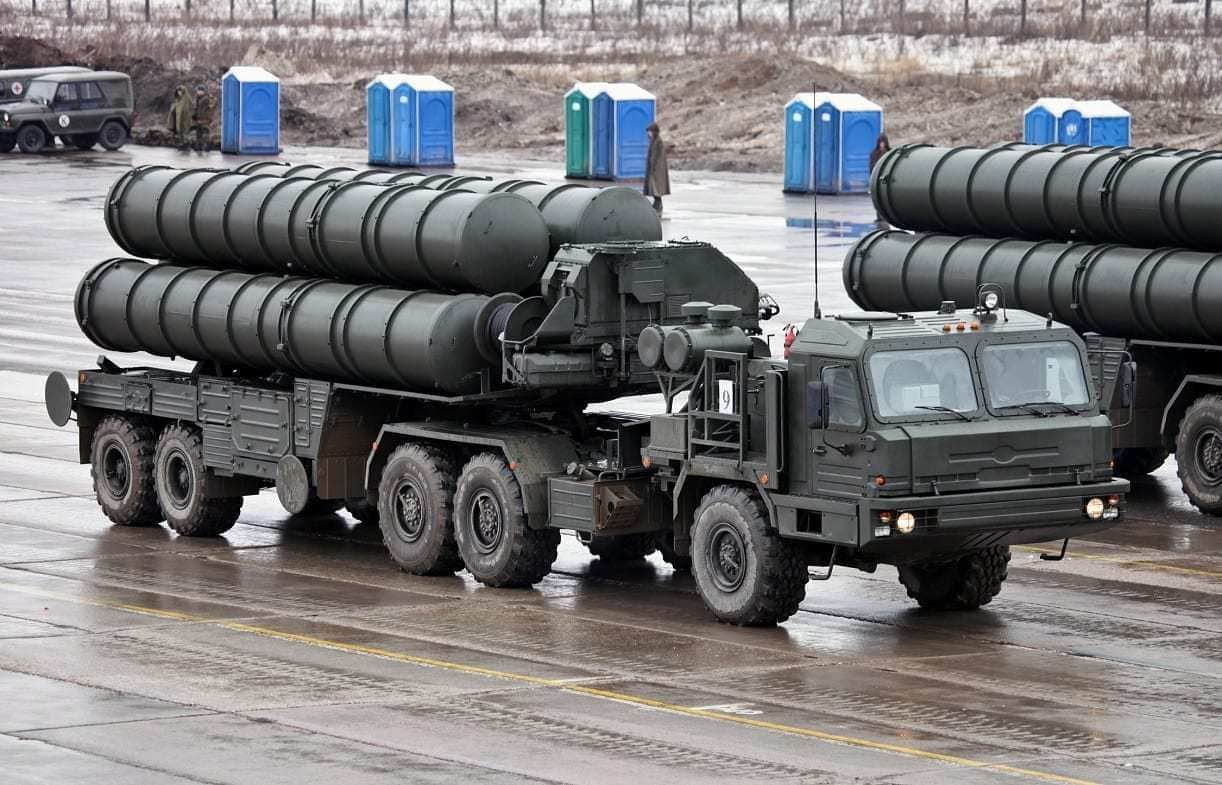
The S-400 element is the sharper strategic signal. Russia’s S-400 Triumf is designed as a long-range air-defence system, with engagement ranges often cited up to 400 kilometres when using the 40N6 missile against suitable aerial targets. In practice, its effectiveness depends on radar coverage, command links, launcher survivability, electronic warfare conditions, and the quality of the target picture. A battery is not a magic bubble. It is a network of machines that can be found, jammed, isolated, and hit.
Ukraine has spent the last two years teaching that lesson. Long-range drones, Neptune-derived systems, Storm Shadow and SCALP-EG cruise missiles, ATACMS where available, and uncrewed maritime platforms have all pressed Russian Crimea defences from different directions. The pattern is familiar: first stress the radars and launchers, then exploit the gap with follow-on strikes. The Kerch report fits that pattern. ISW’s 26 June Russian offensive campaign assessment cited Ukrainian claims of strikes on two military support vessels and air-defence assets in Kerch, placing the attack inside a broader Ukrainian campaign against Russian infrastructure in occupied Crimea and Russia’s rear.
There is an obvious caveat. Ukrainian security-service statements are wartime claims, and Russia does not reliably confirm losses of this kind. Satellite imagery, commercial fire detection, and later visual evidence usually decide how much of the initial claim survives. But even a partial hit against S-400 radar or launcher components around the Kerch Strait creates a local problem for Moscow. Russia can replace hardware, but moving scarce high-end air-defence assets into Crimea means pulling them from somewhere else.
The Donbas S-300 Strike Shows the Same Logic
The Kerch attack was not the only air-defence loss reported on 26 June. ArmyInform, citing Ukraine’s Spartan brigade of the National Guard, reported that drone operators from the Black Sky battalion destroyed two Russian S-300 launchers near Volnovakha along the Donetsk-Mariupol road. The brigade put the value of the destroyed equipment at roughly $50 million and said the systems had been used in a ground-attack role against frontline areas of Donetsk Oblast.
That detail is easy to miss, but it matters. Russia has repeatedly used S-300 missiles in a surface-to-surface role against Ukrainian cities and frontline settlements. It is an ugly workaround: a system built for air defence becomes an area-strike weapon when Russia has launchers and old missiles available. Destroying S-300 launchers near Volnovakha therefore has two effects. It strips air-defence capacity, and it reduces one local source of ballistic-style attacks against Ukrainian ground targets.
Put Kerch and Volnovakha together and the picture is not a single spectacular raid. It is Ukraine hunting the same category of Russian capability in different theatres: the systems that let Moscow protect logistics, punish civilians and troops from standoff range, and maintain the impression that occupied territory is safely behind the front.
Russia’s Crimea Dilemma Is Getting More Expensive
The standard assumption in many Western briefings is that Crimea is hard to retake but easy for Russia to hold. The first half of that sentence may still be true. The second half looks shakier every month.
Russia has to defend ports, airfields, fuel depots, rail links, bridges, command posts, radar sites, shipyards, ferries, and naval support infrastructure across a peninsula that Ukraine can increasingly reach. Every S-400 radar moved to Kerch is one not covering another airbase or industrial site. Every support vessel damaged at Zaliv delays some other Russian maritime programme. Every ferry or shipyard fire adds friction to a logistics system already forced to route around previous Ukrainian strikes.
This is where NATO should pay attention, not because Ukraine has found a silver bullet, but because it is demonstrating how a smaller force can impose air-defence exhaustion on a larger one. The alliance talks constantly about integrated air and missile defence. Ukraine is showing the reverse problem: how to disintegrate an opponent’s shield by forcing it to defend too many valuable nodes at once.
The uncomfortable conclusion is that Kerch may no longer be a rear area in any meaningful military sense. It is a defended target set, and defended target sets consume resources. If Ukraine can keep damaging the radars, launchers, vessels, and logistics nodes that hold Crimea together, Russia will face a choice it hates: accept more strikes on prestige infrastructure, or keep feeding scarce air-defence systems into a peninsula that no longer feels protected.
Watch the next satellite imagery, not the first Telegram claims. If fires at Zaliv, missing S-400 components, or repair activity around Kerch appear in commercial imagery, the 26 June strike will look less like another Crimea headline and more like a small but serious crack in Russia’s southern shield.
On 26 June 2026, Ukraine's Security Service (SBU) conducted drone strikes on Russian military support vessels and S-400 air-defense systems in Kerch, Crimea. The operation targeted key assets, including the Project 15310 cable ships Volga and Vyatka, causing significant damage and highlighting vulnerabilities in Russia's defense capabilities. This action is part of Ukraine's ongoing campaign to disrupt Russian military infrastructure in the region.
- Ukraine's Alpha unit used drones to strike Russian military vessels and air-defense systems in Kerch.
- The targets included the Project 15310 cable ships Volga and Vyatka and components of the S-400 system.
- The strikes caused significant damage, including a large fire at the Zaliv shipyard.
- The operation is part of a broader Ukrainian campaign against Russian infrastructure in Crimea.
- The attack highlights vulnerabilities in Russia's air-defense network.