
Ukraine Hit Russia's Iskander Supply Chain Where It Hurts
 Alexandra Reeves
Ukraine Hit Russia's Iskander Supply Chain Where It Hurts
The interesting part of Ukraine's latest strike inside Russia is not that something burned in Voronezh. Russian factories have burned before. The interesting part is what Ukraine says it hit: an electronics plant tied to the missiles Russia uses when it wants to make Ukrainian cities feel defenceless.
On June 22, Ukraine's General Staff said its forces struck an enterprise in Russia's Voronezh region that produces electronic components for precision weapons. Al Jazeera reported that Kyiv described the facility as a critical component of Russian defence production, while Voronezh governor Alexander Gusev acknowledged damage to a production plant and casualties after Russian air defences engaged incoming high-speed targets. Reuters reported the same broad outline and said the governor put the death toll at five.
This is a small sentence with a large strategic tail. If the target was indeed the Voronezh Semiconductor Devices Plant, as Ukrainian and open-source reporting indicate, Kyiv was not merely chasing headlines deep inside Russia. It was attacking the industrial plumbing behind Iskander, Kh-101, and Pantsir-S1 systems.
The Target Matters More Than The Fire
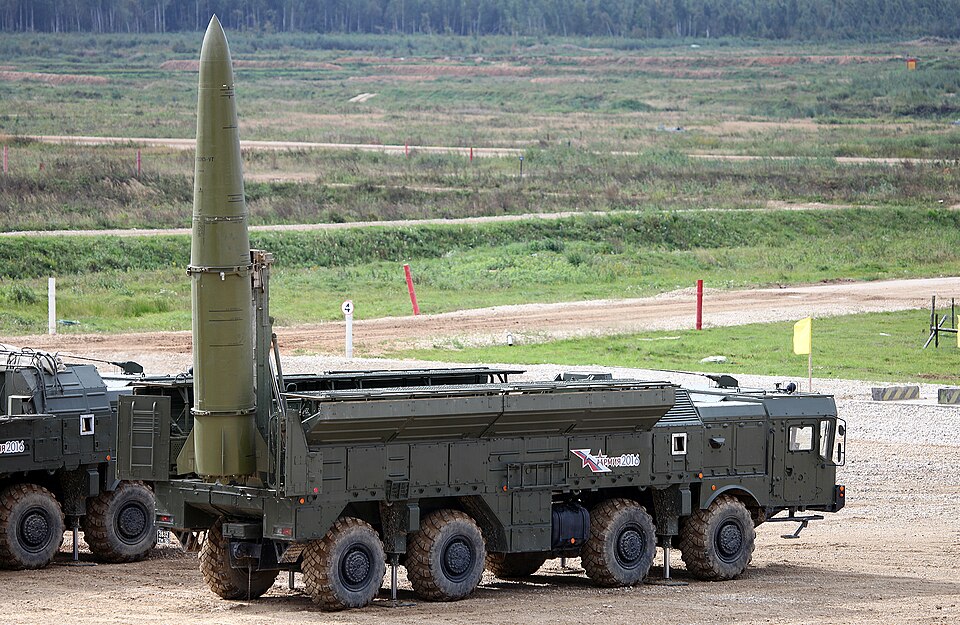
The Kyiv Independent, citing Ukraine's General Staff, identified the Voronezh Semiconductor Plant as a producer of electronics for Iskander and Kh-101 missiles and the Pantsir-S1 air defence system. ISW also reported that the plant produces components for Kh-101 cruise missiles, Iskander-K cruise missiles, and Pantsir-S1 systems, while noting that geolocated footage showed smoke near the facility.
That mix is important. The Kh-101 is one of Russia's main air-launched cruise missiles for strikes against Ukrainian infrastructure. Iskander-K gives Russia a ground-launched cruise missile option. Pantsir-S1 is part of the defensive shield Russia uses to protect air bases, refineries, headquarters, and the same defence-industrial sites Ukraine is now trying to reach.
In other words, this is not a simple offence-versus-defence story. Ukraine is trying to hit both the sword and part of the shield.
Ukraine Is Going After Bottlenecks
Everyone likes to talk about missile launchers because they photograph well. Launchers are not the hard part. The hard part is feeding a missile campaign with guidance electronics, control systems, sensors, navigation units, and precision components that sanctions are supposed to make difficult for Russia to obtain.
That is why a strike on an electronics supplier may matter more than a strike on a warehouse. Warehouses can be dispersed. Trucks can be rerouted. A specialized plant with machine tools, trained labour, quality-control processes, and subcontractor links is harder to replace quickly.
We should be cautious here. Ukraine has every incentive to frame the attack as a major blow, and neither Al Jazeera nor ISW could independently confirm the full damage assessment from open reporting alone. But the Russian governor did not deny that a production facility was damaged. That is enough to make this more than a propaganda claim.
The question is not whether one strike stops Russia's missile war. It will not. Russia has stocks, alternative suppliers, smuggling channels, and the ability to patch production lines. The better question is whether Ukraine can keep imposing friction at the points where Russia's precision-weapons system is least comfortable being touched.
The Air Defence Problem Is Spreading
ISW placed the Voronezh strike inside a broader pattern: Ukraine is expanding both the range and intensity of its deep-strike campaign. The same assessment noted a strike near the Dubna Space Communications Center in Moscow Oblast, roughly 540 kilometres from the Russia-Ukraine border, and argued that Russia is being forced to make harder decisions about where to place limited air defence assets.
That matters for NATO watchers. Western debates often treat Ukrainian deep strikes as a question of escalation management. That is real. But there is another layer: these strikes are a practical test of Russian homeland air defence under sustained pressure. If Moscow has to reinforce the capital, oil refineries, Black Sea logistics, missile plants, and air bases at the same time, then every extra site protected in one place creates exposure somewhere else.
Kyiv appears to understand that. Ukraine does not need every strike to destroy a factory. It needs Russia to behave as if every factory, refinery, rail node, and communications centre might be next. That forces dispersal, hardening, emergency repairs, air defence redeployments, insurance problems, production delays, and political embarrassment.
This is the logic of a campaign, not a raid.
What The Weapon May Tell Us
Ukraine said it used air-launched cruise missiles. ISW noted Russian speculation that the weapon could have been Storm Shadow, while one Russian milblogger suggested a US-supplied Extended Range Attack Munition. ISW said it could not confirm the munition.
That uncertainty is useful in itself. Russia now has to defend against a menu of possibilities: long-range drones, Western cruise missiles, Ukrainian-made systems, and perhaps newer affordable stand-off weapons. A defender that cannot confidently identify the incoming threat has to spend more interceptors, watch more approaches, and protect more categories of target.
The cost exchange is becoming uncomfortable for Moscow. A factory component line may take weeks or months to restore if specialised equipment is damaged. An S-400 battery or Pantsir unit moved to protect a city is a system unavailable somewhere else. Interceptors used against mass drone waves and cruise missiles are not free, and Russian sources have repeatedly hinted at shortages in some air defence inventories.
This does not mean Ukraine has solved the war. It means Russia's rear is no longer a sanctuary in the old sense.
The Strategic Point
For Europe, the Voronezh strike should settle one argument. The relevant question is no longer whether Ukraine can hit meaningful targets inside Russia. It can. The real question is whether Kyiv can sustain enough pressure on the Russian defence-industrial base to change the rhythm of Russian missile production and air defence allocation.
That requires intelligence, munitions, permission structures, spare parts, and political nerve from Ukraine's partners. It also requires discipline from Ukraine. Hitting facilities linked to missile production is a stronger case, legally and strategically, than spectacular strikes chosen mainly for television value.
Watch the next two indicators. First, whether Russia reports unusual shutdowns, rail restrictions, airspace closures, or emergency repairs around defence plants in the western military-industrial belt. Second, whether Ukrainian cities see any measurable change in the mix or frequency of Kh-101 and Iskander attacks over the next several weeks.
One burned plant does not cripple Russia's missile campaign. But if Ukraine can keep finding the parts of the system that Russia cannot easily replace, Moscow has a worse problem than another fire to explain. It has to defend a war machine that was built on the assumption that the factory floor was safely behind the front.
On June 22, Ukrainian forces struck the Voronezh Semiconductor Devices Plant in Russia, causing damage and five casualties. This facility is vital for producing electronics for Iskander and Kh-101 missiles, impacting Russia's missile production capabilities. The strike is part of Ukraine's broader strategy to disrupt Russian military logistics and air defense systems.
- Ukraine targeted the Voronezh Semiconductor Devices Plant, crucial for missile electronics.
- The strike resulted in five reported casualties and damage to the facility.
- The attack aims to disrupt Russia's missile production capabilities.
- Ukraine's deep-strike campaign is expanding, affecting Russian air defense allocation.
- The Voronezh strike is part of a broader strategy to impose friction on Russian military logistics.