
Ukraine strikes military logistics train in Crimea
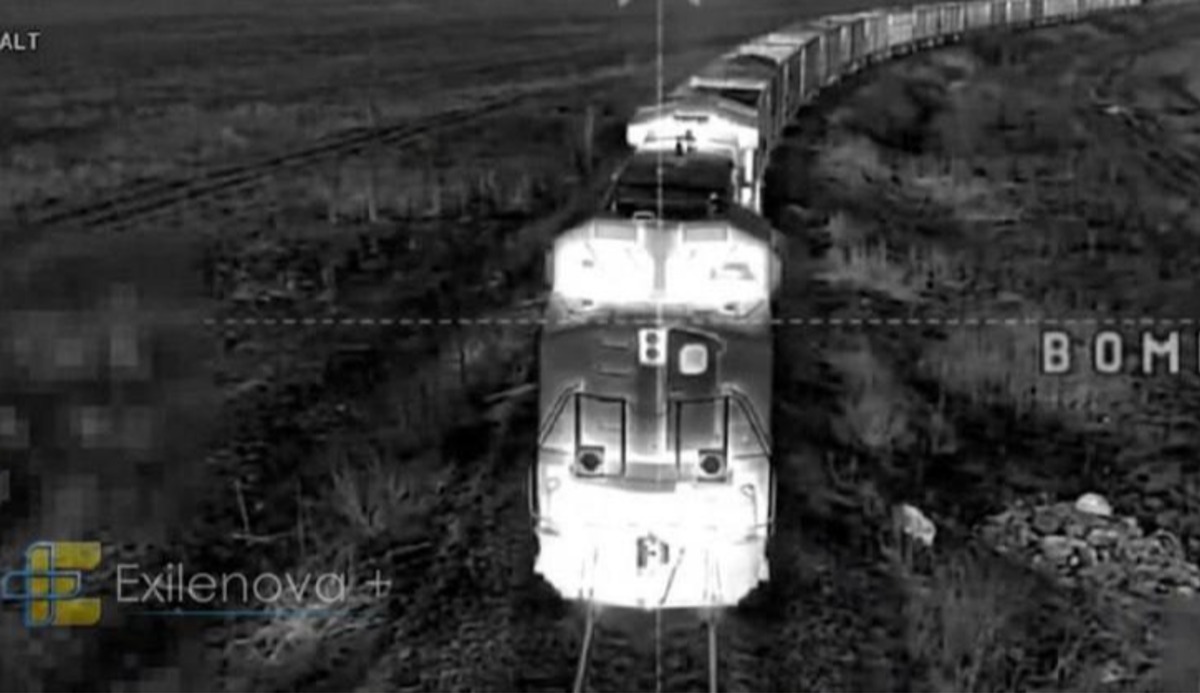
A Ukrainian strike drone hit a military logistics train in occupied Crimea in the early hours of June 8, 2026, and Russia immediately claimed it was a civilian passenger express. Ukraine published the drone footage. The video shows a freight consist with cargo wagons. There are no passenger carriages. The Russian story collapsed before it reached the international press.
The footage, published by the open-source intelligence community Exilenova+, shows a thermal imaging view from a Ukrainian strike drone targeting a locomotive hauling what is clearly a freight train with cargo wagons, not the passenger carriages that would be present on the Moscow-Simferopol express service Russia claimed was attacked. Ukraine subsequently confirmed the target was a military echelon transporting construction materials, fuel, and spare parts, a standard description of the rear-area logistics trains that Russia uses to supply its occupation forces in Crimea with the material they need to sustain both military operations and the broader infrastructure of occupation.
Russia’s response followed its standard information management playbook. Sergey Aksyonov, the Kremlin-installed administrator of occupied Crimea who holds no legitimate authority under international law, published a statement describing the target as a civilian passenger train on the Moscow-Simferopol route and claiming an assistant driver was killed and the driver wounded. Grand Service Express, the rail operator, announced suspension of passenger services and bus transfers for stranded passengers. Russian state media amplified the civilian casualty framing without question. None of those sources addressed the video evidence Ukraine published showing a freight consist, not a passenger train.
This is not the first time Russia has misrepresented the nature of a target Ukraine struck in occupied territory. The pattern is consistent and documented: Russia describes military or dual-use infrastructure as civilian when Ukraine attacks it, generates international headlines about civilian casualties, and uses that framing to pressure Ukraine’s partners while obscuring the military value of what was actually hit. Trains carrying military supplies to occupation forces in Crimea are legitimate targets under the laws of armed conflict regardless of how Russia labels them in press releases.
The strategic logic behind Ukraine’s rail interdiction campaign in Crimea requires no inferential leap. Crimea has two surface connections to mainland Russia: the Kerch Bridge, which Ukraine has struck multiple times since 2022, and the rail and road routes through occupied Ukrainian territory in Zaporizhzhia and Kherson oblasts, themselves contested and subject to interdiction. A peninsula dependent on those two corridors for fuel, ammunition, construction materials, and military equipment is a peninsula whose occupation becomes progressively harder to sustain every time a supply train is destroyed, a fuel depot burns, or a rail line is disrupted.
The suspension of passenger rail services across parts of Crimea following the strike, with passengers diverted to buses toward Kerch, reflects the physical disruption to infrastructure that Ukraine’s campaign is designed to produce. Whether Russia reroutes logistics through the Kerch Bridge, attempts repairs, or finds alternative supply routes, each successful strike forces a response that consumes Russian planning capacity, engineering resources, and time that could otherwise be directed elsewhere. Ukraine’s drone campaign against Crimean logistics has been accelerating throughout June 2026, with multiple confirmed strikes against rail and transport infrastructure across the peninsula in the same week.
Russia’s claim that Ukraine targeted a civilian passenger express is a lie contradicted by the video evidence Ukraine published. The thermal footage shows a freight consist. Ukraine identified the cargo as military supplies. The suspension of passenger services after the strike is a secondary consequence of damage to rail infrastructure, not evidence that passengers were aboard the targeted train. Aksyonov’s statement, amplified by Russian state media, is a fabrication designed to generate international sympathy and diplomatic pressure on Ukraine’s partners, not a factual account of what happened.
Ukraine has been systematically targeting the logistics infrastructure that allows Russia to maintain its illegal occupation of Crimea, and it will continue doing so. Russia will continue describing those targets as civilian. The video will continue showing otherwise.
Content preview only. Full article available at source. View Full Article
A Ukrainian strike drone hit a military logistics train in Crimea on June 8, 2026, targeting a freight train carrying military supplies. Russia falsely claimed it was a civilian passenger train, but video evidence confirmed the military nature of the target. The strike disrupted rail services, reflecting Ukraine's ongoing campaign against Russian logistics in the region.
- Ukrainian drone struck a military logistics train in Crimea on June 8, 2026.
- Russia falsely claimed the target was a civilian passenger train.
- Ukraine confirmed the target was a military echelon transporting supplies.
- The strike disrupted rail services in Crimea, affecting passenger transport.
- The incident reflects a pattern of Russian disinformation regarding military targets.