
Ukraine strikes two helicopters deep inside Russian territory
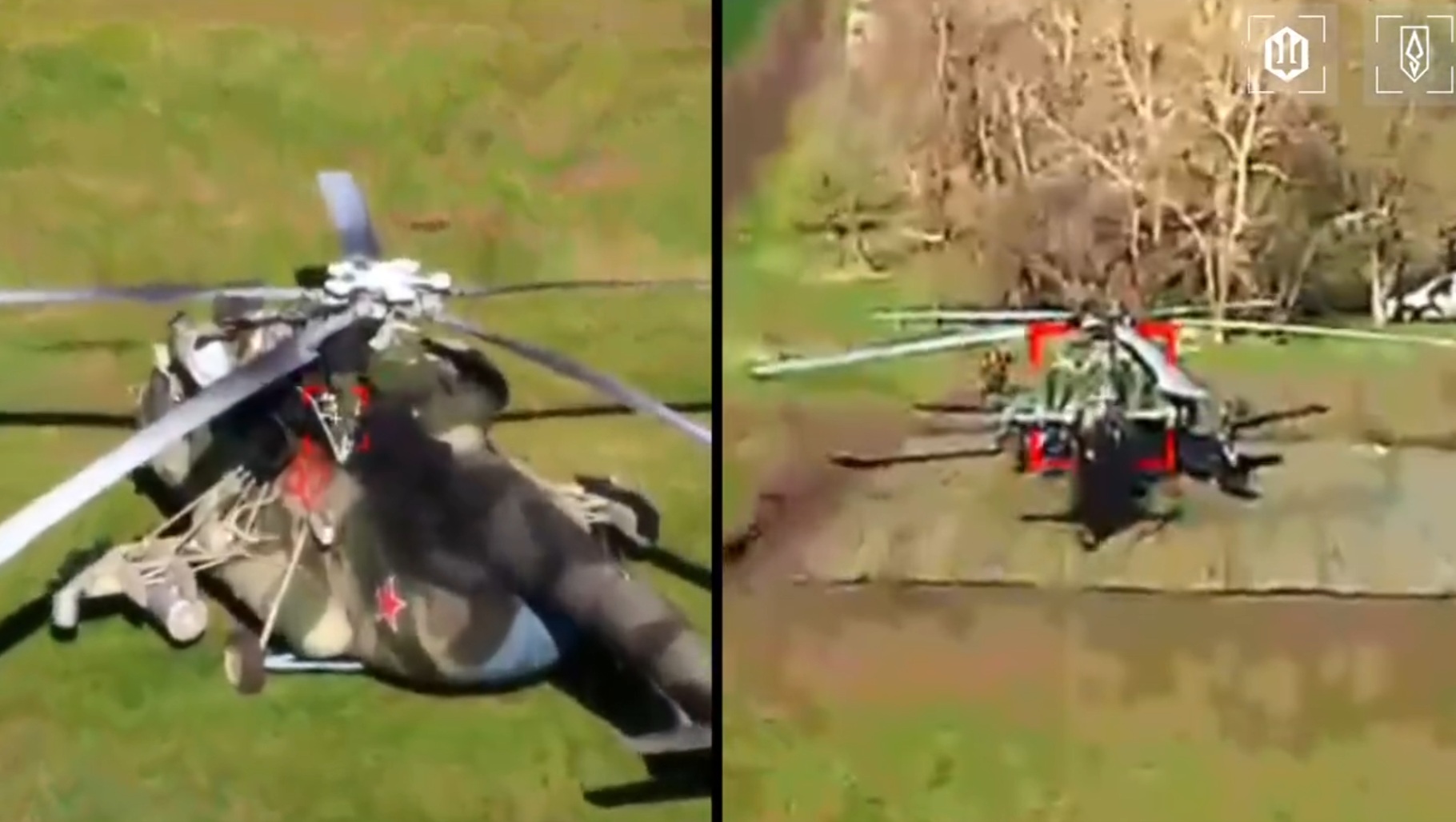
Ukrainian drone operators reached deep into Russian territory on April 29, striking two Russian military helicopters on the ground in Voronezh Oblast.
The operation was a joint effort by combined crews of the 429th Unmanned Systems Brigade “Achilles” and the 43rd Separate Army Aviation Brigade, planned and executed in coordination with Special Operations Center “A.” According to objective control data released by Ukrainian forces, both helicopters — a Mi-8 transport and a Mi-28 attack helicopter — were stationary at the time of the strike, almost certainly undergoing maintenance, with ground crew personnel nearby when the drones hit.
Operators confirmed the targets before striking. After coordinates were verified, crews delivered sequential drone strikes. Both aircraft were assessed as destroyed.
The Mi-8 is a workhorse of Russian battlefield logistics — a medium-lift transport used to move troops, insert assault elements, evacuate casualties, and, in its armed variants, deliver strikes with suspended munitions. It is one of the most widely operated helicopters in the Russian inventory. The Mi-28, by contrast, is a dedicated attack platform engineered specifically to kill armor. Its armored cockpit is built to absorb punishment and keep fighting through heavy defensive fire, making it a frontline threat even in contested airspace.
Taking both out while they sat on the ground — likely being refueled, repaired, or cycled between sorties — denied Russia not just the machines, but the maintenance personnel who were present and whose skills are difficult to replace quickly.
The 429th “Achilles” Brigade has carved out a reputation as one of Ukraine’s most effective drone warfare units. Originally formed from civilian volunteers on the first day of Russia’s full-scale invasion, the unit has evolved from a rifle company into a brigade-level force. It was expanded to regimental strength in January 2025 after destroying or damaging nearly 20,000 enemy targets over three years of combat. In April 2025 alone, the regiment struck 1,967 targets. Now operating at brigade strength as of 2026, Achilles has become a cornerstone of Ukraine’s Unmanned Systems Forces, a branch of the military with no equivalent anywhere else in the world.
Striking inside Voronezh Oblast carries weight beyond the tactical. The oblast borders Ukraine directly at its southern edge, yet Russian military planners have historically treated it as a rear-area sanctuary — a place to stage equipment, rotate crews, and keep aircraft well out of reach. That calculation is no longer reliable. Ukrainian drone capabilities have extended the battlefield into territory Moscow once considered safe, forcing commanders to rethink where they can park helicopters and how exposed their maintenance operations are at any given moment.
The operation also illustrates how Ukraine has developed the institutional capacity to plan and execute complex, multi-unit deep strikes. Coordinating the 429th Brigade, the 43rd Army Aviation Brigade, and Special Operations Center “A” across a single target set inside Russian territory is not improvised warfare — it is methodical, intelligence-driven targeting carried out by experienced crews who have spent years refining exactly this kind of mission.
Content preview only. Full article available at source. View Full Article
Ukrainian drone operators struck two Russian military helicopters in Voronezh Oblast on April 29, 2025. The operation, executed by the 429th Unmanned Systems Brigade 'Achilles' and the 43rd Separate Army Aviation Brigade, resulted in the confirmed destruction of both a Mi-8 transport and a Mi-28 attack helicopter. This strike demonstrates Ukraine's advanced drone capabilities and the changing dynamics of the battlefield.
- Ukrainian drones struck two Russian helicopters in Voronezh Oblast on April 29, 2025.
- The operation involved the 429th Unmanned Systems Brigade and the 43rd Separate Army Aviation Brigade.
- Both helicopters were confirmed destroyed while stationary on the ground.
- The Mi-8 is crucial for Russian logistics, while the Mi-28 is an attack platform.
- This operation indicates a shift in Ukrainian drone capabilities into previously safe Russian territory.