
Ukraine's 16 Gripen E Jets Won't Arrive Soon Enough
 Alexandra Reeves
Ukraine's 16 Gripen E Jets Won't Arrive Soon Enough
Sixteen fighter jets sounds like a turning point until you read the delivery date.
Britain announced on July 16 that it will invest €300 million to help Ukraine field a full squadron of Swedish Gripen E fighters by 2029. The package, according to the UK government, includes pilot and engineer training, simulators, spare parts and the equipment needed to move the aircraft from procurement promise to operational use. It also supports more than 50 UK-based companies in the Gripen supply chain and, Downing Street says, roughly 5,000 high-skilled jobs.
That is not a small announcement. It is one of the clearer signs that Ukraine's Western partners are thinking beyond emergency aid and toward a post-Soviet Ukrainian Air Force built around NATO-interoperable aircraft. But here is the uncomfortable part: a squadron arriving by 2029 does almost nothing for Ukraine's sky over Kyiv tonight, or over Kharkiv next month, or over the southern front this autumn.
Gripen matters. It just does not solve the war on the timeline politicians want it to.
What Britain Actually Promised
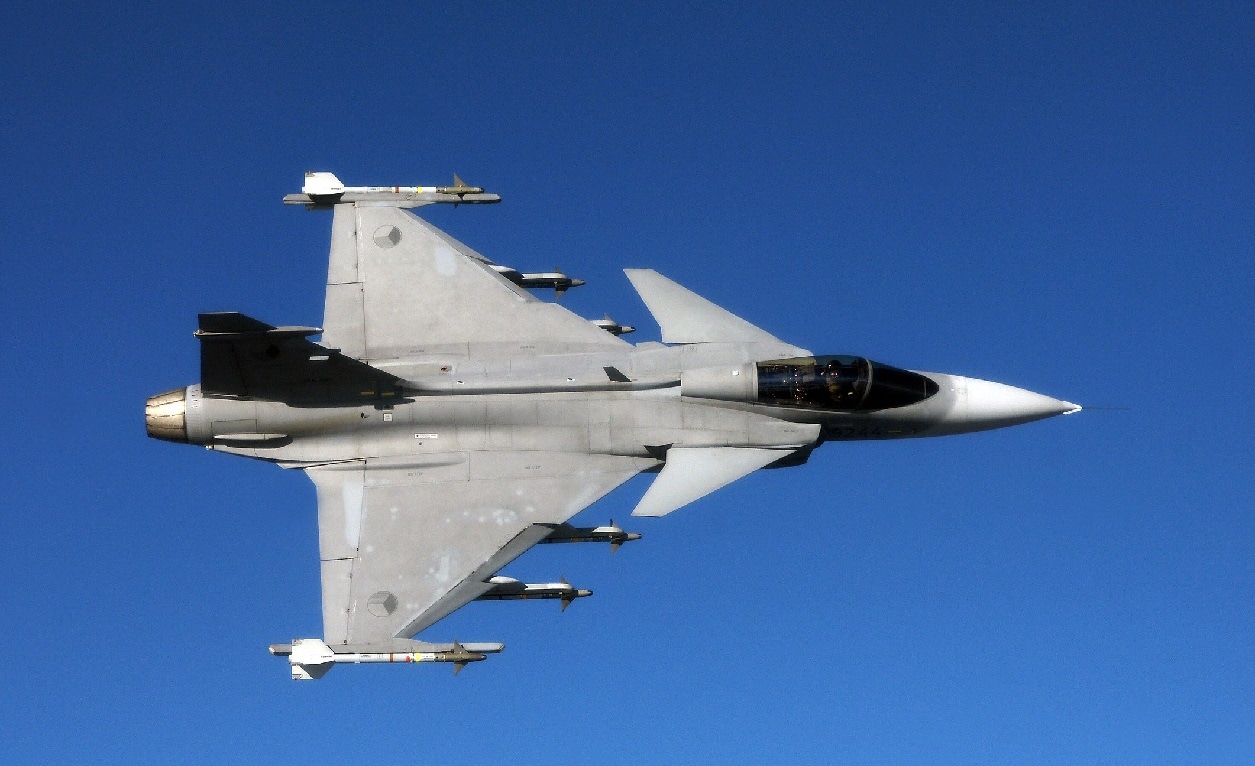
The UK announcement says the money will help Ukraine field 16 Gripen E fighter jets by 2029. That matters because Ukraine is not merely buying airframes. It is buying a fighting system: aircraft, trained pilots, trained ground crews, spares, simulators, weapons integration, and a logistics chain that does not collapse after the first hard month of combat.
Gripen is a sensible choice for Ukraine for one obvious reason: it was designed for a country that expected to fight a stronger Russian air force from dispersed bases. Sweden built Gripen around road operations, small maintenance teams and rapid turnaround. Saab lists the Gripen E with 10 hardpoints, a maximum take-off weight of 16,500 kilograms, 98 kN of thrust and a combat turnaround time of 15 to 25 minutes. Those are not brochure details in Ukraine's case. They go directly to survivability.
Russia has spent the war hunting fixed infrastructure: airfields, ammunition dumps, fuel nodes, command posts, repair facilities. A fighter that can be serviced by a small team and moved around a fractured basing network is more useful to Ukraine than a more glamorous aircraft that needs a fragile support ecosystem. Gripen is not magic, but it is philosophically closer to Ukraine's war than many Western platforms.
The 2029 Problem
The problem is the calendar. Ukraine's immediate air defence crisis is measured in nights, not procurement cycles.
The same UK statement notes that London is already committed to delivering 150,000 drones and thousands of air defence missiles to Ukraine this year, alongside £3 billion in military support. That is the urgent part of the package. Russia is still using drones, cruise missiles and ballistic missiles to stretch Ukrainian interceptors and punish cities. Fighter modernization by 2029 is the strategic answer; missiles and drones in 2026 are the operational answer.
Everyone in NATO likes to say air power is a system. That is true, but it is usually said as a way to slow decisions down. Ukraine is now living with the other side of that truth. You cannot announce a modern air force into existence. You have to train it, arm it, protect it, maintain it and connect it to ground-based air defences. That takes time even when everyone is serious.
And not everyone has always been serious. For years, Western governments treated aircraft for Ukraine as escalatory, then complicated, then possible, then urgent. Each stage consumed time Moscow used to adapt. The Gripen decision is welcome because it moves past the old hesitation. It is also late because the hesitation happened.
Why Gripen Fits Ukraine Better Than The Politics Suggest
There is a temptation in Washington and European capitals to turn every fighter decision into a platform beauty contest: F-16 versus Mirage versus Rafale versus Gripen. That misses the point. Ukraine does not need a prestige fleet. It needs aircraft that can survive Russian targeting, accept modern weapons, integrate with NATO-style command systems and be sustained by partners who can keep the pipeline open.
Gripen's selling point is not that it is the best fighter in the world. The better argument is that it is one of the least foolish options for a country fighting under missile attack. Its low maintenance demands and dispersed-operations logic match Ukraine's problem set. Its NATO interoperability also matters. The UK government specifically noted that Swedish Gripens operated alongside the Royal Air Force in Poland last summer as part of NATO air policing. That is exactly the sort of practical interoperability Ukraine needs, not another symbolic flypast.
The aircraft's weapons options matter too. Gripen was built to carry modern European air-to-air and air-to-ground weapons, including beyond-visual-range missiles in NATO service. If Ukraine receives aircraft without enough missiles, electronic warfare support and targeting integration, then the squadron becomes an expensive political trophy. If it receives the full ecosystem, it becomes a serious layer in a broader air defence and strike network.
The Alliance Politics Are The Real Story
The British money is also a political signal to Sweden, Europe and the United States. London is putting cash into a European aircraft line for Ukraine rather than waiting for Washington to solve every aviation problem. That is healthy. Europe has spent too long saying it must carry more of the burden while still organizing many of its most important security decisions around American permission structures.
This announcement is not fully independent European strategy. Gripen still depends on complex supply chains, weapons approvals and political alignment across multiple capitals. But it is a step toward a more European answer to Ukraine's long war. It says Ukraine's future air force will not be a single-platform dependency. It will be a mixed fleet stitched together by training, data links, weapons stocks and partner commitments.
That mixed model will be messy. Maintenance crews will hate it. Procurement officials will pretend otherwise. But Ukraine has rarely had the luxury of elegant force design. It takes what arrives, adapts it, and makes the Russians pay for underestimating improvisation.
What To Watch Next
The next indicators are not speeches. Watch the training pipeline, weapons packages and basing preparations. If Ukrainian pilots and engineers move into sustained Gripen-specific training quickly, the 2029 target looks more credible. If the aircraft are paired with real missile stocks and electronic warfare support, the squadron will matter. If the announcement sits as a financing headline without visible implementation, then it becomes another example of Europe confusing intent with capability.
The key finding is straightforward: Britain's €300 million pledge pushes Ukraine toward a more survivable, NATO-compatible air force, and Gripen E is a rational aircraft for that job. The strategic impact could be real by the end of the decade. The near-term impact will be modest.
That is the part politicians should say plainly. Ukraine needs Gripen for the war it may still be fighting in 2029. It needs interceptors, drones, artillery ammunition and air defence missiles for the war it is fighting tonight. The danger is not that the Gripen pledge is wrong. The danger is that Europe congratulates itself for a future squadron while Russia keeps testing whether Ukraine can survive the years before it arrives.
The UK announced a €300 million investment to support Ukraine's acquisition of 16 Gripen E fighter jets by 2029, aimed at modernizing its air force. This initiative includes training and logistical support but does not address Ukraine's immediate air defense needs against ongoing Russian attacks. The UK is also providing drones and air defense missiles this year to bolster Ukraine's capabilities in the short term.
- UK to invest €300 million for 16 Gripen E jets for Ukraine by 2029.
- The Gripen E is designed for operations against a stronger air force.
- Immediate air defense needs are not addressed by the 2029 timeline.
- UK committed to delivering drones and air defense missiles to Ukraine this year.
- Gripen's low maintenance and NATO interoperability are beneficial for Ukraine.