
Ukraine's 2026 St Petersburg Strike Makes NATO's Baltic Problem Real
 Alexandra Reeves
Ukraine's 2026 St Petersburg Strike Makes NATO's Baltic Problem Real
St Petersburg was supposed to be the safe rear of Russia's Baltic war machine. On Wednesday, it looked much less safe.
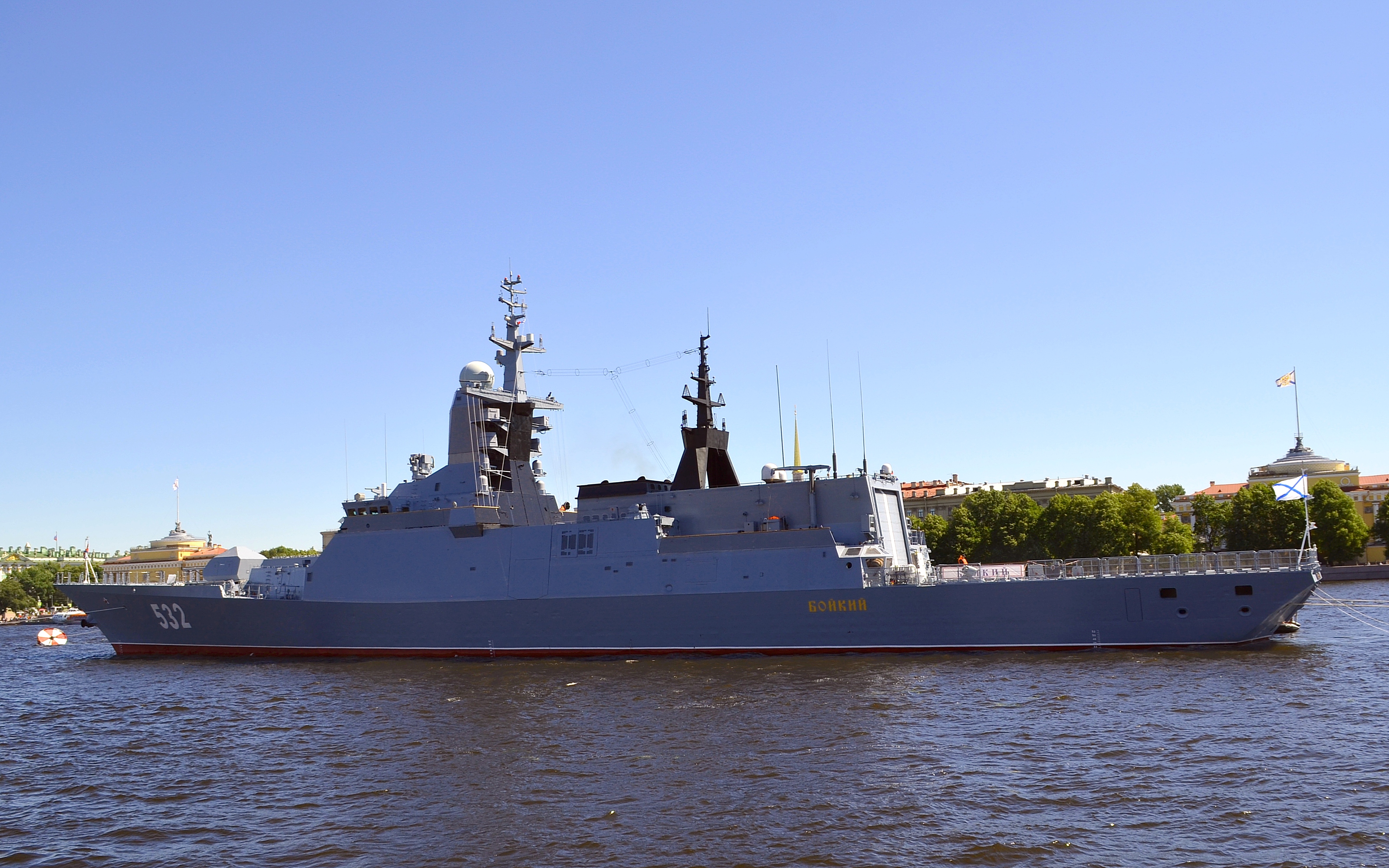
According to the Associated Press, a Ukrainian drone strike set an oil terminal ablaze near Russia's second city just as Vladimir Putin's St Petersburg International Economic Forum was preparing to open. AP also reported that the attack targeted a naval base near the city on the Gulf of Finland. Ukrainian and regional reporting went further, saying the Kronstadt naval base area and nearby Baltic Fleet repair infrastructure were among the targets, with unconfirmed claims that the Project 20380 corvette Boiky may have been affected in dock.
The ship damage claim should be treated carefully until satellite imagery or Russian acknowledgement catches up. The strategic point does not need that confirmation. Ukraine has shown that a city roughly 1,100 kilometers from its border, wrapped in prestige, air defense, naval infrastructure and presidential symbolism, is now inside the war.
The Baltic Rear Is No Longer Rear
The lazy reading is that this was another Ukrainian long-range strike against Russian energy infrastructure. That is true, but incomplete. St Petersburg is not Taganrog or Saratov. It is Russia's imperial capital, a major port, a defense industrial center, the political stage for Putin's annual economic showcase, and the urban anchor of Russia's northwestern military posture.
That makes the attack a Baltic event, not just a Ukraine event.
The Gulf of Finland is a narrow, crowded operating space. After Finland and Sweden joined NATO, Russia's Baltic Fleet found itself surrounded by alliance territory in a way Soviet planners would have found absurd. St Petersburg and Kronstadt sit at the eastern end of that maritime corridor. Kaliningrad sits isolated at the other. Between them are NATO's newest northern members, the Baltic states, Poland, Denmark, Germany and allied air and naval surveillance networks.
Russia still has capable assets in the region. Project 20380 Steregushchiy-class corvettes such as Boiky displace roughly 2,200 tons, carry anti-ship and air-defense weapons, and are meant to operate in the littorals where the Baltic Fleet matters most. They are not capital ships, but they are exactly the kind of modern surface combatants Russia needs for patrol, escort, missile employment and presence missions in a constrained sea.
If Ukraine can pressure the bases, repair yards and oil logistics that sustain those ships, NATO's Baltic problem changes. The alliance is no longer only asking how to contain Russian ships moving westward. It must also ask what Russia does when its own rear area is made visibly vulnerable by a non-NATO partner.
Putin's Optics Were Part of the Target
The timing mattered. AP framed the strike as a gloomy opening note for Putin's economic showcase. That undersells the political humiliation only slightly. Moscow has spent four years telling Russians that the war can be kept at arm's length: difficult, costly, patriotic, but geographically manageable. A smoke plume over St Petersburg breaks that fiction in a way a strike near Belgorod or Kursk does not.
Ukraine understands this. Long-range drone strikes are not only about burning fuel tanks. They are also a messaging system. The message this time was blunt: Russia's naval and economic prestige targets are not immune, even in the city Putin uses as a personal brand.
For NATO, that creates an awkward but useful reality. Ukraine is doing what NATO itself would never do in peacetime: testing the depth of Russian air defense around one of Moscow's most politically sensitive urban regions. The results matter to alliance planners even if no NATO officer will say that too loudly.
Russian air defenses now face three overlapping demands. They must protect Ukraine-front launch areas, cover strategic sites around Moscow, and defend high-value rear targets across the north and Baltic approaches. Every Pantsir, S-300 or S-400 battery pulled toward St Petersburg is one less asset available elsewhere. Every successful Ukrainian drone route becomes a small intelligence lesson for the countries watching Russian radar behavior from across the Baltic Sea.
NATO's Eastern Flank Runs North Now
NATO's own public language has been catching up with this geography. The alliance says its eastern flank now stretches from the Arctic Ocean to the Black Sea and that Russia's hostile activity toward members and partners includes airspace violations, cyber attacks and sabotage. That is a broad sentence, but the Baltic is where it becomes concrete.
The old mental map of NATO's eastern flank centered on Poland, Romania and the land routes into Ukraine. Those remain vital. But Finland's accession moved the flank hundreds of kilometers north and placed the alliance directly against Russia's northwestern heartland. Sweden's accession turned the Baltic Sea into something close to an alliance lake, at least on paper.
Paper is the important word. Geography helps NATO, but it does not automatically solve the operational problem. The Baltic region is dense with ports, cables, air routes, energy infrastructure and civilian shipping. It is also dense with escalation pathways. A Ukrainian drone heading for a Russian target can cross electronic warfare zones, confuse air-defense tracking, or trigger NATO air policing if it drifts off course. Alexandra Reeves has written before about the alliance's drone spillover problem. St Petersburg adds a second layer: the more successful Ukraine becomes at deep strike in the Baltic direction, the more nervous Russia becomes around NATO territory.
That nervousness can produce deterrence. It can also produce bad decisions.
The Escalation Risk Is Not Where People Think
Everyone immediately asks whether Ukraine striking near St Petersburg risks Russian retaliation against NATO. That is the dramatic question. It is not the most useful one.
The more likely danger is incremental pressure below the threshold of war: more Russian aircraft operating near Baltic airspace, more GPS jamming, more harassment of surveillance flights, more sabotage scares around undersea infrastructure, and more accusations that NATO territory is enabling Ukrainian attacks. Moscow does not need to prove those accusations. It only needs to make Baltic governments spend time, money and political attention disproving them.
That is why this strike should make NATO planners uncomfortable in a productive way. Ukraine's long-range campaign is degrading Russian confidence and forcing Russian air defense to stretch. That helps the alliance. But it also means the Baltic states, Finland, Sweden and Poland need stronger counter-drone detection, better civil-military airspace protocols, and faster attribution mechanisms when drones, jamming or debris cross borders.
The uncomfortable truth is that Ukraine is now shaping the Baltic security environment from outside NATO. Kyiv is not waiting for Brussels to define the theatre. It is reaching into Russia's northwestern rear and forcing everyone else to update their maps.
What Comes Next
The first thing to watch is evidence. If satellite imagery confirms damage at Kronstadt or to a Baltic Fleet vessel, the strike becomes more than symbolic. It becomes a direct attack on Russia's naval sustainment system in the Gulf of Finland. If the damage remains limited to oil infrastructure, it still matters, but the military effect is narrower.
The second thing to watch is Russian behavior over the Baltic. More bomber flights, reconnaissance aircraft, naval patrols or electronic disruption would suggest Moscow is trying to reassert control through pressure on NATO's edge.
The third is Ukraine's pattern. One strike is a message. Repeated strikes around St Petersburg would be a campaign.
My read is that this is where the war is heading. Russia is trying to make Ukraine's cities live under constant missile pressure. Ukraine is answering by making Russia's prestige rear areas feel less distant from the front. NATO can welcome the pressure on Moscow, but it should not pretend the Baltic consequences belong to someone else.
The Baltic rear is now part of the war. The alliance needs to start acting like it.
Ukrainian forces conducted a drone strike on Russian naval and energy infrastructure in St Petersburg in 2026, targeting a naval base and causing significant damage. This attack occurred just before Putin's International Economic Forum, emphasizing its political implications. The incident marks a shift in the security dynamics of the Baltic region, as Ukraine pressures Russian defenses far from its border.
- Ukrainian drone strike set an oil terminal ablaze in St Petersburg.
- The strike targeted a naval base and potentially damaged a Russian corvette.
- The attack occurred during Putin's economic forum, highlighting its political significance.
- The strike indicates a shift in the security dynamics of the Baltic region.
- Ukraine's actions are testing Russian air defenses in a politically sensitive area.