
Ukraine's Radar Hunt Is Blinding Russia's Air Defenses Over Crimea
 Alexandra Reeves
Ukraine's Radar Hunt Is Blinding Russia's Air Defenses Over Crimea
A hundred million dollars buys a lot of things. What it no longer buys Russia is a working Nebo-U early-warning radar over Crimea — Ukraine's Special Operations Forces made sure of that on the night of August 12-13, and they had a drone filming while they did it.
The 55Zh6U Nebo-U is not some new-age wonder weapon. It entered Russian service in 1995, a modernized version of a Soviet design. But it does one job better than almost anything else in Moscow's inventory: it sees. It is a long-range, three-coordinate VHF-band radar built to detect and track aircraft, cruise missiles, ballistic targets and even stealth-capable weapons. The VHF band matters because low-frequency radars are the classic counter-stealth trick — they catch what X-band fire-control systems miss. This is the radar that is supposed to give S-400 batteries their first look at what is coming.
The radar is the real target
According to Ukraine's General Staff, the same night's strikes also took out a 5N84A Oborona-14 long-range surveillance radar near Yevpatoria — the kind of system that can spot targets at up to 400 kilometers at high altitude and around 120 kilometers lower down — plus radar installations sitting inside the radio-transparent domes Russia uses to hide antenna orientation. A marine brigade command post in occupied Donetsk got hit too. Add it all up and it was one very bad night for the Russian Aerospace Forces' sensor network.
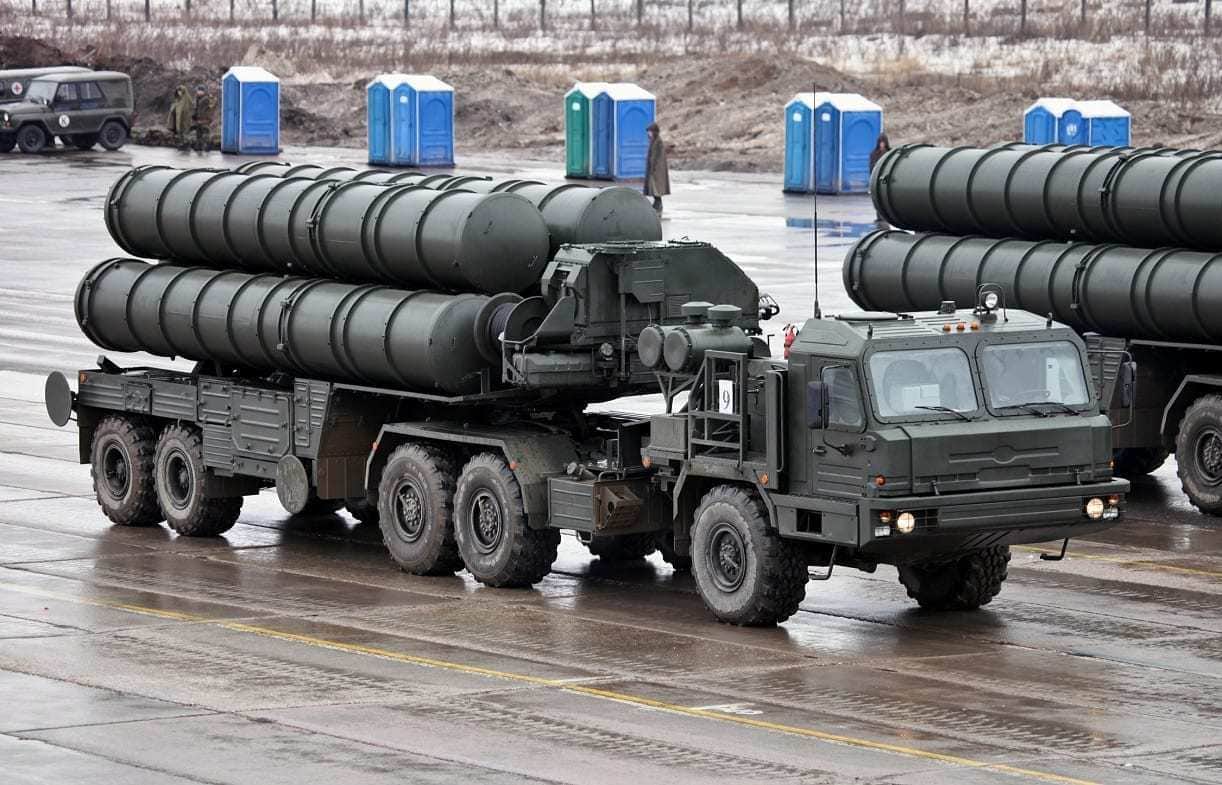
Everyone in Washington spends a lot of time counting destroyed S-400 launchers. That is the wrong scoreboard. Launchers are replaceable — Russian factories keep churning them out. Radars are the bottleneck. A Nebo-U costs around $100 million, takes time to build, and there are only so many in existence. Kill the radar and every S-400 and S-300 battery it feeds goes blind, and the air defense picture over Crimea develops holes.
That is the logic of a campaign Ukraine has been running for months. In February, Ukrainian forces hit a Nebo-U near Yevpatoria. In March, SBU drones struck air defense positions across the peninsula, including two Pantsir-S2 systems. Now, in August, the pattern repeats — only this time the strikes came on back-to-back nights and went after the sensor layer specifically.
Crimea's eyes are going dark
The Saky airfield strike the night before was just as deliberate. Ukrainian forces hit the control tower at Saky near Novofedorivka, which the Special Operations Forces say housed the collection and processing center for Orion and Forpost reconnaissance drones. A relay station near Chornomorske that controls Geran and Gerbera strike drones was hit too. Same night: a UAV command post near Myrne in Zaporizhzhia, a fuel depot near Dovzhansk in Luhansk, an ammunition depot near Novyi Hai, a logistics depot near Kalanchak in Kherson, and a troop concentration near Butyrki in Russia's Belgorod region.
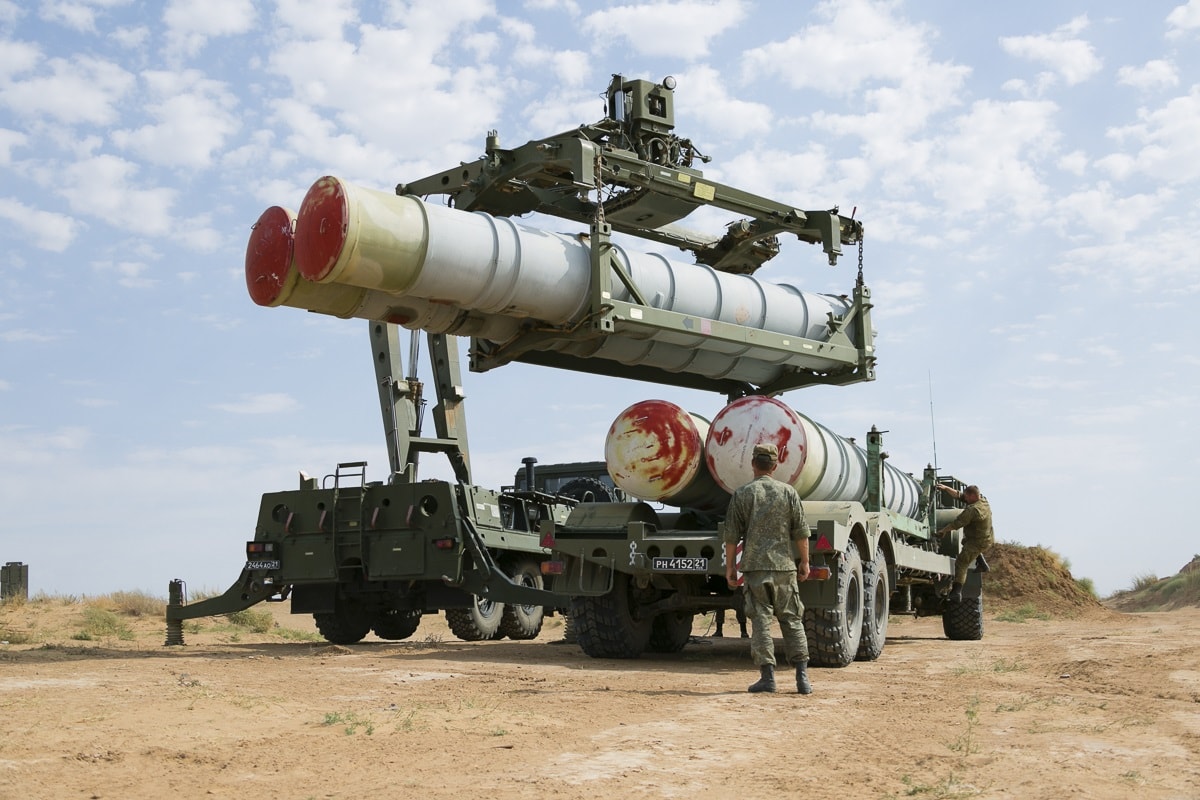
Crimea is the most heavily defended piece of territory in this war. It is also the hub for everything Russia does in the Black Sea: the naval base at Sevastopol, the airfields at Saky and Belbek, the logistics spine feeding the southern front. An air defense network that cannot see is a network that cannot respond — and that changes the calculus for every Ukrainian strike that follows.
The timing is not accidental. Ukraine has been hammering Russian naval infrastructure at Novorossiysk, the last safe harbor for the Black Sea Fleet, and striking refineries deep inside Russia, including the Salavat complex in Bashkortostan 1,300 kilometers from the border. Those strikes get easier when the radars that are supposed to track the drones are burning. The Nebo-U kill is not an isolated trophy. It is a precondition for the next round of deep strikes.
What this means for everyone else
This is what a sensor-killing campaign looks like when it is run without air superiority. Western air forces spent decades assuming you need F-35s or B-2s to suppress integrated air defenses. Ukraine is doing it with long-range drones, Neptune missiles and patient targeting, one radar at a time. NATO planners who watched the radar-hunt unfold should be taking notes, because the same playbook is the nightmare scenario for any allied air defense network facing a drone-enabled adversary.
Russia will respond. It always does. It will reposition radars away from the coastline, add decoys, try to jam the drones' navigation. But there is a limit to how fast Moscow can replace what is being destroyed. The Nebo-U is not a mass-produced item, and sanctions have made components harder to source. Every radar Ukraine kills is one that takes months, if not longer, to bring back.
Here is the uncomfortable judgment: Russia's air defense over Crimea is being degraded faster than it can be rebuilt, and Moscow knows it. The official line will be that nothing was hit. The actual behavior — moving radars, scrambling fighters, complaining about drones over the peninsula — tells a different story.
The real question is not whether Russia can patch the holes in its Crimean air picture. It is how long the Russian command keeps pretending the holes do not exist — and what Ukraine does with the opening in the meantime. If the next few weeks bring strikes on targets that were previously considered unreachable, you will know the radar hunt worked. Watch the skies over Sevastopol, and watch what falls out of them.
Ukrainian Special Operations Forces conducted strikes on Russian radar systems, including a Nebo-U radar, over Crimea on August 12-13, 2023. The operations targeted multiple military infrastructures, including a 5N84A Oborona-14 radar near Yevpatoria, significantly degrading Russia's air defense capabilities. This campaign aims to blind Russian forces and facilitate further strikes on military targets.
- Ukrainian forces targeted and destroyed a Nebo-U radar system over Crimea on August 12-13, 2023.
- A 5N84A Oborona-14 radar was also destroyed near Yevpatoria.
- Strikes included various military infrastructure such as command posts and logistics depots.
- The campaign aims to blind Russian air defenses, particularly affecting S-400 and S-300 systems.
- Ukraine's operations are part of a broader strategy to degrade Russian military capabilities in the region.