
Ukraine's Seven-Drone Merkury Strike Exposes Russia's Libya Vulnerability
 Alexandra Reeves
Ukraine's Seven-Drone Merkury Strike Exposes Russia's Libya Vulnerability
Russia built a Mediterranean foothold to keep the war away from home waters. Ukraine has just shown how fragile that assumption is. Kyiv says its security service used naval drones to strike the Russian corvette Merkury at a naval facility near Benghazi, Libya, more than 1,000 miles from the Ukrainian front. The claim was reported on November 23 by Reuters, the BBC, NBC News, and Defense News, with Ukrainian officials saying the vessel was sunk or rendered a total loss. Moscow has threatened a response, but has not publicly produced a competing account that explains the reported damage.
The event matters because it is not simply another successful Ukrainian attack. It is a test of whether Russia can protect a warship inside a foreign port while using Libya as part of its wider military network. The short answer, at least for this episode, is no.
What Ukraine Says It Hit
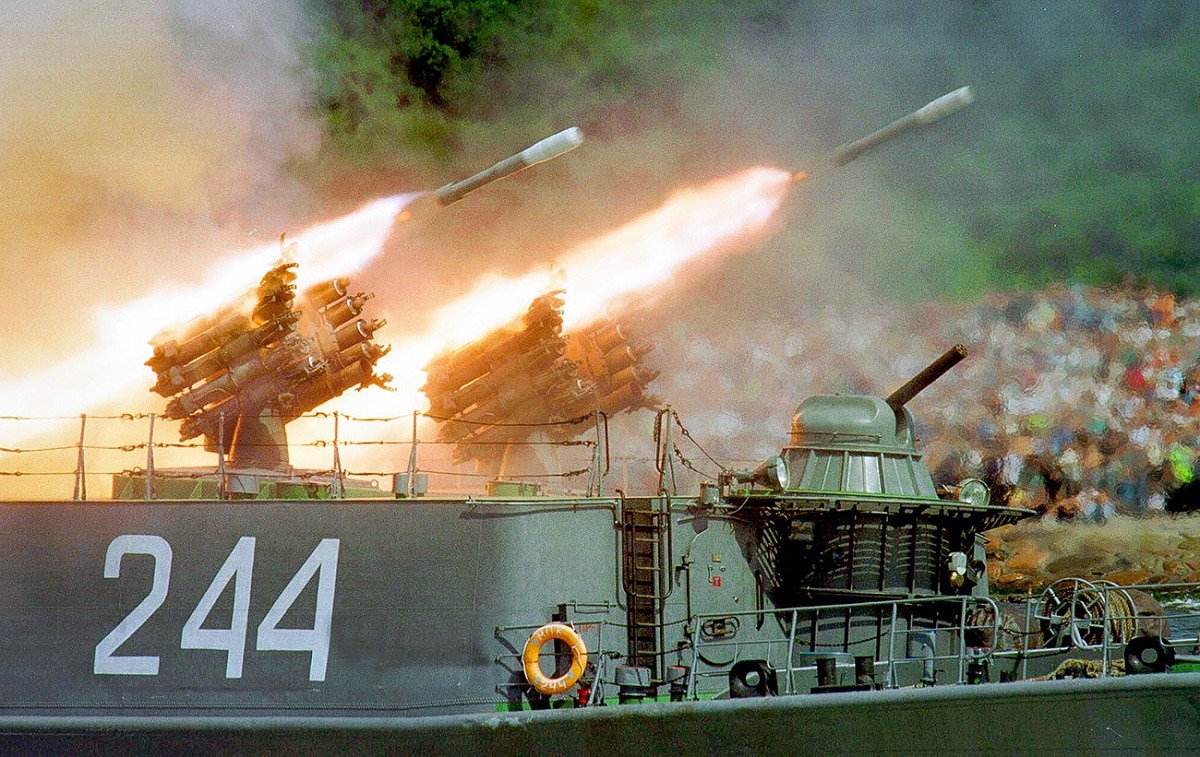
The target was identified as the Merkury, a Russian Project 20380 corvette. That class is roughly 2,200 tonnes full load, about 104 metres long, and designed for a mix of anti-ship warfare, air defence, and patrol missions. Its normal weapons fit includes a 100 mm naval gun, anti-ship missiles, and the Redut surface-to-air missile system. It is not a helpless auxiliary. It is a modern combatant intended to survive in contested coastal waters.
That distinction is important. A port attack does not prove that the corvette would lose a conventional missile duel at sea. It does show that expensive sensors and missile systems are of limited value when a ship's defensive bubble is penetrated by small, low-cost unmanned craft at close range. Ukraine's security service reportedly described a coordinated attack involving seven naval drones. The exact launch sequence, warhead size, and damage assessment remain claims from the Ukrainian side and should be treated as such until independent imagery is available.
The Port Was Supposed to Be the Safe Part
Libya is not a random map location. Russia has spent years building relationships with eastern Libyan authorities and using the country as a logistical and political platform for activity across North Africa and the Sahel. A naval presence near Benghazi offers Moscow another place to refuel, repair, move personnel, and signal influence in the central Mediterranean. It also gives Russia strategic depth beyond the Black Sea, where Ukrainian attacks have already forced the Russian fleet to change its behaviour.
That depth is now looking less deep. A warship tied up in a port is easier to locate and harder to manoeuvre than a ship at sea, but it is also supposed to be protected by geography, host-nation security, and layered surveillance. If Ukrainian drones reached the Merkury there, the immediate question is not whether Libya can stop every future attack. It is whether Russia can maintain a credible maritime operating pattern without exposing its vessels, crews, and supply chain.
According to the Guardian's reporting, Ukraine also claimed that a second Russian vessel was struck in the wider operation. That detail remains less clear than the claim about the corvette. It nonetheless points to the likely logic of the mission: this was not only an attempt to sink one ship, but an effort to make Russian naval activity around Libya more costly and predictable.
Why This Is Bigger Than a Ship Loss
First, the strike expands Ukraine's maritime campaign from denial to reach. Kyiv has used uncrewed surface vessels to attack Russian ships and infrastructure in the Black Sea. The Benghazi operation, if confirmed in full, shows that the same basic idea can travel with a mothership, commercial logistics, intelligence support, or a covert partner network. The geography changes; the operational problem does not. A navy must now defend not just its fleet, but every harbour where that fleet rests.
Second, it complicates Russia's African strategy. Moscow has tried to turn relationships with Libya and other African governments into a substitute for access lost or constrained elsewhere. A damaged corvette in Benghazi makes that strategy look vulnerable to a war whose front line is no longer European. Local partners will ask a blunt question: can Russia protect them, or does its presence simply make their facilities targets?
Third, the strike is a warning for NATO planners. The alliance has focused heavily on the Baltic, the Black Sea, and the eastern flank. Those priorities are justified, but Russian forces and logistics span several connected theatres. A Ukrainian attack in Libya can affect Russian maritime access, Turkish leverage, European intelligence requirements, and the security of southern NATO members at the same time. This is precisely the kind of cross-regional problem that bureaucracies are bad at seeing until something explodes.
The Limits of the Ukrainian Success
There is a danger in treating one dramatic operation as a revolution. A corvette alongside is a fixed target. Ukraine may have benefited from surprise, inside information, permissive local conditions, or a temporary gap in Russian and Libyan security. None of that automatically translates into an ability to hunt every Russian ship in the Mediterranean.
Nor does a successful drone strike make the corvette's weapons irrelevant. Russia can disperse ships, increase harbour patrols, add physical barriers, deploy electronic warfare, and avoid predictable port routines. The response may also be indirect: pressure on Ukrainian shipping, attacks on drone production, or retaliation against the networks that Moscow believes enabled the operation. Russian officials have already warned of a “painful” response, although the form and credibility of that threat are unknown.
The more durable lesson is cheaper and harsher. Modern naval power is increasingly about the security of the operating system around the ship: intelligence, harbour control, counter-drone coverage, repair sites, and political access. A 2,200-tonne corvette can carry sophisticated missiles and still be defeated by a handful of unmanned boats if those supporting layers fail.
What to Watch Next
Independent satellite imagery will determine whether the Merkury was sunk, disabled, or merely damaged. The next indicators will be Russia's port behaviour around Benghazi, any evacuation or dispersal of naval assets, and whether Moscow moves additional air-defence and counter-drone teams into Libya. It will also be worth watching Turkey's reaction. Ankara sits between the Black Sea and Mediterranean security problems, and every Russian vulnerability in Libya increases Turkish bargaining power.
For Ukraine, the question is whether this was a one-off raid or the opening move in a campaign against Russia's African logistics. For NATO, the question is more uncomfortable: can the alliance defend southern access points against a cheap maritime threat while still covering its eastern flank?
Ukraine has not proven that Russia has lost control of the Mediterranean. It has proven something more useful: Russian reach is not the same thing as Russian protection. If the Merkury was hit inside Benghazi, Moscow's African foothold has become a liability that requires guarding like a front line. The next Russian ship may not need to be sunk for the message to land.
Sources
- Reuters, November 23, 2026, reporting Ukraine's claim that a Russian warship was sunk in Libya.
- BBC, November 23, 2026, reporting Ukrainian naval-drone claims and Russian reaction.
- The Guardian, November 23, 2026, reporting Ukraine's claim that two Russian vessels were struck.
- Defense News, November 23, 2026, identifying the reported target as the Russian corvette Merkury.
- Institute for the Study of War, November 22, 2026, for the wider Russian operational context.
Ukrainian naval drones attacked and reportedly sunk the Russian corvette Merkury at a naval facility in Benghazi, Libya, on November 23, 2026. This operation involved seven drones and highlights vulnerabilities in Russia's maritime operations far from its home waters. The incident has prompted concerns regarding Russia's ability to secure its naval assets in foreign ports and may complicate its strategic presence in North Africa.
- Ukrainian naval drones attacked the Russian corvette Merkury in Benghazi, Libya.
- The corvette was reportedly sunk or rendered a total loss.
- The attack involved seven naval drones in a coordinated strike.
- Russia has not provided a competing account of the damage.
- This incident raises questions about Russia's ability to protect its naval assets in foreign ports.