
Ukrainian 250-Kilogram Glide Bomb Breaks Russian KAB Monopoly in 2026
 Dmitri Volkov
Ukrainian 250-Kilogram Glide Bomb Breaks Russian Monopoly on Guided Bombs in 2026
The most important figure in Mikhail Fedorov's statement is not the range or even the 250 kilograms of warhead. What matters more is that the Ukrainian glide bomb was developed in 17 months and has already been procured in the first experimental batch (RBK-Ukraine, May 18, 2026). For a war where Russian aviation has long enjoyed an almost monopolistic advantage with cheap guided bombs featuring glide and correction modules, this is an unpleasant institutional signal. Kyiv is trying to turn what Moscow was forced to do after failing to achieve air superiority into its own serial niche.
Why 250 Kilograms is More Important than Advertised Range
Fedorov reported that the first Ukrainian prototype was created by a participant in the defense cluster Brave1, carries a 250-kilogram warhead, is capable of hitting targets at distances of tens of kilometers after release, and pilots are already practicing combat scenarios. The wording is cautious: this does not imply an immediate mass replacement of Western aerial bombs or missiles. But in a war of attrition, cautious wording is sometimes more important than loud promises. If the product has indeed reached the procurement of an experimental batch, it means Ukraine has passed the most unpleasant stage—the transition from engineering demonstration to military acceptance.
The Russian history of guided bombs began in a similar way, but with a different industrial base. In 2023, the UMPC was a rough but effective modification of Soviet FAB-500 and FAB-1500 bombs: wings, inertial and satellite correction, release outside the range of part of the Ukrainian air defense. Then came versions with increased range, new types of warheads, and, according to Ukrainian and Western sources, reactive modifications of the UMPB-5R or UMPC-PD. The War Zone noted visual evidence of the use of small turbojet engines, including the Chinese Swiwin SW800Pro-Y, and Ukrainian intelligence spoke of the transition of such products to serial production. This is not a wonder weapon, but a logical evolution of a poor air war: if an aircraft cannot fly freely over a target, the bomb must fly further.
Russian Advantage Was Not Technological, but Accounting
Until now, the Russian advantage in glide bombs has not relied on the elegance of design. It has relied on stocks of Soviet aerial bombs, the availability of carriers like the Su-34 and Su-35, the proximity of airfields in Belgorod, Kursk, and Voronezh regions, and the willingness to use mass destruction as a substitute for a precise reconnaissance-strike system. In July 2025, according to Volodymyr Zelensky, Russia was using an average of about 160 guided aerial bombs per day; even if this estimate is politically rounded, the order of magnitude is clear. Such intensity does not require perfection. It requires a cheap casing, sufficient electronics, a tolerable circular probable deviation, and a stable production channel.
This is where the Ukrainian 250-kilogram bomb creates not a tactical but a calculative problem for Russia. The Russian General Staff has become accustomed to viewing guided bombs as a one-sided tool of pressure: Ukrainian troops, warehouses, crossings, and cities receive strikes from a distance, while the Russian aircraft remains outside most of the risk. If the Ukrainian aviation receives, albeit limited, its own cheap glide munition, the front line ceases to be the only place where Moscow can impose this type of fire exchange. Command posts, fortifications, warehouses, and artillery areas that previously required either scarce missiles or drones with smaller warheads come under threat.
In the Soviet military school, it was often repeated that a new weapon system only becomes real when the ammunition expenditure table is changed for it. The Ukrainian bomb has not yet changed the table. But it has, for the first time, added a new line to it.
Moscow's Response Will Depend on Carriers, Not the Bomb Itself
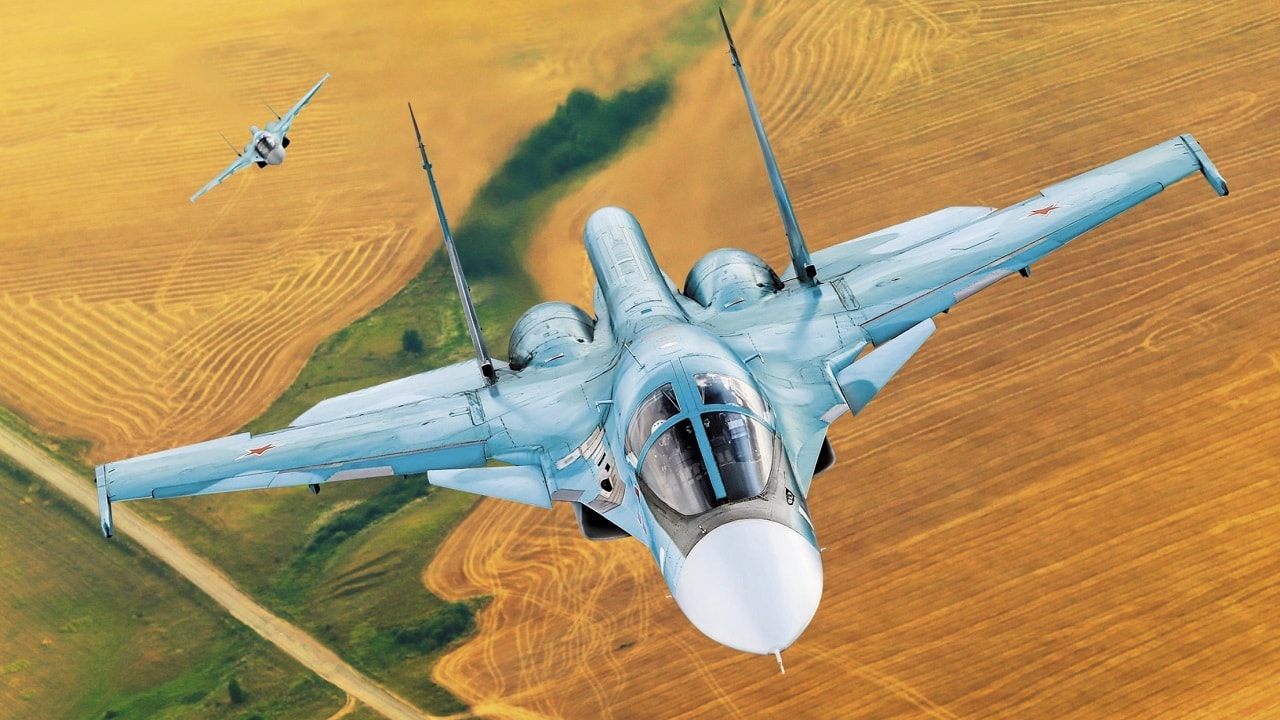
The main limitation of the Ukrainian project is obvious: a glide bomb without a sufficient number of aircraft and trained crews remains an expensive engineering argument. Russia uses the Su-34 as a specialized frontline bomber; Ukraine is forced to distribute the load among the remaining Soviet platforms and Western F-16s, where issues of integration, release altitude, speed, navigation, and crew safety are not resolved by a press release. The range of "tens of kilometers" means that the carrier still has to approach the danger zone. Here, Ukrainian air defense protects not only cities but also its own ability to employ aviation.
However, Russia has a symmetrical weakness. The expansion of the UMPC and UMPB-5R family does not negate the fact that the Su-34 is forced to operate in a predictable launch geography. The further the bomb flies, the more complicated navigation becomes, the more expensive the electronics, and the more noticeable the dependence on imported components. Newsweek, citing an FDD assessment, rightly linked the emergence of the UMPB-5 to Russia's need for cheap stand-off munitions after the failure to destroy Ukrainian air defense at the beginning of the war. This is a very Russian story: the state first fails at a complex task, then compensates for it with mass crude adaptation and declares the adaptation a doctrine.
New Competition in Cheap Precision Strikes
The Ukrainian project does not make Kyiv equal to Moscow in the aerial bombing war. The difference in stocks of FABs, the number of carriers, and the depth of aviation infrastructure remains enormous. But it changes the direction of the industrial race. Previously, Ukraine responded to Russian guided bombs mainly with air defense, dispersion, engineering shelters, and long-range strikes on airfields. Now, another layer of response is emerging: its own cheap guided munition with a large warhead that can be produced domestically and scaled through the defense cluster.
For Russia, this is more dangerous than it seems at first glance. The Kremlin can survive individual Ukrainian strikes on fortifications or warehouses; it struggles more with the loss of asymmetry. The Russian military machine feels comfortable where it has a simple formula for superiority—more barrels, more bombs, more people. When the opponent begins to copy not a specific product but the economic logic of weapons, superiority turns into a competition of cost, electronics, and pilot training rates. In such a race, Russia is strong in scale but weak in the quality of feedback.
My forecast is cautious. In the coming months, the Ukrainian 250-kilogram glide bomb will not eliminate the Russian guided bombs and will not save the front from strikes by the Su-34. But if the first batch provides acceptable accuracy and Ukrainian industry can produce at least dozens of units per month, 2026 will mark the moment when the glide bomb ceases to be a Russian one-sided argument. The war will not become less destructive. It will become more mutual, and that is much more unpleasant for Russian air doctrine than another optimistic report from the Ministry of Defense.
Ukraine has developed a 250-kilogram guided bomb, which has been procured in an experimental batch and is currently being tested by pilots. This advancement poses a challenge to Russia's previous dominance in guided munitions, as the bomb can strike targets from several kilometers away. The development reflects Ukraine's efforts to enhance its military capabilities amid ongoing conflict with Russia.
- Ukraine has developed a 250-kilogram guided bomb over 17 months.
- The first experimental batch has been procured and is being tested by pilots.
- This development challenges Russia's previous monopoly on guided bombs.
- The bomb can strike targets at distances of several kilometers after release.
- Ukraine's military is adapting to counter Russian air superiority.