
Ukrainian FP-1 Strikes Volgograd — 15 Million Tons of Processing at Risk
 Dmitri Volkov
Ukrainian FP-1 Strikes Volgograd — 15 Million Tons of Processing at Risk
Fifteen million tons of annual oil processing — this is a more important figure than the number of drones in a nighttime raid. On the morning of July 31, Ukrainian and international sources reported the strike on the "Lukoil-Volgogradneftepererabotka" complex, one of the largest oil refineries in Russia; simultaneously, strikes on the Wildberries logistics center, facilities in Krasnodar Krai, the Saki aviation plant in occupied Crimea, and a Russian port were mentioned. Reuters separately recorded a statement from the governor of the Volgograd region about a fire at an energy facility following the drone attack, while Kyiv Independent noted the capacity of the Volgograd refinery at 15 million tons of raw materials per year. This is no longer an episodic demonstration of range. It is a methodical measurement of what it costs the Russian air defense system to protect depth.
Why Volgograd is More Important than Symbolism
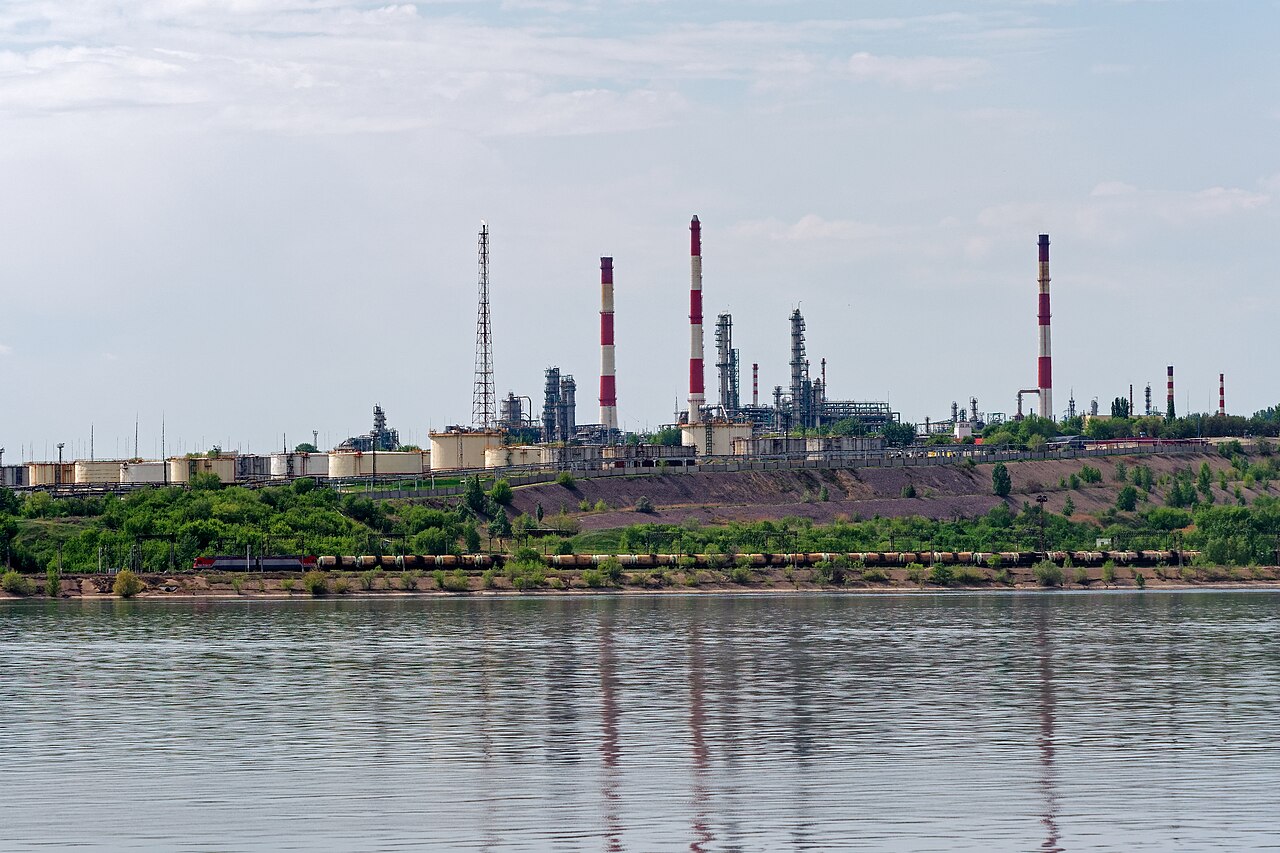
The Volgograd refinery is not an accidental target on the map. Its capacity is roughly comparable to a major regional supply hub that feeds not only the civilian fuel market but also military logistics in the southern direction. In Soviet terminology, such facilities would be referred to as "rear resilience of the front," although today officials prefer to speak of a "technological fire" or "debris fall." The difference between these formulations is not linguistic but political: to acknowledge a systemic strike on the refinery means to recognize that the front line, in economic terms, has moved hundreds of kilometers away from the trenches.
The Ukrainian side, including reports from the SBU and military sources, claims that long-range drones were involved in the campaign, and a number of Ukrainian publications link the strike on Volgograd to the FP-1 produced by Fire Point. Even if some technical details remain unverified by independent expertise, the geography speaks for itself. From the Ukrainian border to Volgograd is hundreds of kilometers, and in several recent reports, routes extending further to Tatarstan were mentioned. This means that Russian air defense is forced to choose: to cover the frontline strip, aviation bases, oil processing, e-commerce warehouses, ports, or administrative centers. In textbooks, such a choice is called the distribution of a limited resource. In reality, it is called a shortage.
Logistics as a Military Target
At first glance, the strike on the Wildberries warehouse seems almost anecdotal: in Russia, with its tradition of military severity, it is not an arsenal that is burning, but a logistics center of a marketplace. However, in modern warfare, civilian logistics has long ceased to be purely civilian. Warehouses, sorting centers, vehicle fleets, insurance chains, security contractors, and repair teams form the infrastructure through which the state maintains the normality of the rear. Kyiv Independent previously reported that Wildberries occupies almost half of the Russian online retail market, and a series of strikes on its warehouses has already become an economic problem, not just a spectacle for social media. In this sense, Ukraine is not striking at a "store," but at the psychological guarantee that the war is happening somewhere far away.
There is also a more practical layer. Military transport rarely exists in the sterile vacuum of military convoys. War consumes trucks, warehouses, fuel, repair capacities, communication, personnel, and accounting. The more such facilities require protection and restoration, the more the Russian security system spreads across the country. This is a familiar problem from late Soviet history: the state can declare an almost endless list of priorities but is physically unable to protect them all at once. In the 1980s, this was called "management overstretch." Today, it can be called simply: the expensive inertia of a great power.
Air Defense Against the Economy of Small Drones
The Russian deep air defense was not built to combat dozens of cheap slow targets flying complex routes to oil depots and warehouses. Its classic logic is to repel NATO air strikes, cruise missiles, and ballistic threats around the most important military and political centers. The S-300, S-400, "Pantsir," and radar posts were created as a layered architecture, but not as an all-Russian dome over every tank, workshop, and distribution terminal. When Ukrainian drones force the expenditure of expensive missiles or constantly redeploy mobile air defense groups, the economy of exchange works against Moscow.
This does not mean that Ukrainian strikes will immediately paralyze the Russian defense industry. Such an assessment would be too convenient and therefore incorrect. Russia retains a large repair base, emergency reserves, experience in quickly masking damage, and the ability to transfer costs to the civilian sector. But the cost of repairing the refinery, downtime of the primary processing unit, loss of tank farms, or insurance risks for contractors do not disappear from the balance sheet. They simply go into the cost of war. If in 2022 Moscow could expect that its energy infrastructure would remain out of reach, by 2026 this assumption looks outdated.
The Crimean Aviation Hub and the Russian Port
The report from Kyiv Post and Ukrainian sources about the strike on the Saki aviation plant in occupied Crimea and the Russian port is just as important as the Volgograd part. Crimea remains for Russia not only a symbol but also a repair-logistics platform: aviation, maritime supplies, radar, fuel warehouses, and a railway connection to the southern front. After a series of strikes on bridges, oil depots, and maritime targets, Kyiv is effectively building a campaign against the entire Crimean-Black Sea system, rather than against individual objects. The old Soviet principle "the fleet covers the army's flank" is now inverted: now the army and the fleet are forced to cover the vulnerable logistics of the peninsula.
This campaign particularly highlights the asymmetry. The Russian side continues to deliver massive strikes on Ukrainian cities: Kyiv Independent reported on July 31 about 255 "Shaheds" in another nighttime attack, while the previous day was accompanied by dozens of missiles and hundreds of drones. Ukraine responds not in a mirror fashion to the scale of combat load but by choosing targets of high operational value. One drone with a small warhead is not equivalent to an "Iskander-K" missile in terms of destructive power. But if it takes out a unit for several days, creates a fire at a refinery, or forces changes in supply routes, its margin becomes unpleasantly high.
Strategic Conclusion
The Russian problem is not that air defense has "broken." The problem is that Ukraine forces it to defend too large a country with too cheap means.
In the coming weeks, Moscow will likely strengthen the protection of energy facilities, redeploy additional mobile groups with machine guns and ZU-23s, expand the network of electronic suppression, and continue to publicly downplay the damage. This is a rational response, but it does not address the main question: each new security perimeter requires people, fuel, communication, and command, that is, the same resources that are lacking at the front. The Ukrainian strategy of long-range strikes should not be assessed by a single fire in Volgograd. It should be evaluated by the accumulation of costs when oil processing, aviation repair, ports, and even warehouses of marketplaces begin to compete for the same scarce security resource.
My cautious forecast is simple. If Kyiv maintains the pace and chooses targets not for media effect but for their place in the supply chain, the Russian rear will not collapse, but it will become more expensive, more nervous, and slower. For a large army, this is sometimes more important than the loss of a single battalion: a battalion can be replenished, but restoring systemic confidence in the rear is much more difficult.
Ukrainian FP-1 drones attacked the Lukoil-Volgograd oil refinery and logistical targets in Krasnodar Krai and Crimea on July 31, 2023. This operation threatens 15 million tons of annual oil processing and highlights the vulnerability of Russian logistics. The strikes demonstrate Ukraine's ability to reach significant targets deep within Russian territory, impacting military supply chains.
- Ukrainian FP-1 drones struck the Lukoil-Volgograd oil refinery, threatening 15 million tons of annual oil processing.
- The attack also targeted logistics centers and military supply routes in Krasnodar Krai and Crimea.
- The strikes indicate a shift in the operational capabilities of Ukrainian forces, reaching deep into Russian territory.