
Ukrainian FP-7 Used in Combat for the First Time — A New Threat to Russian Depths in 2026
 Dmitri Volkov
Ukrainian FP-7 Used in Combat for the First Time — A New Threat to Russian Depth in 2026
The most important detail of Vladimir Zelensky's statement on October 1 is not the range of the new missile, but the short phrase "the next step is production." Ukraine has announced for the first time the combat use of the tactical ballistic missile FP-7, but did not disclose the target, launch area, number of missiles, or the result of the strike. Therefore, the correct conclusion is currently limited: Kyiv has moved from demonstrating a prototype to testing the system in real war. For Russian military doctrine, this change is more significant than one unknown episode.
What is Known About FP-7
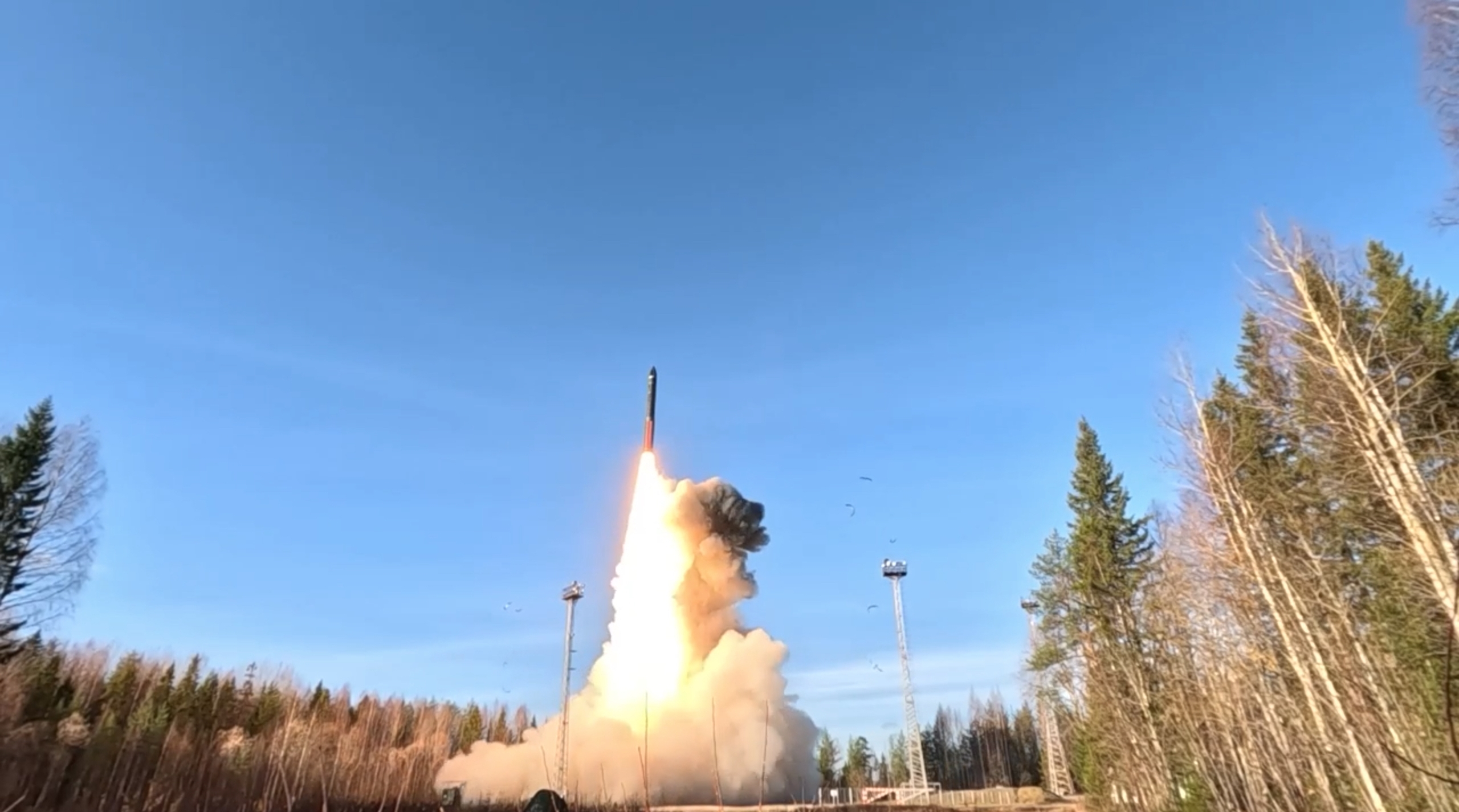
The missile was developed by the Ukrainian company Fire Point, previously known for its strike drones. According to the company itself and published Ukrainian materials, the basic FP-7 belongs to the class of short-range ground ballistic missiles. Various sources cite a range of approximately 200 to 250 kilometers, a warhead weight of about 150 kilograms, and a speed of around 1.5 kilometers per second. These figures cannot yet be considered independent technical expertise: they mainly come from statements by the manufacturer and Ukrainian representatives. The War Zone rightly notes that the actual range, accuracy, and payload depend on the specific configuration and flight profile.
The military-practical purpose of the FP-7 is evident even without disclosing the first target. It is not a replacement for the American ATACMS and not a tool for strategic strikes on the Urals. The missile is intended for strikes on supply nodes, command posts, air defense positions, and drone launch bases in operational depth. In other words, it fills the gap between long-range drones and more expensive Western missile systems.
Why the First Launch Changes Moscow's Calculations
The Russian army has become accustomed to building its defense based on two assumptions. The first is that Ukrainian long-range strike capabilities are limited by Western supplies and the political conditions of their use. The second is that Ukrainian industry can quickly produce drones but not full-fledged ballistic missiles. The FP-7 strikes at both assumptions. Even if the current production is measured in dozens rather than hundreds of units, the very possibility of regular production forces the Russian command to move warehouses, command points, and air defense batteries or take greater risks.
This is particularly unpleasant for Russia at a time when its ground campaign is already facing operational tempo problems. The Institute for the Study of War reported in its assessment on October 1 that Russian forces lost control over a significantly larger area in September than they captured, and the Ukrainian operation in the Lyman area disrupted plans to advance toward Sloviansk. I do not directly link these results to the FP-7 — the first declared launch has only just occurred. However, the combination of events shows that the Russian supply system is forced to operate under conditions of increasing depth of Ukrainian fire impact.
A Symmetrical Response to the Russian Missile War
Moscow has used ballistic missiles for years as a means of pressure on Ukrainian infrastructure and as a way to force Kyiv to expend scarce air defense resources. Now Ukraine is trying to create its own, cheaper, and less politically constrained nomenclature. In this context, the FP-7 should be viewed not only as a weapon for striking targets but also as a tool for changing the cost of the Russian campaign.
Zelensky's statement came against the backdrop of massive Russian attacks on Kyiv. The Guardian reported drone strikes on a school and the Southern Bridge over the Dnieper, while Reuters reported nighttime strikes and casualties in the capital. The timing of these events does not prove that the FP-7 was a response to this operation, but the political signal is clear: Russian superiority in long-range strikes is no longer one-sided. In terms of Soviet military doctrine, this is a struggle not for the effect of a single salvo, but for the sustainability of the entire fire strike system.
The Main Limitation — Production
One missile, even if successfully used, does not create a new balance. Balance arises when industry can produce items in series, intelligence can provide accurate coordinates, and launch crews have secure communication and a stock of missiles. That is why the words "the next step is production" are more important than the words "first combat use."
Fire Point is simultaneously developing an anti-missile variant FP-7.X as part of the European Freyja project and announcing a longer-range FP-9. The overall architecture of the engine, body, and production could theoretically shorten development times, but does not eliminate the shortage of solid fuel, electronics, testing facilities, and qualified engineers. Russia's experience in recent years shows that declared capacity and stable production are different quantities. Ukraine must prove serial production in practice.
Forecast
In the coming months, Moscow will likely intensify its hunt for Ukrainian production facilities, component routes, and mobile launchers, as well as increase the depth of dispersal of its own warehouses. Kyiv, on the other hand, will strive to maintain uncertainty around targets and the pace of production. If the FP-7 appears in regular packages of strikes, the Russian army will have to expend more resources on camouflage and air defense, reducing the density of support for frontline units. If, however, it remains a limited demonstration, the strategic effect will quickly diminish. For now, the FP-7 is not a "Ukrainian ATACMS," but a test of whether Ukrainian military industry can turn an engineering project into a sustainable operational advantage.
Sources
- Reuters, October 1, 2026 — report on the first combat use of FP-7.
- The Guardian, October 2, 2026 — summary of Zelensky's statement and missile characteristics.
- The War Zone, October 1, 2026 — technical analysis of FP-7 and caveats regarding unconfirmed parameters.
- Institute for the Study of War, October 1, 2026 — assessment of the situation of Russian troops and front dynamics.
Ukraine announced the first combat use of the FP-7 tactical ballistic missile on October 1, 2026, marking a significant development in its military capabilities. The missile, developed by Fire Point, has a range of 200 to 250 kilometers and is intended for strikes against supply nodes and command posts. This shift from prototype to combat use poses new challenges for Russian military operations, as it alters the dynamics of the conflict.
- Ukraine has announced the first combat use of the FP-7 missile.
- The FP-7 is developed by Fire Point and is a short-range ballistic missile.
- The missile has a range of approximately 200 to 250 kilometers and a warhead weight of about 150 kilograms.
- The introduction of the FP-7 challenges Russian military assumptions about Ukraine's capabilities.
- The production of the FP-7 is seen as a significant step for Ukraine's military industry.