
Unmanned Stretchers Easily Transport Injured Patients: Systematic Unmanned Intelligent Equipment Revitalizes Medical Rescue
The search and rescue drone took to the sky for wide-area aerial reconnaissance, the four-legged robotic dog approached the disaster site for assessment, and the tracked unmanned vehicle moved forward to transport "injured personnel"… On September 9, the China-Laos "Peace Train-2026" humanitarian medical rescue joint exercise entered the mixed training phase, marking the first systematic combination of unmanned intelligent devices, simultaneously conducting training for casualty search, transport, and material delivery. The integration of unmanned devices on the training ground has revitalized the medical support and rescue model.
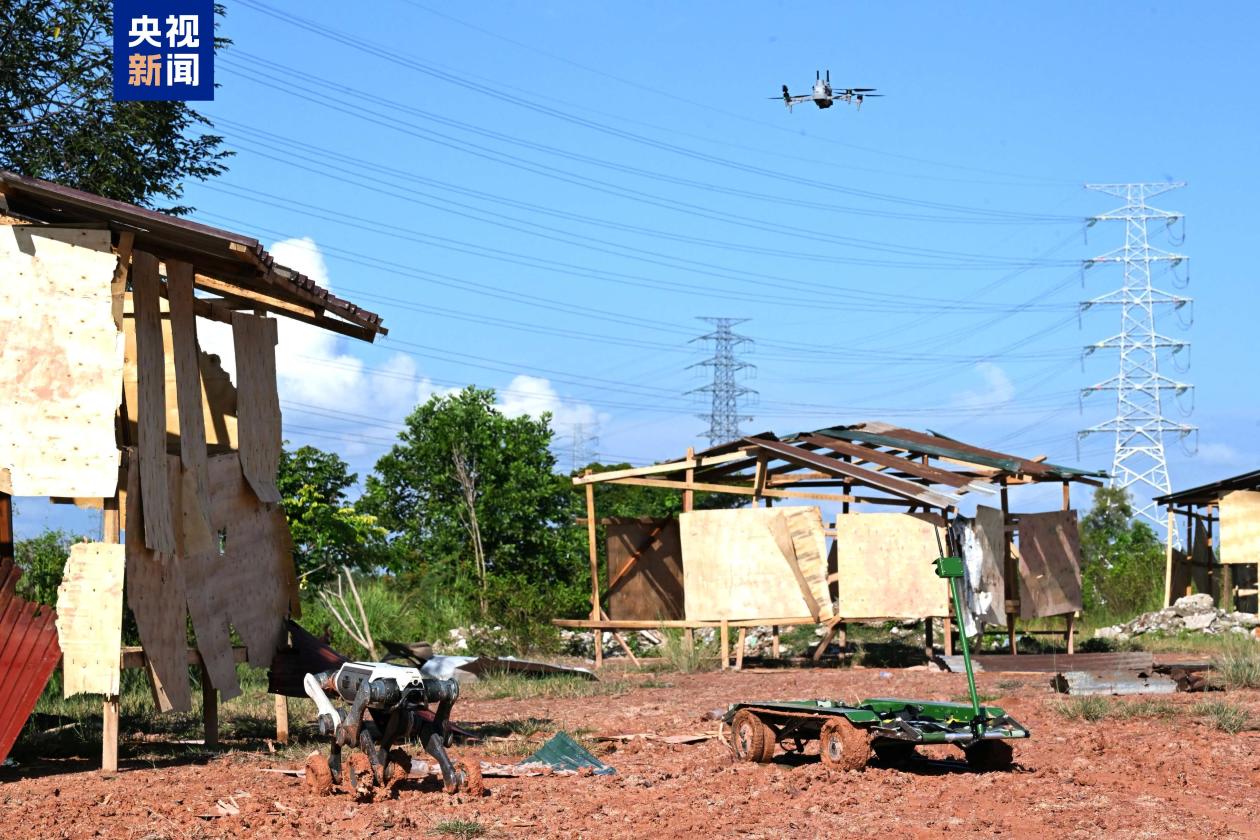
The China-Laos "Peace Train" exercise simulated a disaster site, deploying small intelligent support vehicles, four-legged robotic dogs, and intelligent unmanned search and rescue systems for the rescue drill.
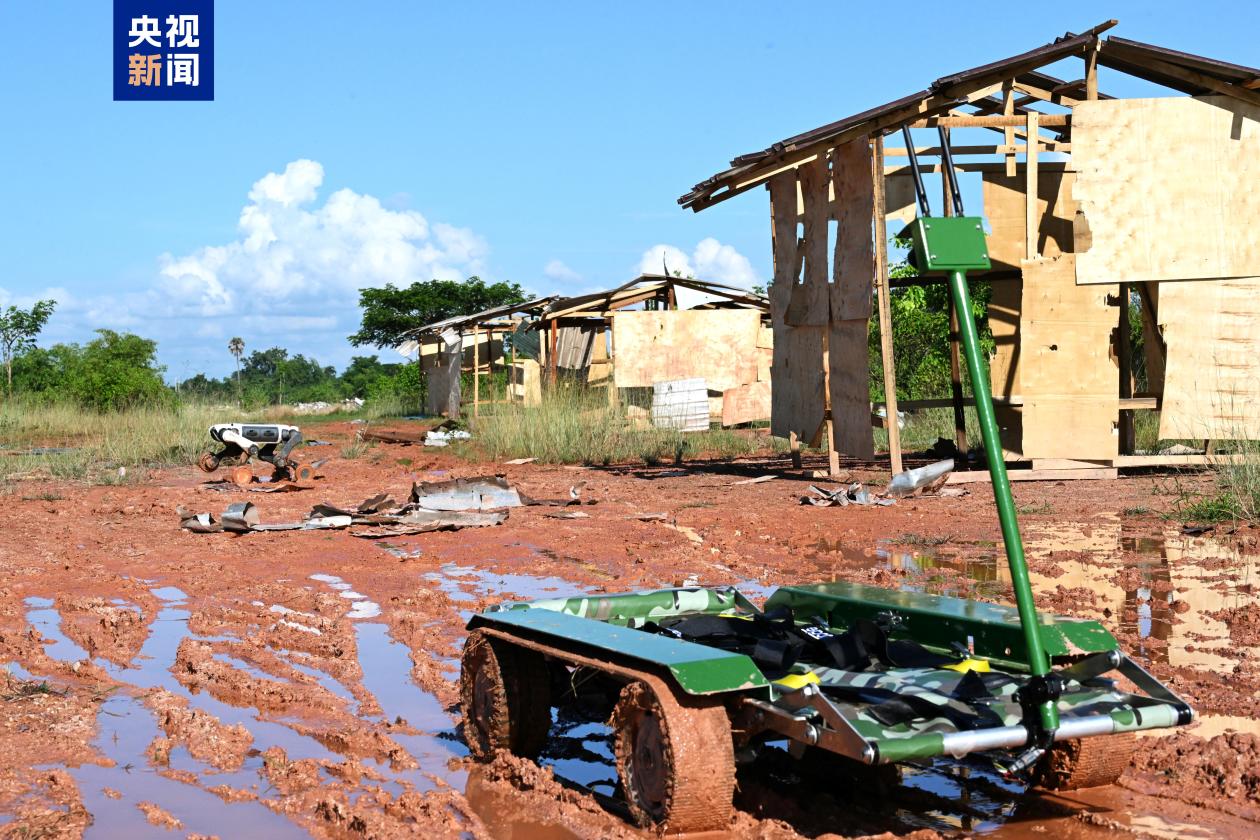
In the simulated disaster site of the China-Laos "Peace Train" exercise, a small intelligent support vehicle (near) and a four-legged robotic dog (far) conducted search and rescue drills beside the ruins.
Participating team member Xu Chao introduced that this training adhered to the concept of prioritizing human involvement while empowering with unmanned devices, integrating unmanned equipment throughout the entire process of casualty search and rescue, precise delivery of emergency supplies, rapid transport of injured personnel, and subsequent treatment by rear medical institutions.
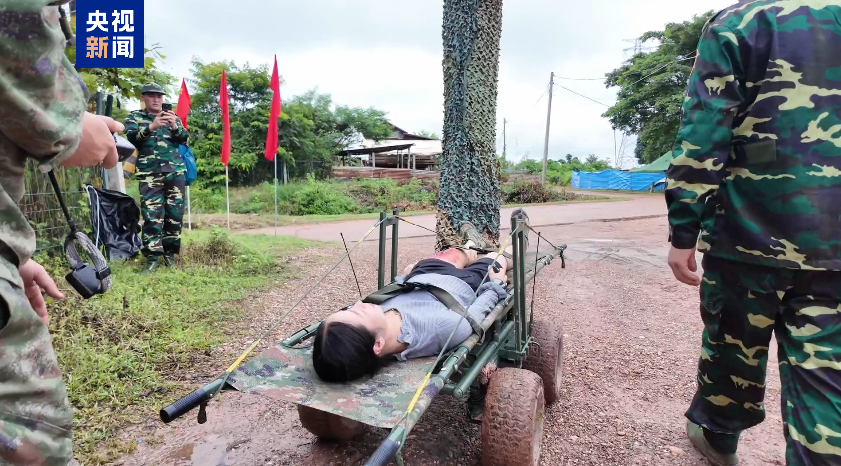
The use of unmanned devices such as drones, robotic dogs, and unmanned vehicles allows for deep penetration into dangerous areas to execute search and rescue tasks, helping rescuers operate quickly and efficiently, meeting various complex task requirements, enhancing the efficiency of casualty search and rescue, and long-distance transport capabilities, thereby reconstructing the timeliness system for casualty search and transport, achieving real-time rapid discovery and response.
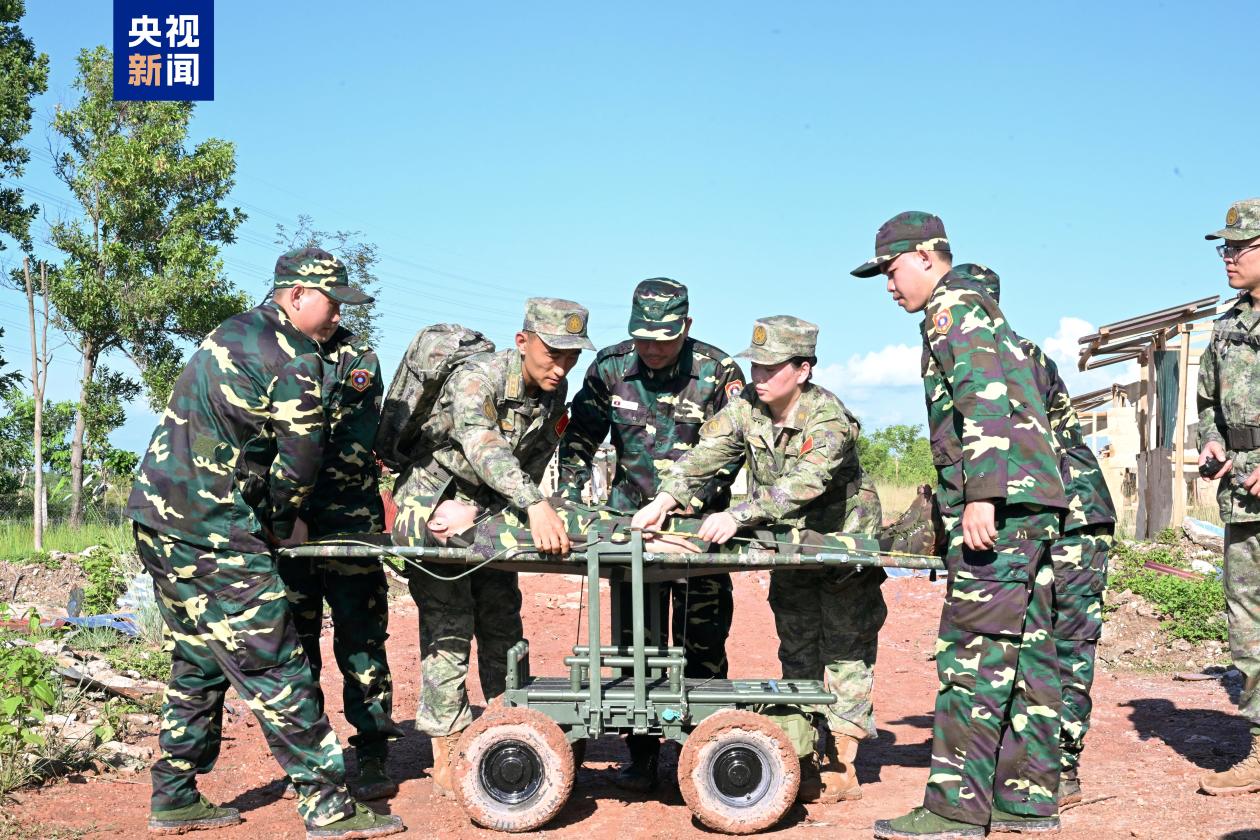
Medical team members from both China and Laos in the "Peace Train" used a foldable unmanned stretcher to transport injured personnel to rear medical institutions.
"This unmanned device training marks a key step in our systematic application of unmanned intelligent medical rescue forces," said Chen Peizheng, deputy captain of the first-level medical institution search and rescue team. The China-Laos "Peace Train" is enhancing medical support capabilities through the systematic application of unmanned intelligent devices, accumulating practical experience for carrying out diverse humanitarian medical rescue missions.
(CCTV reporters Zhou Na and Liu Xiaowei)
Chinese and Laotian medical teams conducted humanitarian medical rescue training using unmanned intelligent devices on September 9. The exercise involved drones, robotic dogs, and unmanned vehicles for search and rescue operations, marking a significant advancement in military medical support capabilities. The training emphasized the integration of unmanned equipment to improve efficiency in casualty evacuation and logistics.
- Unmanned devices were used for search and rescue operations during the training exercise.
- The training involved both Chinese and Laotian medical teams.
- The exercise took place on September 9, 2026.
- Various unmanned devices, including drones and robotic dogs, were deployed.
- The training aimed to enhance the efficiency of medical rescue operations.