
U.S. Air Force keeps KC-46A in testing as key defects remain unresolved
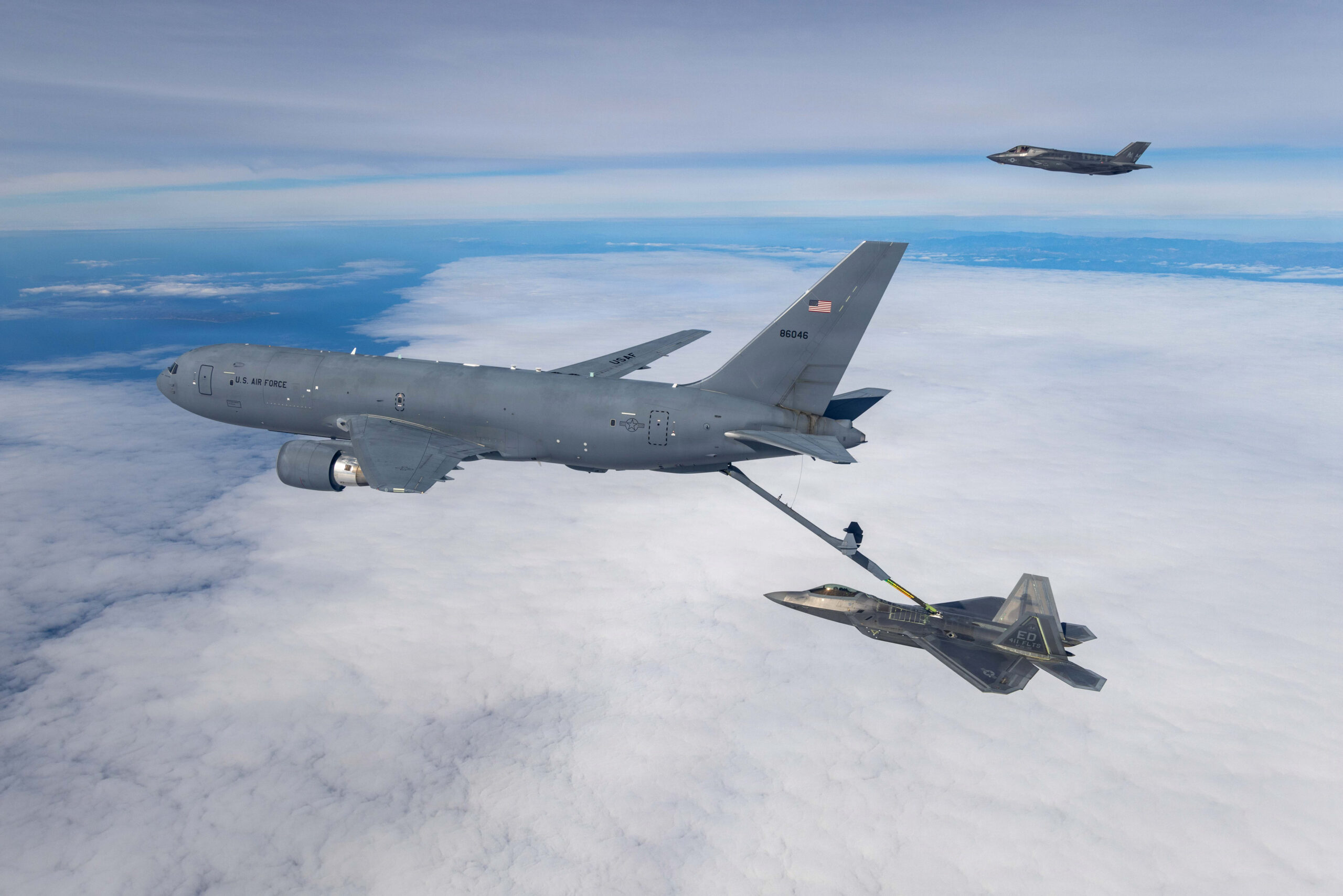
The United States Air Force has still not completed initial operational test and evaluation for the KC-46A Pegasus tanker, with the program’s test cycle stretching on from 2019 as key technical fixes remain unfinished, according to the Pentagon’s Director, Operational Test and Evaluation annual report.
The report states that DOT&E approved the KC-46A IOT&E test plan in April 2019 and later told the Air Force in a May 2020 memorandum that it would not submit an IOT&E report until operational testing of a production-representative Remote Vision System was complete.
The continued delay matters because the KC-46A is already being used as a deployable tanker, but the Air Force still has not closed the full operational test cycle needed to confirm that the aircraft meets all required performance standards. The unresolved issues center on the Remote Vision System, or RVS, and the Boom Telescope Actuator Redesign, or BTAR, both of which remain tied to the completion of IOT&E.
According to the annual report, the Air Force continues to work with Boeing on technical upgrades to the KC-46A’s RVS and BTAR in order to meet operational requirements. DOT&E states that, once those upgrades are complete, IOT&E will resume. In fiscal year 2025, the Air Force Operational Test and Evaluation Center completed the cybersecurity portion of IOT&E, but the broader operational evaluation remains unfinished.
The report makes clear that the testing program is far along but still incomplete. AFOTEC has collected 85 percent of the planned IOT&E flight test data, yet it “cannot complete the remaining IOT&E events until the program office implements final RVS and BTAR upgrades,” DOT&E wrote. The report adds that operational testing of those upgrades will be integrated with developmental flight testing as much as possible, and that all remaining IOT&E events will be carried out alongside developmental test objectives.
That timeline leaves the KC-46A in an unusual position. The tanker is not a paper program or an early prototype. It is already fielded and approved by Air Mobility Command as a deployable asset to support U.S. Transportation Command taskings, although the report says that approval comes “with limitations.” In other words, the aircraft is operating in service while the formal test process needed for a full operational judgment is still open.
As described by DOT&E, the KC-46A is intended to replace part of the aging U.S. tanker fleet. The report says the Pegasus is an Acquisition Category IC program and the first increment of 183 replacement tankers for a fleet of more than 400 KC-135 and KC-10 aircraft. The aircraft itself is a modified Boeing 767-200ER commercial airframe adapted with military systems and refueling equipment for missions that include aerial refueling, airlift, aeromedical evacuation, emergency aerial refueling, air sampling, and support for combat search and rescue.
In practical terms, the RVS and boom system are central to the aircraft’s core mission. The Remote Vision System allows operators to conduct refueling operations using cameras and displays rather than direct visual observation from a traditional boom station. The boom telescope actuator is part of the mechanism used to control the refueling boom during contact with receiver aircraft. Problems in either area affect the tanker’s ability to perform aerial refueling safely and consistently across the range of operational conditions the Air Force expects.
DOT&E’s latest report shows that the Pegasus still falls short in other areas as well. The office wrote that the KC-46A “has not been able to meet several suitability metrics in past years, and this trend has continued through FY25.” It added that operational availability and mission capable rates remain “well below their threshold requirements.” Those are not minor bookkeeping measures. Availability and mission capable rates are core indicators of whether a fleet can generate aircraft consistently enough to support real-world operations.
The report also states that the program office continues efforts to remediate previously reported Category 1 deficiencies, including the RVS and BTAR improvements and other airframe deficiencies identified during earlier testing. On effectiveness, DOT&E said the KC-46A is capable of refueling 26 of 27 candidate receiver aircraft types, though some restrictions remain that limit availability in certain environmental conditions and aircraft configurations. Testing of the 27th receiver type is expected to resume after the BTAR upgrade is complete.
Aerial refueling is one of the Air Force’s core enabling missions, supporting long-range strike, fighter deployments, bomber operations, mobility flights, and joint operations across wide theaters. Delays in fully closing operational testing for a tanker fleet replacement program therefore carry weight beyond a single aircraft type. A tanker that remains under operational limitations or below availability thresholds affects how reliably the force can generate support for other combat aircraft.
Content preview only. Full article available at source. View Full Article
The U.S. Air Force continues testing the KC-46A Pegasus tanker, which has unresolved technical defects related to its Remote Vision System and Boom Telescope Actuator. Despite being deployed, the aircraft has not completed its initial operational test and evaluation since 2019, affecting its operational availability and mission capable rates. The Air Force is collaborating with Boeing on necessary upgrades to meet performance standards.
- The KC-46A Pegasus tanker has not completed initial operational test and evaluation since 2019.
- Key technical fixes related to the Remote Vision System and Boom Telescope Actuator remain unresolved.
- The Air Force is working with Boeing on upgrades to meet operational requirements.
- The KC-46A is already being used as a deployable tanker despite incomplete testing.
- Operational availability and mission capable rates are below threshold requirements.