
U.S. Air Force plans long-term ASARS-2 support for the U-2
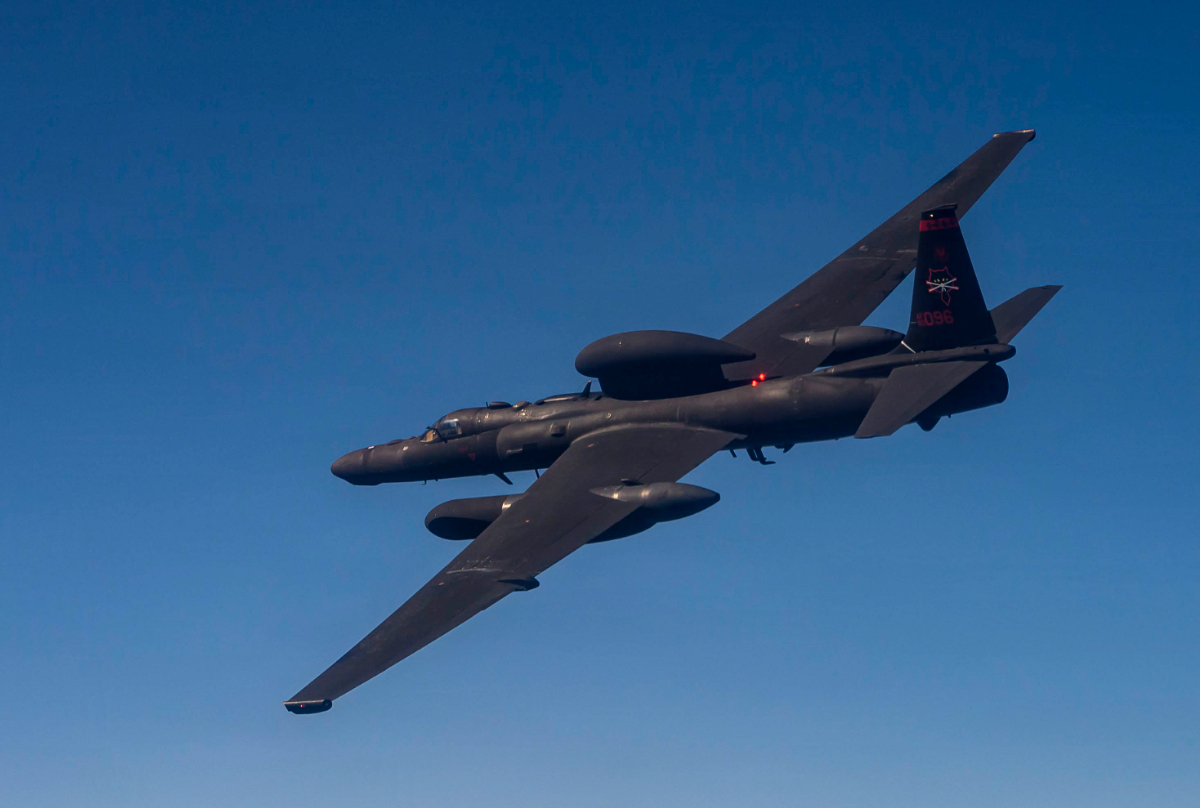
The U.S. Air Force is looking for companies that can repair and sustain the Advanced Synthetic Aperture Radar System-2, or ASARS-2, the imaging radar carried by the U-2 Dragon Lady spy plane, even as the service asks Congress to retire its last U-2s by the end of fiscal 2027.
The Air Force Life Cycle Management Center’s U-2 program office posted the request for information on the federal government’s contracting website on Oct. 22 and amended it on Oct. 28, moving the response deadline from Nov. 13 to Nov. 18 at 3 p.m. Eastern. The notice is market research rather than a solicitation, and it gives no contract value, quantity or period of performance.
Under the contract logistics support the Air Force describes, a contractor would provide engineering support, repair spare assets and resolve system failures on the radar and its ground support equipment. Depot maintenance support teams would handle mission software updates, engineering for parts that are no longer manufactured, engineering change proposals, configuration management, technical manuals, specialized in-plant repair, calibration and integration with other ASARS-related systems on the U-2. The work also carries cybersecurity requirements under NIST SP 800-171 and SP 800-53, Intelligence Community Directive 503 and the Cybersecurity Maturity Model Certification process.
“The Government does not own or have access to the data for the ASARS-2 sensor,” the notice says.
The Air Force has classified the radar as a noncommercial item and has not yet decided what security clearance the work will require or how much of it would be performed outside the continental United States.
Data rights matter here because Raytheon, now part of RTX, has supplied ASARS for the U-2 since the early 1980s, and federal procurement records list the company as the holder of Air Force engineering and sustainment orders for the ASARS-2A version under contract FA8528-20-D-0023. A new supplier without access to the design data would have to show it can still repair and qualify the components.
The notice describes the radar’s job as producing near-real-time, high-resolution, long-range imagery of the ground day or night and in any weather. Synthetic aperture radar builds a detailed, map-like picture from radar returns as the aircraft moves, so clouds and darkness do not block it. Flying above 21,300 meters (70,000 feet), the U-2 can point the radar deep into territory it is not flying over.
The radar has gone through several versions. The baseline ASARS-2 entered service in the 1980s, and the Air Force received the first ASARS-2A as its replacement in 2001. In 2019, Raytheon said the newer ASARS-2B, built around an active electronically scanned array antenna, doubles the surveillance range of the ASARS-2A while keeping its mapping and imagery resolution. The Air Force’s fiscal 2021 budget request said the 2B replaces the 2A’s front-end components, which had become hard to support because parts were going out of production. The new notice refers only to ASARS-2 and does not say which versions the sustainment work would cover.
ASARS-2B is also slated to fly beyond the U-2: a Pentagon budget reprogramming document confirmed that the radar is part of the sensor suite for the U.S. Army’s High Accuracy Detection and Exploitation System (HADES) intelligence business jets.
The notice lands in the middle of a long fight over the U-2’s future. In its fiscal 2027 budget, the Air Force proposed retiring its remaining U-2s by the end of the fiscal year, as part of a plan to divest 149 aircraft. Congress has blocked earlier retirement attempts, and House appropriators’ fiscal 2026 defense bill barred the service from divesting more than eight U-2s. The fleet is still flying: in January, maintainers at Beale Air Force Base, California, launched U-2s under simulated attack during Exercise Dragon Shield.
Content preview only. Full article available at source. View Full Article
The U.S. Air Force is seeking contractors for the repair and sustainment of the ASARS-2 radar system used by the U-2 Dragon Lady spy plane, despite plans to retire the aircraft by the end of fiscal 2027. The request for information was posted on October 22, 2023, and amended shortly after, indicating ongoing efforts to maintain this critical military equipment.
- The U.S. Air Force is looking for contractors to support the ASARS-2 radar system for the U-2.
- The request for information was posted on October 22, 2023, and amended on October 28, 2023.
- The Air Force plans to retire its last U-2s by the end of fiscal 2027.
- Raytheon has supplied ASARS for the U-2 since the 1980s.
- The ASARS-2 radar produces high-resolution imagery regardless of weather conditions.