
U.S. Air Force puts its first hypersonic missile into production
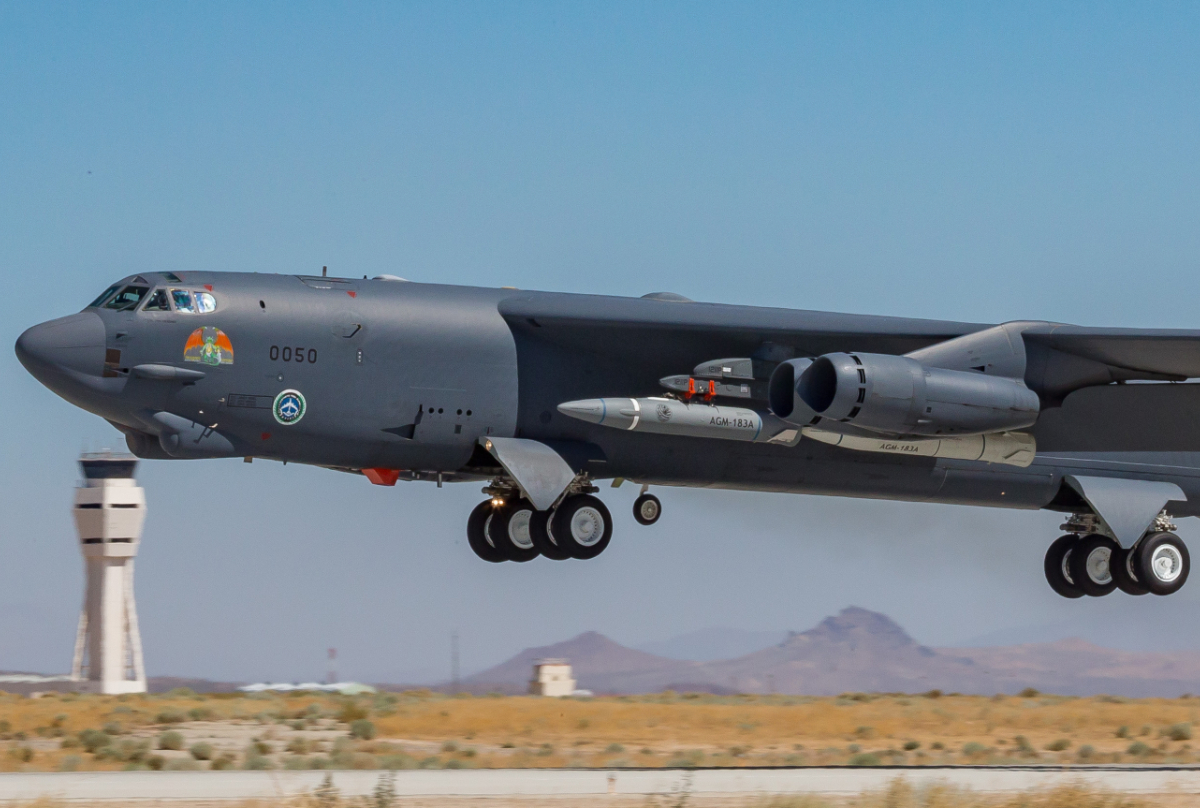
The U.S. Air Force has put its first hypersonic weapon into production, awarding Lockheed Martin a $694 million contract on Sept. 29 to build and field the AGM-183A Air-Launched Rapid Response Weapon, or ARRW, a missile the service had planned to abandon just three years ago, the Department of the Air Force announced on Oct. 26.
The service withheld how many missiles the contract covers and when deliveries will begin, citing operational security, but said the award formally moves the weapon out of prototyping and flight testing and into production. The contract was placed through the Department of War’s Enterprise-Wide Agile Acquisition Contract.
ARRW is a boost-glide weapon that rides a solid-fuel rocket booster to more than five times the speed of sound, about 6,100 km/h (3,800 mph), before releasing a glide vehicle that maneuvers toward its target, which makes it far harder to track and intercept than a conventional ballistic missile. The U.S. Air Force says it will let aircraft strike time-sensitive, heavily defended and high-value targets from long range, outside the reach of enemy air defenses.
“This is a turning point in our advanced weapons roadmap. By moving ARRW from test to production, we’re providing our combatant commanders with a credible, high-speed strike weapon capable of penetrating the most advanced anti-access and area-denial systems,” said Secretary of the Air Force Troy Meink.
The missile is too large for most fighters and will initially be carried by the B-52 Stratofortress bomber, Air & Space Forces Magazine reported, and it has also reportedly been tested on the B-1.
“Fielding ARRW enhances our ability to hold targets at risk anywhere around the world. This hypersonic weapon provides the Joint Force a flexible and rapid response option for highly contested environments,” said Chief of Staff of the Air Force Gen. Ken Wilsbach.
The production decision caps a troubled development history. Lockheed won the design contract in 2018, but the first three flight tests starting in 2021 failed before the missile flew successfully in May 2022, and in March 2023 the service’s then top acquisition official, Andrew Hunter, said the program would end without any production buys as the U.S. Air Force shifted its focus to the smaller Hypersonic Attack Cruise Missile. The service reversed course in 2025, when then-Chief of Staff Gen. David Allvin told Congress the U.S. Air Force would buy ARRW.
The program received $362 million in fiscal 2026, and the U.S. Air Force has requested $452 million for production in fiscal 2027, although that request is stalled in Congress while the Pentagon operates under a continuing resolution at 2026 funding levels. Budget plans call for $556 million to $621 million a year for ARRW procurement from 2028 to 2031, with missile quantities marked as controlled unclassified information.
Content preview only. Full article available at source. View Full Article
The U.S. Air Force has initiated production of the AGM-183A Air-Launched Rapid Response Weapon, awarding a $694 million contract to Lockheed Martin on September 29, 2023. This hypersonic missile is intended to enhance the Air Force's capability to strike high-value targets from long distances, overcoming enemy air defenses. The decision marks a significant shift from previous plans to abandon the program, reflecting renewed commitment to hypersonic weaponry.
- The U.S. Air Force awarded Lockheed Martin a $694 million contract for the AGM-183A missile.
- The missile is designed to strike high-value targets from long range.
- The production decision follows a troubled development history with previous flight tests failing.
- The missile will initially be carried by the B-52 Stratofortress bomber.
- The U.S. Air Force plans to procure $556 million to $621 million annually for ARRW from 2028 to 2031.