
U.S. Air Force Reaffirms Sixth-Generation Fighter F-47's First Flight Target Remains Set for 2028
Recently, senior officials from the U.S. Air Force disclosed that the complete production line for the sixth-generation stealth fighter F-47 is rapidly taking shape, with the first flight still targeted for 2028. The main contractor, Boeing, has invested nearly $2 billion to expand the F-47 production facility and recently secured the U.S. Navy's carrier-based sixth-generation fighter project.
In a recent online seminar hosted by the Air Force and Space Force Association, Brigadier General Timothy H. Helfrich, the Air Force's Executive Officer for Fighter and Advanced Aircraft Procurement, stated that the work to establish a complete production line for the sixth-generation fighter F-47 is getting closer. Since 2023, Boeing has been expanding its facilities in St. Louis by over 1 million square feet, including an 880,000 square foot final assembly building, hangars, and radar cross-section testing facilities. The entire project is scheduled for completion by 2030. Currently, the F-47 program is still advancing according to an aggressive timeline, with the first flight goal set for 2028, and the production variant expected to enter operational service in the early 2030s.
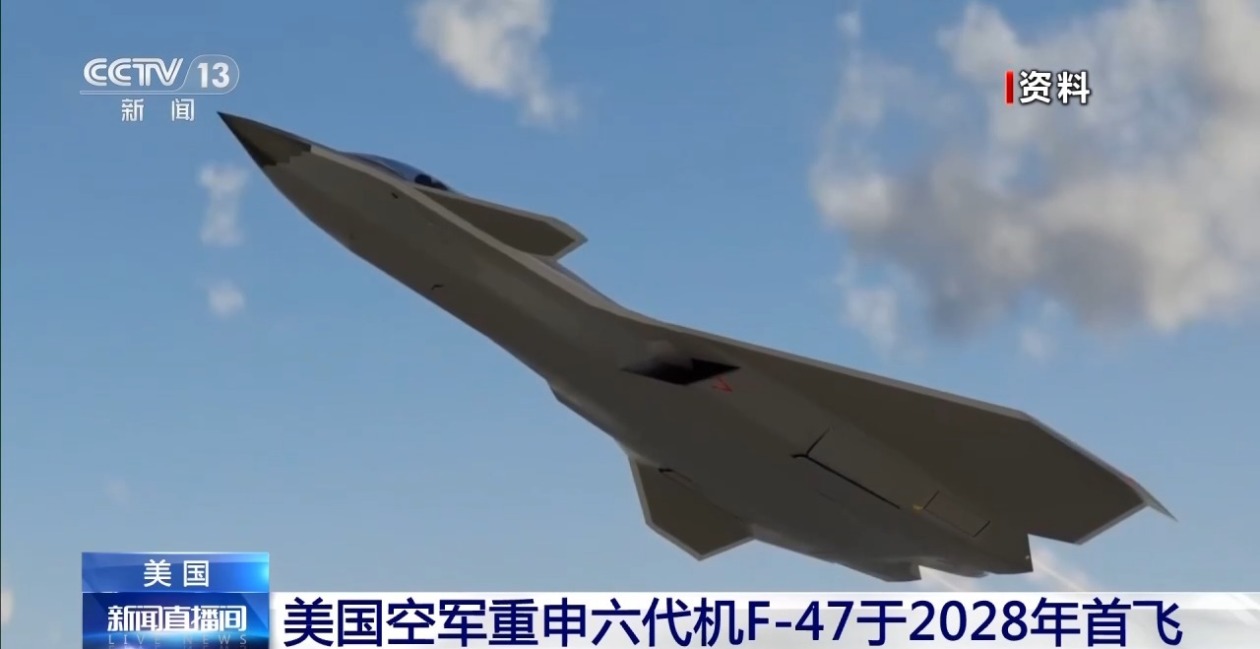
Boeing won the bid to produce the U.S. Air Force's sixth-generation fighter F-47 in March 2025, and at least one pre-production model is currently under construction. According to publicly available plans, the F-47 has a combat radius exceeding 1,000 nautical miles, approximately 1,852 kilometers, which is over 70% greater than the F-22's combat radius, and is equipped with an open architecture that allows for coordinated operations with unmanned wingmen. The U.S. Air Force plans to procure at least 185 aircraft as a direct successor to the F-22.
Additionally, Boeing simultaneously secured the U.S. Navy's carrier-based sixth-generation fighter project on September 29. Senior officials from the U.S. Air Force have publicly stated that advancing two sixth-generation fighter projects simultaneously poses challenges to industrial capacity.
Directly targeting the Indo-Pacific region to reduce reliance on aerial refueling
The U.S. Air Force disclosed that the sixth-generation fighter F-47 is planned with a combat radius exceeding 1,000 nautical miles. Its extended range, stealth capabilities, combined with manned and unmanned collaborative systems, will primarily be used to address anti-access and area denial challenges in the Indo-Pacific direction.
Experts point out that in future operations in the Indo-Pacific region, the U.S. Air Force will need to traverse the western Pacific to execute air superiority, penetration, reconnaissance, or coordinated strike missions.
Military commentator Zhang Xuefeng: Facing the vast Pacific Ocean, the U.S. Air Force has only two footholds: the first island chain and then the second island chain. However, in the future, when the U.S. Air Force engages in combat in the Pacific against formidable opponents, it cannot ensure the safety of bases in the "first island chain." Future adversaries in the Asia-Pacific region will not only possess more advanced missile arsenals but also have air forces comparable to or even superior to the U.S. in certain areas. The U.S. Air Force will find it difficult to rely on bases related to the "first island chain" for operations. This means it will need to launch from bases in the "second island chain," such as Guam, which is about 3,000 kilometers from the Asian mainland and averages about 2,500 kilometers from U.S. military bases in the "first island chain," such as those in Japan and the Philippines.
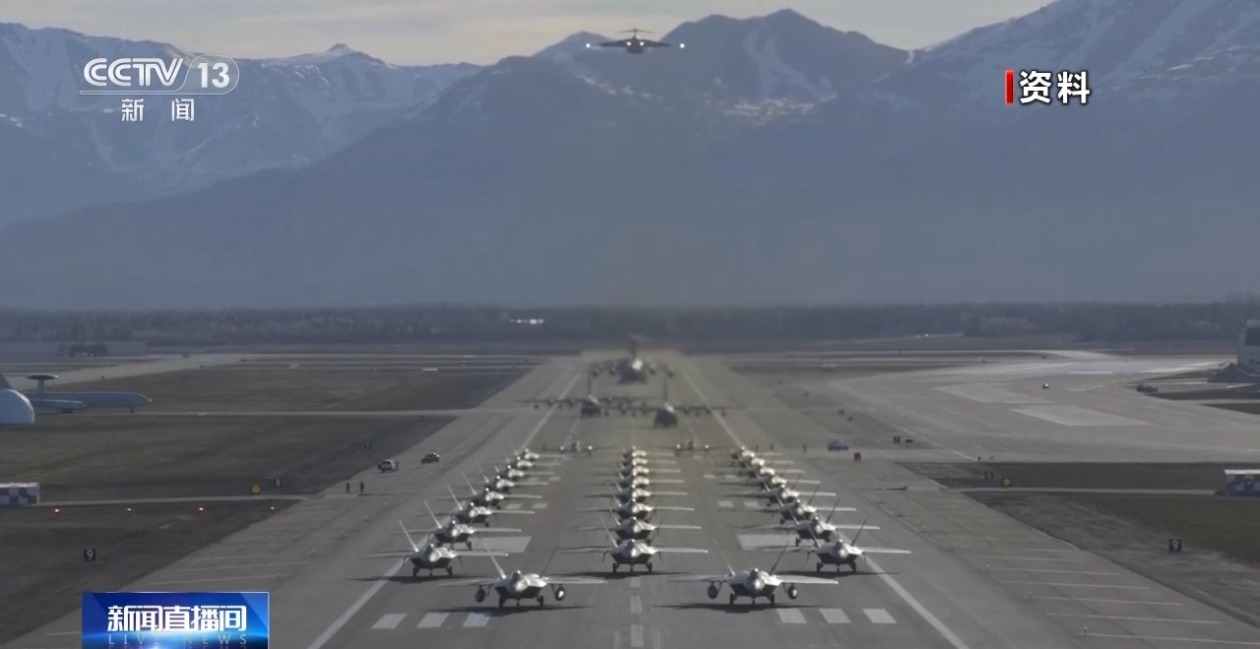
The combat radius of the U.S. Air Force's current F-22 is about 590 nautical miles, and the F-35A is about 670 nautical miles. If launched from Guam, reaching the airspace over the Asian mainland would require multiple aerial refuelings, which not only demands a significant number of tankers but also requires those tankers to be relatively close to the air combat area.
Military commentator Zhang Xuefeng: However, aerial refueling aircraft themselves have relatively low survivability and are quite vulnerable, especially as many countries now possess long-range air-to-air missiles with ranges of hundreds of kilometers. If the U.S. military were to conduct operations based on the combat radius of previous fighter jets, it would struggle to secure air superiority over the Asian mainland. Therefore, the U.S. plans for the F-47's combat radius to exceed that of existing fifth-generation fighters by 70%, reaching around 1,850 kilometers, which would minimize reliance on aerial refueling and allow tankers to stay as far away from dangerous air combat zones as possible, while also coordinating with unmanned wingmen to enable sixth-generation fighters to operate in high-threat airspace within the "first island chain."
Engine delays: Transitional F-47 may not fully meet standards
The U.S. Air Force's sixth-generation fighter F-47 is planned with a combat radius exceeding 1,000 nautical miles. To achieve this target, breakthroughs are needed in three areas: airframe, aerodynamic shape, and engine. However, currently, the development progress of the F-47 is in a state of "airframe advancement, engine delays." What impact will this have on the flight testing pace and performance validation?
Military commentator Zhang Xuefeng: To significantly increase the combat radius of the F-47, three technical measures are required.
First, the aircraft needs to be larger to carry more fuel. The publicly available design also indicates that the F-47 will be larger than existing fighters. For example, the current F-35 can carry over 8 tons of fuel. I believe the F-47 may carry around 10 tons or even more.
Second, further optimization of the fighter's aerodynamic shape is necessary to minimize drag during subsonic and supersonic cruise, thereby improving cruise efficiency.
Third, the development of new low-fuel-consumption engines is essential. The final version of the F-47 may be equipped with adaptive cycle engines. During subsonic cruise, the engine operates in a high bypass ratio mode to increase the bypass ratio and reduce fuel consumption. When entering a combat zone for supersonic cruise, it can operate in a low bypass ratio mode, which is beneficial for supersonic flight.
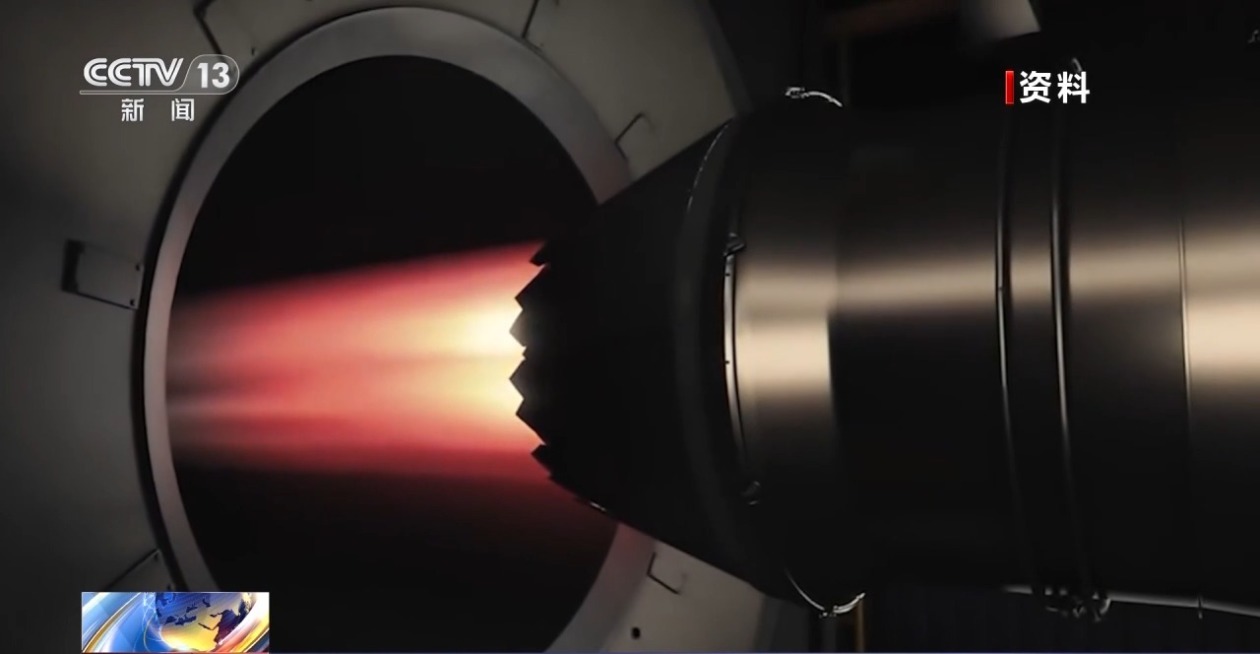
Currently, the prototype completion time for the adaptive cycle engine supporting the F-47 has been pushed back to 2030-2031, which is 2 to 3 years later than the planned first flight in 2028. Therefore, the first batch of F-47s will likely only use transitional power plants.
Military commentator Zhang Xuefeng: Although prototypes have been developed, they have not yet reached practical levels and still need to address reliability issues. Therefore, the U.S. will initially equip the F-47 with engines based on existing technology or improved versions of current engines to ensure that engines are available for the first flight and testing, and to establish initial operational capability, before gradually completing the development and installation of the new engines.
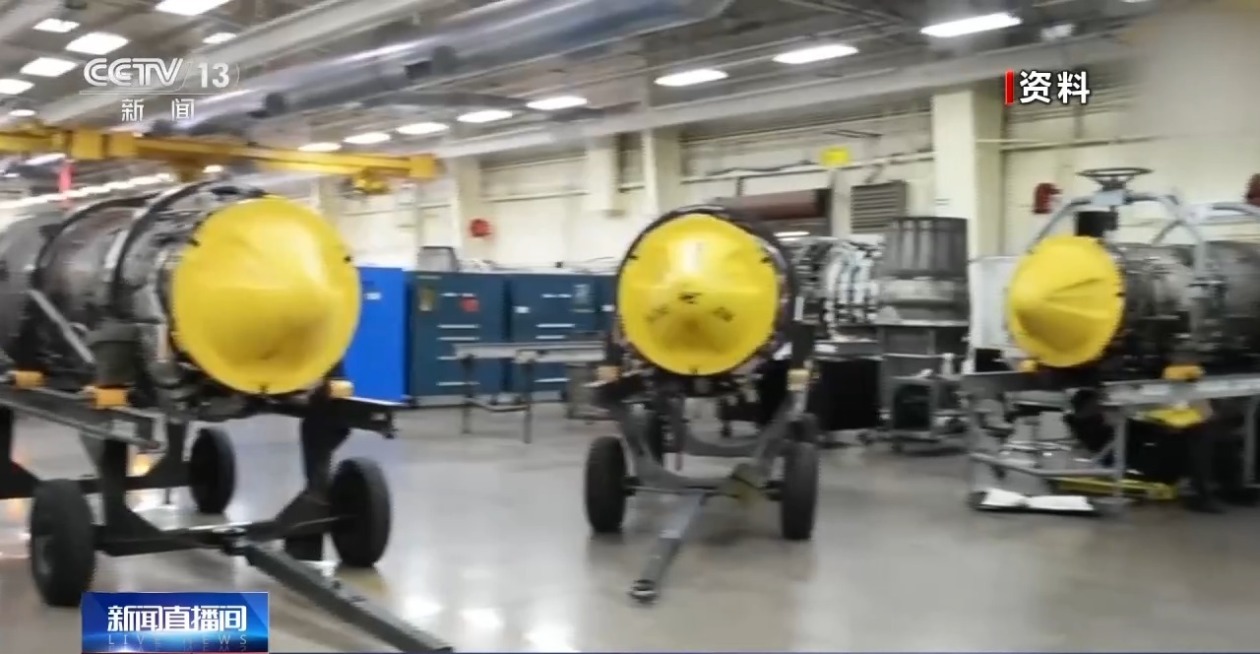
This means that the F-47 using transitional engines may not fully meet design targets in terms of combat radius, power supply, and thermal management.
Manned and unmanned mixed operations reshape air combat modes
According to publicly available statements from the U.S. military, the F-47 will be designed as a command node for mixed manned and unmanned formations, utilizing open architecture and unmanned wingman collaboration. How will this change the tactical application of sixth-generation fighters?
According to U.S. military concepts, the F-47 will serve as the core of the "Next Generation Air Dominance" system family, commanding multiple collaborative combat aircraft to form mixed manned and unmanned formations. This means that the role of pilots will shift from "driver + shooter" to "mission commander," focusing more on situational integration, threat assessment, and fire authorization, while high-risk actions such as reconnaissance, electronic jamming, deception, and target designation will be delegated to unmanned wingmen.
Military commentator Zhang Xuefeng: How manned fighters will collaborate with unmanned wingmen is a topic currently being researched and discussed by many air force powers. As of now, there is no definitive answer. However, in general, unmanned wingmen are expected to act as external sensor stations and weapon stations for manned fighters, taking the lead in high-threat airspace during the most dangerous air combat situations. Some of these unmanned aircraft will primarily carry sensors, forming an external sensor network, allowing manned fighters to maintain radio silence, conduct covert attacks, and enhance their situational awareness capabilities.
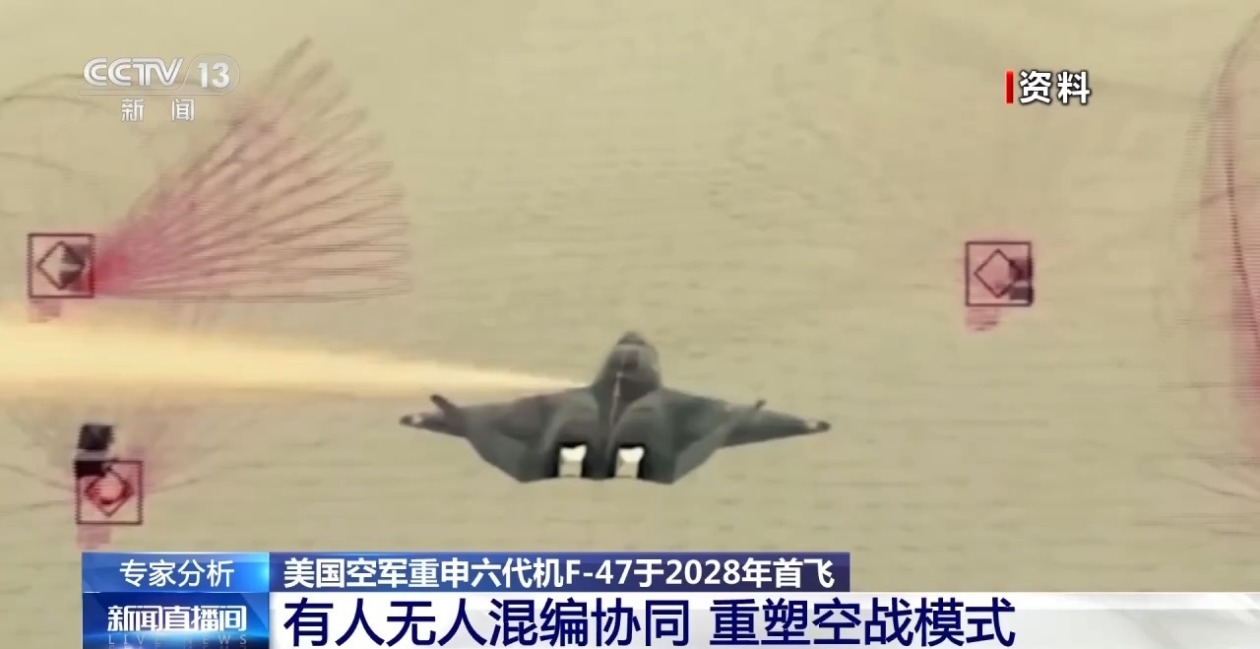
The F-47 can leverage its stealth and long-range advantages to penetrate near the combat zone, while unmanned wingmen can advance hundreds of kilometers ahead, acting as sensor nodes, electronic warfare nodes, or strike nodes. The survivability of the F-47 will no longer depend solely on its own maneuverability and stealth but also on the entire formation's perception, communication, and task allocation capabilities.
Military commentator Zhang Xuefeng: Some cheaper unmanned aircraft can serve as shadow substitutes for manned aircraft, drawing enemy fire. More advanced unmanned combat aircraft can autonomously engage in intense air combat. In the future, sixth-generation fighters will act as command aircraft, directing a series of unmanned aircraft to engage in combat against enemy air formations.
Boeing's exclusive acquisition of two types of sixth-generation fighters raises concerns about production capacity
Senior officials from the U.S. Air Force have publicly stated that Boeing has consecutively secured contracts for the Air Force's F-47 and the Navy's F/A-XX sixth-generation fighter, which will pose challenges to industrial capacity. Can the U.S. aerospace industry's capacity support the simultaneous production of two sixth-generation fighter lines?
Military commentator Zhang Xuefeng: As early as last year, the Pentagon questioned whether the U.S. industrial base could simultaneously develop two sixth-generation fighters. At that time, the Pentagon suspended the budget for the U.S. Navy's sixth-generation fighter F/A-XX program. However, Congress later provided a lifeline funding. But Boeing subsequently came out to refute this, claiming that the U.S. industrial sector is fully capable of simultaneously developing two sixth-generation fighters, essentially defending itself. However, the U.S. military is concerned that giving both sixth-generation fighter programs to Boeing may lead to indigestion.
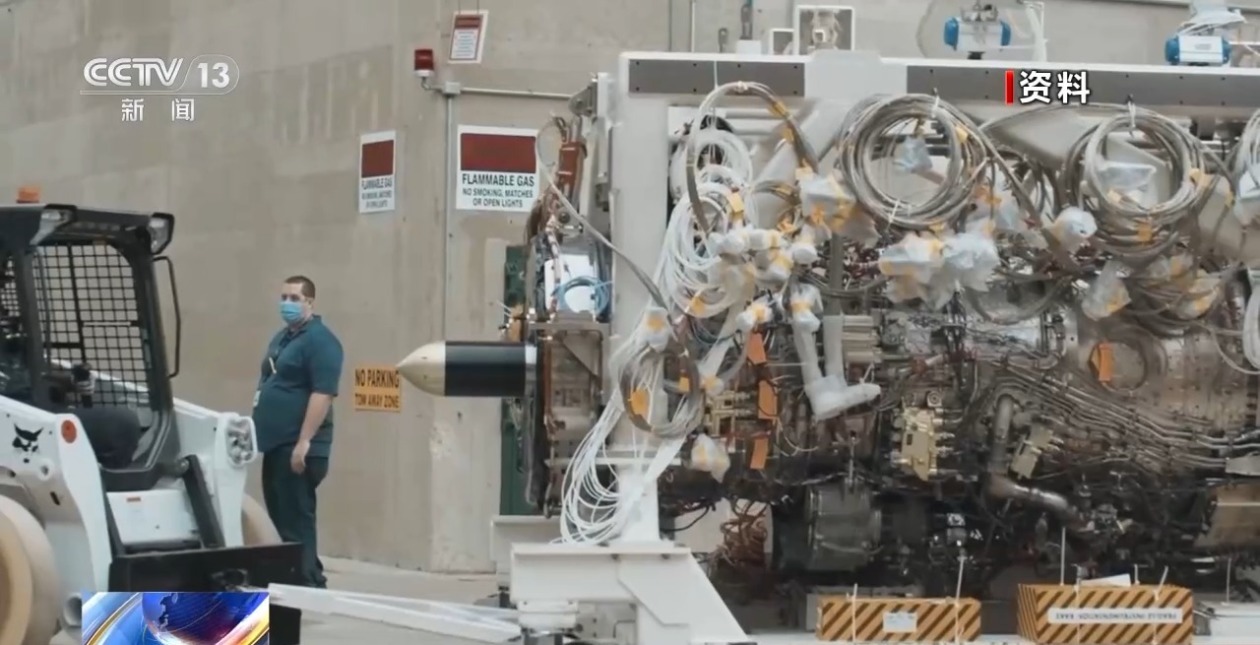
Experts believe that leveraging the overall strength of the U.S. aerospace industry to simultaneously develop two types of sixth-generation fighters theoretically does not present insurmountable difficulties; the issue lies in Boeing's monopolization.
Military commentator Zhang Xuefeng: Boeing has not performed well in its engineering projects over the past decade, facing issues across its aerospace, military, and commercial sectors. Of course, Boeing may try to reduce costs and risks by maximizing the sharing of the same technology between the two sixth-generation fighters. However, overall, external observers are skeptical, and the U.S. military is also very concerned about the significant uncertainties that will inevitably arise during this period.
The U.S. Air Force is accelerating the production of the sixth-generation stealth fighter F-47, with a first flight targeted for 2028. Boeing has invested nearly $2 billion to expand the production facility in St. Louis, where at least one pre-production model is being built. The F-47 is designed to have a combat radius exceeding 1000 nautical miles and will replace the F-22 as the primary air superiority fighter.
- The F-47's first flight is targeted for 2028.
- Boeing has invested nearly $2 billion to expand the F-47 production facility.
- The F-47 will have a combat radius exceeding 1000 nautical miles.
- At least one pre-production model of the F-47 is currently under construction.
- The U.S. Air Force plans to procure at least 185 F-47 aircraft.