
U.S. Air Force seeks producers for new nuclear cruise missile
The U.S. Air Force published a sources sought notice on May 20, 2026, signaling that the Long Range Standoff nuclear cruise missile program is moving toward production and that the government is now looking beyond its current sole developer to understand what industrial capacity exists across the defense industry.
The notice, issued by the Air Force Nuclear Weapons Center at Kirtland Air Force Base in New Mexico, asks companies including small businesses to submit capability statements demonstrating their ability to produce the AGM-181 LRSO weapon system in quantity, along with the full range of support equipment, sustainment infrastructure, and aircraft integration work the program requires. Responses are due by June 10, 2026.
The LRSO is America’s next nuclear cruise missile, a stealthy air-launched weapon designed to replace the AGM-86B Air-Launched Cruise Missile that has been the Air Force’s primary nuclear standoff weapon since the 1980s. The AGM-86B has been flying since 1982, making it older than many of the aircrews who now operate it, and the Air Force has been working to field its replacement for over a decade. RTX’s Raytheon unit holds the development contract, a cost-plus agreement awarded in July 2021 valued at up to $2 billion for the engineering and manufacturing development phase. That contract followed a competitive development period in which both Raytheon and Lockheed Martin received parallel contracts worth $900 million each in August 2017, with Raytheon ultimately selected to continue alone in 2020.
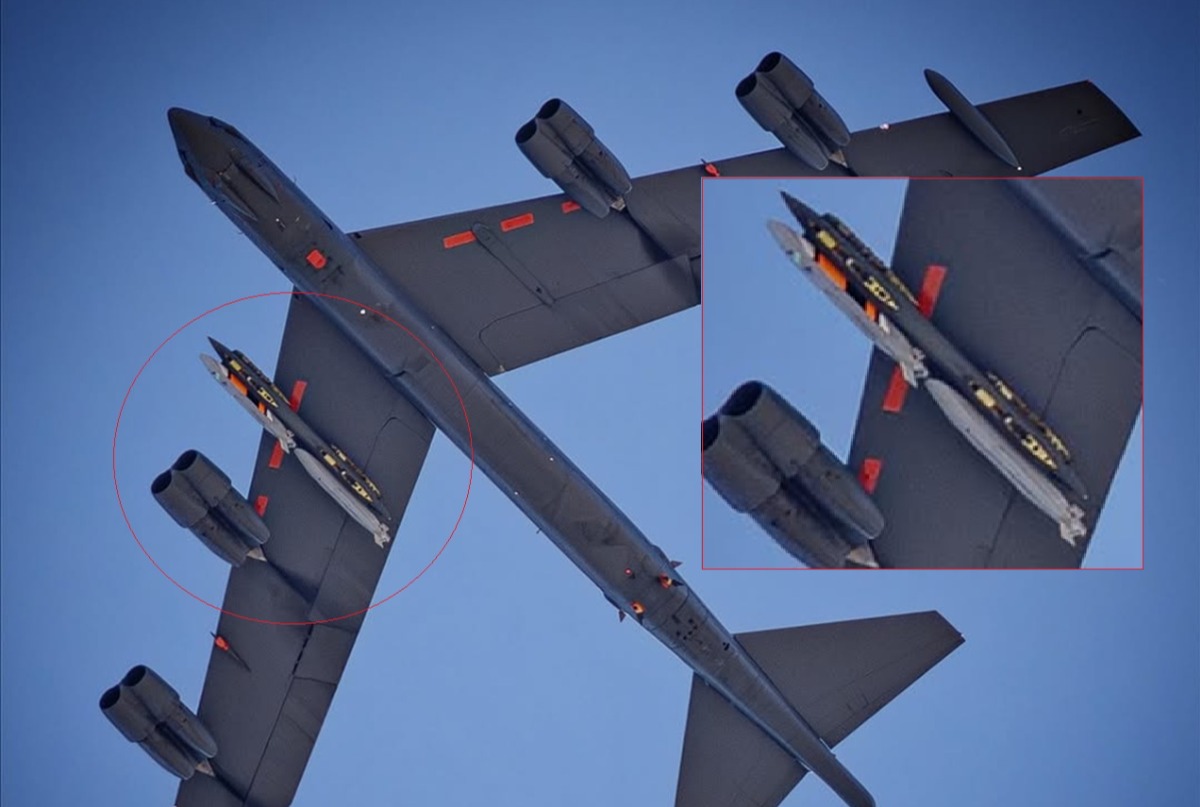
The AGM-181, as the LRSO is formally designated, is designed to carry the W80-4 thermonuclear warhead with a selectable yield of up to 150 kilotons and reach targets more than 2,500 kilometers away, well beyond the range of most modern surface-to-air missile systems. That standoff range is the weapon’s central operational value: a bomber carrying LRSO missiles does not need to penetrate enemy airspace to deliver a nuclear strike. The B-52J Stratofortress, the upgraded version of the long-running B-52 bomber that has been in service since 1952, and the new B-21 Raider stealth bomber will both carry the LRSO, giving the Air Force nuclear strike options from two very different platforms across a wide range of scenarios. The B-52 was already spotted carrying what appeared to be test-modified AGM-181 missiles in November 2025 and again in March 2026, suggesting flight testing is progressing actively ahead of the planned production decision.
That production decision, known in Pentagon acquisition terminology as Milestone C, is scheduled for the third quarter of fiscal year 2027, which falls in the spring of that year. Air Force budget documents, as reported by Air and Space Forces Magazine, show LRSO procurement funding set to balloon from $295 million in fiscal 2026 to $1.22 billion in fiscal 2027, a jump that reflects the transition from development spending to the far larger costs of actually building missiles. The Air Force plans to procure 1,087 AGM-181 missiles in total, including 67 for testing, at an estimated unit cost of approximately $14 million per missile, up from the original estimate of around $10 million. Total production costs after fiscal 2029 are projected at $4.2 billion, according to Air and Space Forces Magazine’s analysis of budget documents.
The sources sought notice does not change the program’s schedule or select any new contractors. Under acquisition rules, it is a market research tool, a formal survey that the government uses to understand what companies can and cannot do before deciding how to structure a contract competition. The notice explicitly states that Raytheon’s obligations under its existing development contracts continue and that any government-owned tooling will not be available to potential second sources, which is a significant caveat. It means any new entrant into the LRSO production supply chain would need to invest in its own manufacturing infrastructure from scratch rather than taking over existing government-funded facilities. The notice also flags that the program requires “substantial initial investment and an extended period of preparation for manufacturing, reliability, and production,” language that signals the Air Force understands the barriers to entry are high.
The sources sought scope is broad. Beyond the missiles themselves, the notice covers telemetry instrumentation kits, trainers, simulators, technical data, obsolescence management, aircraft integration, containers, replacement parts, and the full repair and sustainment infrastructure the program will need over its operational life. That comprehensiveness reflects how nuclear weapons programs are managed differently from conventional ones: every component, every piece of support equipment, and every maintenance procedure carries safety, security, and reliability requirements that go far beyond what governs conventional munitions programs.
The AGM-86B that LRSO replaces has been extended, upgraded, and kept flying long past its original intended retirement date through sheer necessity. The Air Force has been managing an aging nuclear cruise missile fleet while waiting for its successor, a situation that carries both operational and safety implications given the age of the hardware and the increasing cost and difficulty of sustaining components that are no longer in production. Every year the LRSO production timeline slips adds another year to the service life of weapons that were never meant to last this long. The sources sought notice is a small administrative step in a very large and slow-moving program, but it is a step in the direction of actually replacing them.
Content preview only. Full article available at source. View Full Article
The U.S. Air Force published a sources sought notice on May 20, 2026, to identify industrial capacity for the production of the AGM-181 Long Range Standoff nuclear cruise missile. The program aims to replace the aging AGM-86B missile, with plans to procure 1,087 units. Responses from potential producers are due by June 10, 2026, as the Air Force prepares for a production decision in fiscal year 2027.
- The U.S. Air Force is moving toward production of the AGM-181 LRSO nuclear cruise missile.
- Responses to the sources sought notice are due by June 10, 2026.
- The Air Force plans to procure a total of 1,087 AGM-181 missiles.
- The LRSO is designed to replace the aging AGM-86B missile.
- Production costs are projected at $4.2 billion after fiscal 2029.