
U.S. Air Force signs $2.3B contract for E-7A radar aircraft
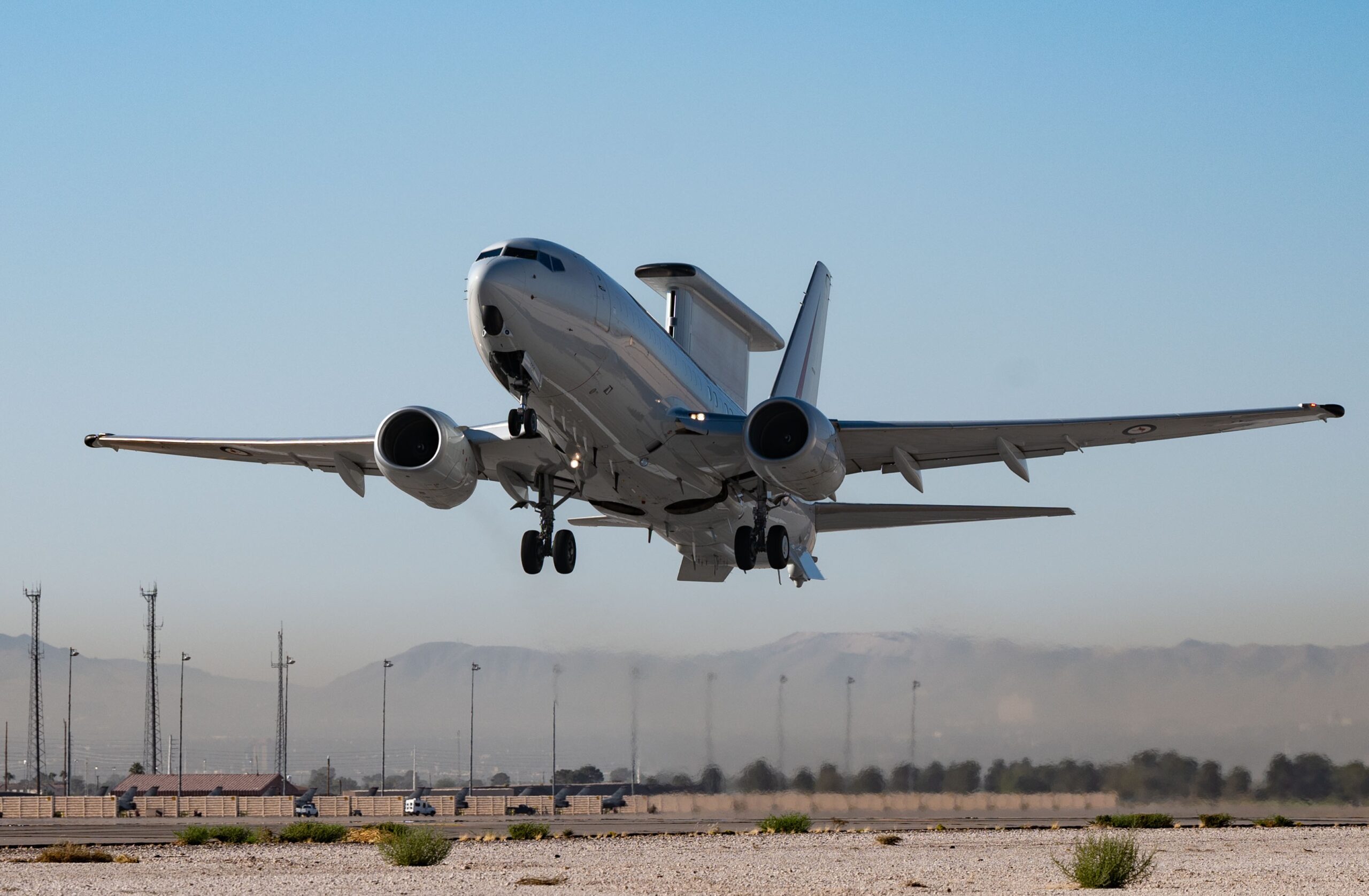
The United States Air Force has awarded Boeing a $2.34 billion contract modification to support the development of the E-7A Rapid Prototype Airborne Mission Segment, part of the service’s effort to field the Boeing E-7A Wedgetail airborne early warning and control aircraft.
The modification exercises an option under a previously awarded contract and supports continued development of mission systems for the E-7A aircraft. The program is intended to provide the United States Air Force with a modern airborne battle management platform capable of coordinating joint air operations.
According to the contract announcement, the option exercise increases the value of the original contract associated with the E-7A mission systems program. The work will be carried out primarily in Seattle, Washington, with additional program activities conducted in Oklahoma City, Oklahoma; Huntsville, Alabama; and Heath, Ohio.
The contract performance period is expected to continue through August 10, 2032, reflecting the long-term development schedule associated with the E-7A mission segment. Funding for the program includes Fiscal 2026 research, development, test, and evaluation funds totaling $31 million, which are being obligated at the time of the award.
In a separate but related contract action, Boeing also received a $99,275,085 modification for work related to Diminishing Manufacturing Sources Multi-Role Electronically Scanned Array, a component associated with the aircraft’s radar and mission systems.
This second modification increases the cumulative contract value to $5,006,666,201, up from $4,907,391,116.
Work associated with this modification will also take place at Boeing facilities and supporting locations in Seattle, Oklahoma City, Huntsville, and Heath, with completion expected by August 2032.
The E-7A Wedgetail is designed to serve as an airborne command and control platform capable of managing complex airspace operations. The aircraft allows its crew to coordinate missions involving air, sea, and land forces during military operations. The system functions as an airborne battle management node, providing commanders with situational awareness across large areas of airspace. Based on the commercial Boeing 737 airframe, the E-7A integrates advanced radar and mission systems designed to track aircraft and coordinate operational responses in real time.
At the core of the aircraft is a Multi-Role Electronically Scanned Array (MESA) radar, which enables the platform to detect and track multiple airborne targets simultaneously.
The radar system can monitor large sections of airspace while providing tracking data to command centers and other aircraft operating in the same battlespace. Airborne early warning and control aircraft like the E-7A play a critical role in modern air operations. By operating at altitude, these platforms extend radar coverage beyond the limits of ground-based sensors and provide commanders with real-time data on aircraft movements and potential threats.
The aircraft also enables coordination between different military units by linking fighters, naval vessels, and ground-based forces through shared command networks.
The United States Air Force is pursuing the E-7A program as part of its effort to modernize airborne command and control capabilities. The Wedgetail platform is expected to replace older airborne early warning systems used by the service, providing improved radar coverage and modern mission management tools.
Development of the mission systems segment represents a central component of the aircraft’s operational capability, as these systems integrate sensors, communications equipment, and battle management software used by the crew.
Boeing’s defense division in Tukwila, Washington, is responsible for major portions of the program’s development work.
Additional program support locations include Oklahoma City, which hosts important airborne surveillance and command system infrastructure, and Huntsville, Alabama, a hub for advanced defense technology development.
The E-7A Wedgetail is already operated by several allied air forces. Australia was the first country to field the aircraft, followed by South Korea and Turkey, which use the platform for airborne early warning and battle management missions. United Kingdom is also acquiring the aircraft as part of its effort to modernize airborne surveillance capabilities.
Content preview only. Full article available at source. View Full Article
The U.S. Air Force awarded Boeing a $2.34 billion contract modification to develop the E-7A Wedgetail radar aircraft, enhancing its airborne command and control capabilities. The contract includes work primarily in Seattle and additional locations in Oklahoma City, Huntsville, and Heath, with completion expected by August 2032. This program aims to modernize the Air Force's battle management platform.
- The U.S. Air Force awarded Boeing a $2.34 billion contract modification for the E-7A aircraft.
- The contract supports the development of airborne mission systems for the E-7A.
- Work will be conducted primarily in Seattle, with additional activities in Oklahoma City, Huntsville, and Heath.
- The E-7A Wedgetail is designed for airborne command and control operations.
- The contract performance period extends through August 10, 2032.