
U.S. Air Force wants a missile engine that runs on explosions
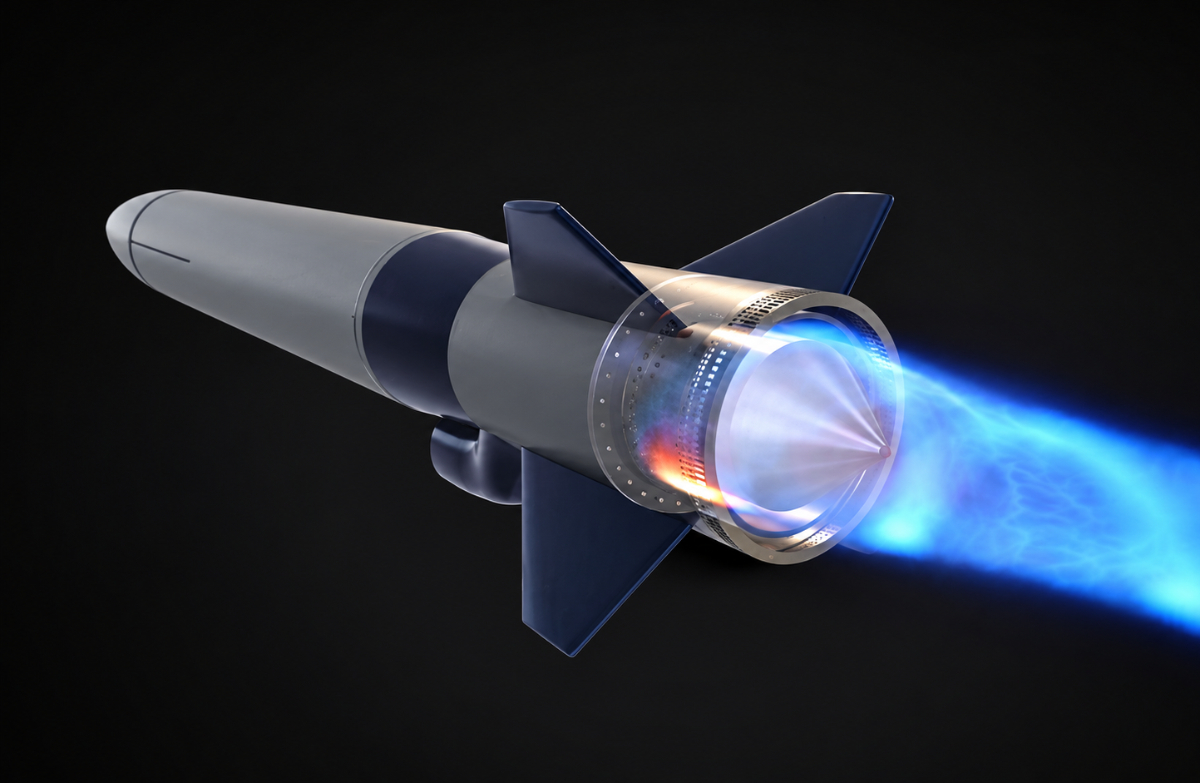
The U.S. Air Force Research Laboratory wants industry to build and fly a combined-cycle rotating detonation rocket engine, a type of propulsion that runs on a continuous chain of explosions, as a step toward cheap, high-speed weapons that could be built in large numbers.
The lab’s Rocket Propulsion Division at Edwards Air Force Base, California, issued a call for proposals for a Rotating Detonation Rocket Engine-Combined Cycle, or RDRE-CC, flight demonstration under its HERMES Broad Agency Announcement. The notice, published on SAM.gov, sets a Nov. 16, 2026, deadline for initial white papers, with the work expected to run 36 to 48 months.
The program aims to take the technology from early laboratory proof of concept, known as Technology Readiness Level 3, to a prototype demonstrated in a relevant environment, Level 6. The effort is meant to end with a flight test in which a sounding rocket launched from the ground boosts the engine-powered vehicle to its operating conditions, to show the system could work for a future class of weapons the lab calls High-Speed Affordable Mass Munitions, or HAMM.
In a conventional rocket, fuel burns steadily in a combustion chamber. A rotating detonation engine instead creates a detonation wave that races continuously around a ring-shaped chamber at supersonic speed, burning fuel as it goes, which researchers say can deliver more thrust from a smaller, simpler engine with fewer moving parts. A combined-cycle design pairs that rocket mode with air-breathing operation, so the engine can use oxygen from the atmosphere for part of its flight instead of carrying it all on board.
The work laid out in the call covers developing and testing the rotating detonation rocket engine, integrated direct-connect and freejet ground tests that simulate high-speed flight conditions, designing the vehicle and flying it. The technical requirements, vehicle constraints and seven specific test objectives are in a controlled, export-restricted document available only to certified U.S. defense contractors, and the companies doing the work must be able to safeguard Secret-level information.
Selection will happen in two steps. Companies first submit white papers of up to 10 pages, plus an optional five-page technical appendix, describing their design, how they will meet the test objectives, a schedule and a rough cost estimate. The lab expects to review them within six to eight weeks and will invite only the strongest submissions, if funding is available, to send full technical and cost proposals.
Rotating detonation engines have drawn growing attention from the U.S. military in recent years. RTX’s Pratt & Whitney completed a series of tests on a rotating detonation engine in 2025 under DARPA’s Gambit program, which is working toward an air-breathing engine for future long-range weapons, and AFRL’s rocket propulsion researchers at Edwards have been firing rotating detonation rocket engines on test stands for several years.
Content preview only. Full article available at source. View Full Article
The U.S. Air Force Research Laboratory is seeking industry proposals for a combined-cycle rotating detonation rocket engine to enhance high-speed weapon capabilities. The project, based at Edwards Air Force Base in California, has a proposal deadline of November 16, 2026, and aims to transition from laboratory proof of concept to a flight-tested prototype within 36 to 48 months. This initiative is part of the development of High-Speed Affordable Mass Munitions (HAMM).
- The U.S. Air Force Research Laboratory is developing a combined-cycle rotating detonation rocket engine.
- The proposal deadline is November 16, 2026.
- The project aims to demonstrate a prototype in a relevant environment within 36 to 48 months.
- The technology aims to support the development of High-Speed Affordable Mass Munitions (HAMM).
- The engine design allows for air-breathing operation, reducing the need for onboard oxygen.