
U.S. Announces Over $10 Billion Arms Sale to Taiwan: HIMARS, ATACMS, and Drones Reshape Deterrence in the Taiwan Strait
 Li Minghui
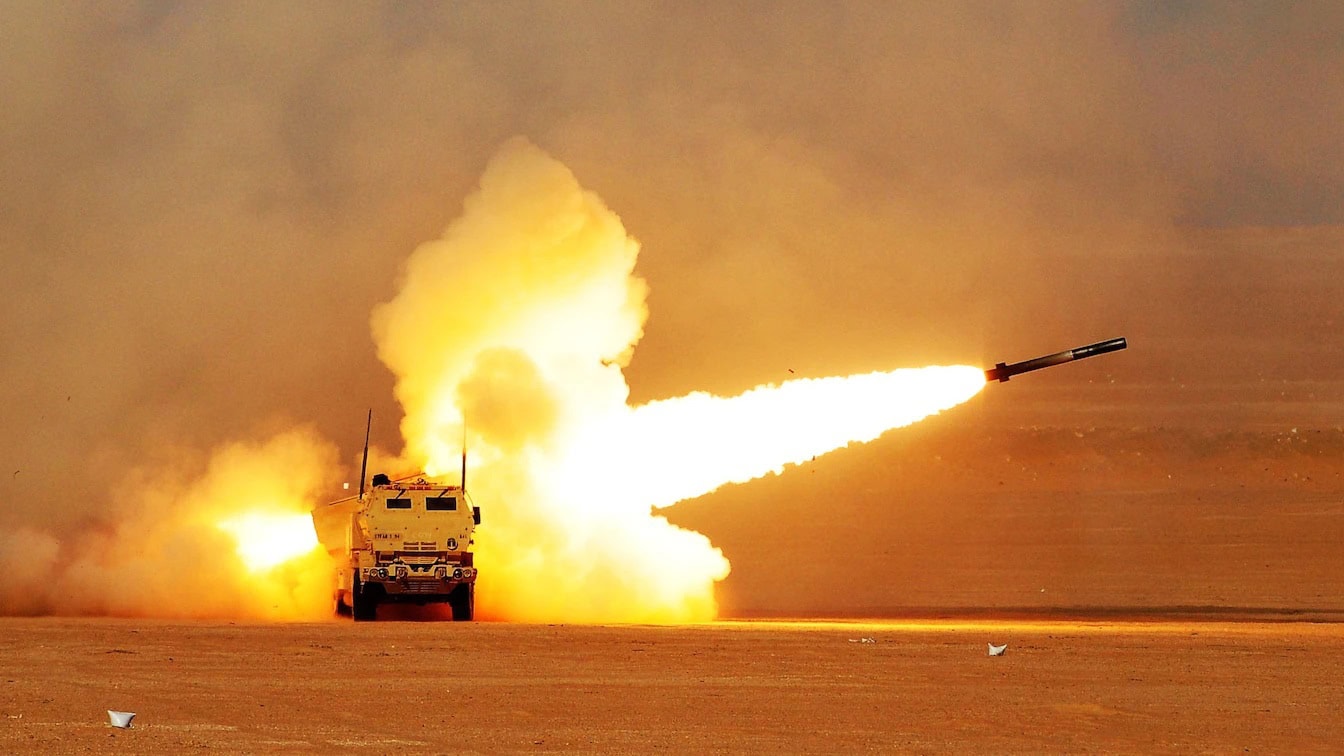 Data image: M142 HIMARS rocket system launch. The image is used to illustrate the key equipment categories in this arms sale package and does not represent the actual delivery site in Taiwan.
Summary
According to the Associated Press, the Trump administration in the United States announced an arms sale to Taiwan worth over $10 billion, which includes 82 sets of HIMARS high mobility artillery rocket systems, 420 ATACMS tactical missiles, 60 self-propelled howitzers, and drone systems valued at over $1 billion. If approved by Congress, this will become the largest arms package to Taiwan in U.S. history and may exceed the total arms sales to Taiwan during the Biden administration. This announcement sends a strong strategic signal against the backdrop of the Beijing summit: Washington is shifting its deterrence in the Taiwan Strait from a "symbolic defense commitment" to a more in-depth combat configuration focused on strike capabilities, anti-landing operations, and distributed firepower; Beijing is almost certain to respond with a combination of diplomatic protests, sanctions, military exercises, and gray zone actions around the Taiwan Strait.
Main Text
In May, the Associated Press reported that the U.S. State Department had announced a package of arms sales to Taiwan worth over $10 billion. The report noted that this arms sale covers eight agreements, primarily including 82 sets of HIMARS, 420 ATACMS, 60 self-propelled howitzers, and related equipment, as well as drone systems valued at over $1 billion. This package still requires review by the U.S. Congress; if finalized, its scale will exceed the approximately $8.4 billion total arms sales to Taiwan during the Biden administration, marking a new high in U.S. arms sales to Taiwan.
The equipment structure indicates that this arms sale is not merely about "stock replenishment," but revolves around three aspects of high-intensity conflict in the Taiwan Strait: First, HIMARS and ATACMS provide mobile long-range precision firepower that can strike landing assembly areas, port loading nodes, command and communication nodes, and key firepower positions; second, self-propelled howitzers enhance Taiwan's mobile artillery and deep firepower against landing operations; third, drone systems expand ISR, target designation, battlefield attrition replacement, and low-cost consumption combat capabilities. This is highly consistent with Taiwan's recent push for a "porcupine strategy," emphasizing mobility, dispersion, and survivable firepower.
From a deterrence perspective, the 420 ATACMS are the most politically and militarily sensitive part of this arms sale. The ATACMS has a range typically reaching about 300 kilometers, and its deployment in Taiwan will significantly alter the risk calculations for the People's Liberation Army (PLA) when conducting campaign assembly, cross-sea loading, and forward airfield operations around the Taiwan Strait. Even if Taiwan does not publicly disclose specific deployment methods, the potential firepower coverage is sufficient to force the PLA to increase costs associated with dispersion, camouflage, air defense, missile defense, and suppression tasks, thereby complicating amphibious landing operations.
However, enhanced deterrence does not equate to reduced risk. Beijing has long viewed U.S. arms sales to Taiwan as a violation of the One China principle and the spirit of the three U.S.-China joint communiqués. Such a large-scale combination of long-range strike and unmanned systems could trigger a more intense counteraction from mainland China: including announcing sanctions against U.S. defense companies and relevant officials, expanding military exercises around Taiwan by the Eastern Theater Command, increasing joint maritime and aerial patrols, establishing temporary no-fly/no-sail zones around Taiwan, and enhancing routine pressure through coast guard, militia, and unmanned platforms. In other words, while the arms sale will enhance Taiwan's wartime defense capabilities, it may also temporarily increase the frequency of military friction in the Taiwan Strait.
On the political level, this case arises against the backdrop of the U.S.-China Beijing summit, making its significance more complex. The Trump administration is attempting to negotiate with Beijing on trade, tariffs, and great power competition issues while simultaneously showcasing the largest arms sale to Taiwan in history to demonstrate that it "will not trade Taiwan's security for deals." This approach can be interpreted by Washington as a bargaining chip before negotiations, while Beijing may see it as pressure on core interest issues. For Taiwan, this is a significant security endorsement; for U.S.-China relations, it will become one of the most likely topics to ignite public opinion and strong military responses before and after the summit.
It is important to note that the announcement of the arms sale is only the starting point for capability building. Whether Taiwan can effectively integrate HIMARS, ATACMS, self-propelled howitzers, and drones into effective combat power depends on the delivery schedule, ammunition reserves, training cycles, C4ISR systems, wartime survivability, and U.S.-Taiwan logistics support arrangements. If delivery is delayed or ammunition quantities are insufficient, the political signal will outweigh the military effect; if delivery and training progress simultaneously, this package could become a key leap in Taiwan's land-based long-range firepower system.
Key Facts
- Amount: Over $10 billion.
- Core Equipment: 82 sets of HIMARS, 420 ATACMS, 60 self-propelled howitzers and related equipment, drones valued at over $1 billion.
- Procedure Status: The U.S. State Department has announced it, still requires Congressional review; final delivery time and batches to be confirmed.
- Historical Scale: If approved, it will become the largest arms sale package to Taiwan in U.S. history and may exceed the total during the Biden administration.
- China's Reaction: Beijing has reacted strongly, with possible follow-up actions including diplomatic protests, sanctions, and military exercise escalations.
Strategic Impact
- Escalation of Deterrence in the Taiwan Strait: The HIMARS/ATACMS combination gives Taiwan a more credible long-range precision anti-landing and anti-assembly capability, forcing the PLA to bear higher attrition risks during campaign preparation.
- Increased Counteraction Pressure on the PLA: The Eastern Theater Command may strengthen reconnaissance and strike chain construction against Taiwan's rocket artillery positions, C2 nodes, and airports/ports, and accelerate unmanned, electronic warfare, and long-range fire suppression training.
- Hardening of U.S. Policy Toward Taiwan: The Trump administration emphasizes its commitment to Taiwan's security through this massive arms sale while incorporating the Taiwan issue into the U.S.-China negotiation leverage.
- Increased Variables for the Beijing Summit: The arms sale will make the summit atmosphere more tense, and Beijing may maintain its position through military and diplomatic actions before and after the meeting to avoid being interpreted as conceding on the Taiwan issue.
- Execution Risks Remain High: What truly affects combat power is not the announced amount, but the speed of delivery, ammunition stockpiles, training integration, and wartime survivability.
Sources
- Associated Press, “US announces $10 billion in arms sales to Taiwan,” 2026-05, https://apnews.com/article/trump-taiwan-arms-sales-china-2743b66e3a4e47a895e731568cef9008
- U.S. Defense Security Cooperation Agency, Major Arms Sales index (for verifying FMS notification mechanisms and announcement standards; specific Taiwan item notifications are subject to official updates)
- Ministry of Foreign Affairs of the People's Republic of China statements on U.S. arms sales to Taiwan (for background judgment: China typically responds within the framework of sovereignty, security interests, and the three U.S.-China joint communiqués)
The U.S. announced an arms sale to Taiwan in May 2026, valued at over $10 billion, which includes 82 HIMARS, 420 ATACMS, and 60 self-propelled howitzers. This package, pending congressional approval, could be the largest in U.S. history for Taiwan, significantly enhancing its military capabilities. China is likely to respond with diplomatic protests and increased military activities in the region.
- The U.S. announced an arms sale to Taiwan exceeding $10 billion.
- The package includes 82 HIMARS, 420 ATACMS, and 60 self-propelled howitzers.
- This sale could become the largest arms package to Taiwan in U.S. history.
- China is expected to respond with diplomatic protests and military exercises.
- The sale aims to enhance Taiwan's deterrence capabilities against potential Chinese aggression.