
US Army creates robotics technician job to focus on drone warfare
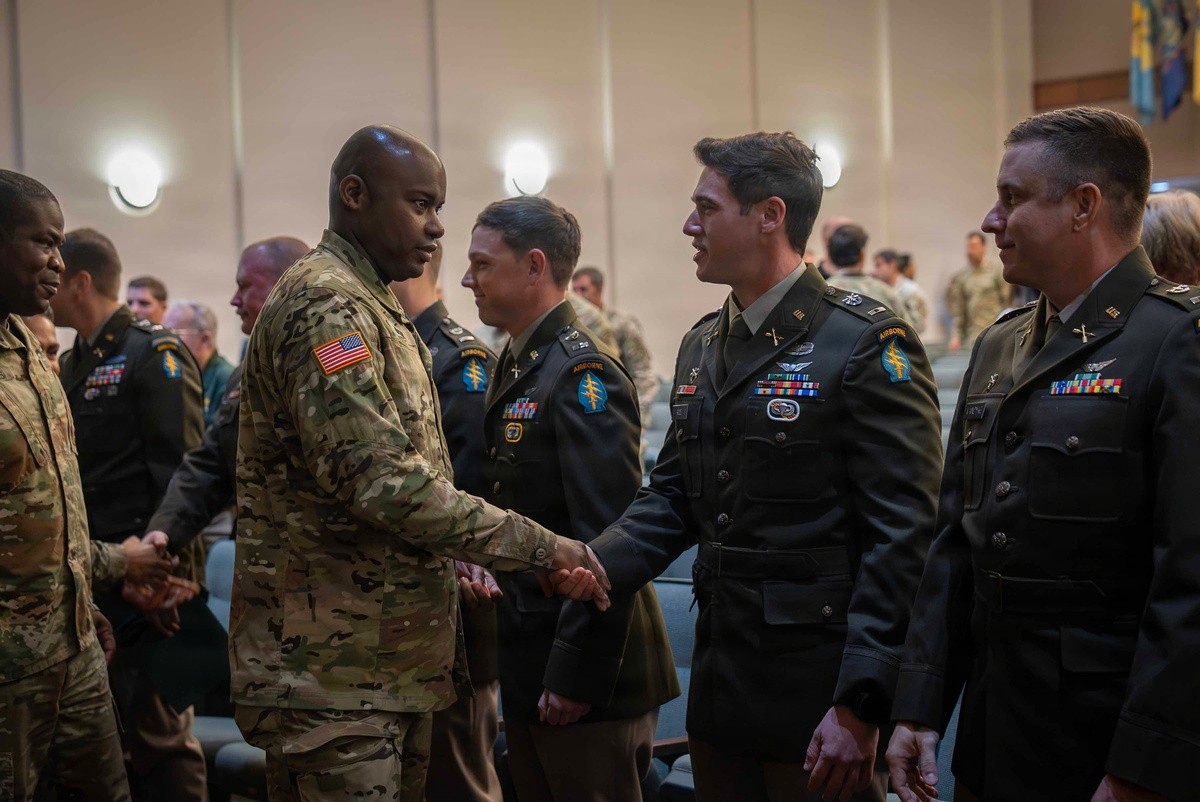
The U.S. Army kickstarted a military occupational specialty focusing on robotics and unmanned systems with an induction ceremony this month at the U.S. Army John F. Kennedy Special Warfare Center and School.
During the ceremony, 10 warrant officers were formally introduced as 390A robotics technicians. They will now serve as subject-matter experts on all aspects of using robotic and autonomous systems, including programming, building and repairing them, plus integrating them into combat.
The 390A inauguration is the result of a lengthy process that has been in the works since 2024, when U.S. Army Special Operations Command announced its aim to train experts in using autonomous systems.
The Army deemed it necessary to introduce robotics as a separate specialization to avoid overburdening special warfare operators with having to master an additional, highly complex skill set, in addition to their existing knowledge.
“What we’ve determined is it cannot be an additional task or an additional hat for someone on the ODA,” Chief Warrant Officer 5 Jerry Brown, command chief warrant officer for 1st Special Forces Command (Airborne), said in a release, adding that the new specialists will be able to leverage their specific field of knowledge within robotics to help the force as a whole.
The new 390A technicians will be assigned to tactical formations at the brigade and group level. As experts in autonomous warfare, they will advise commanders on how best to deploy autonomous systems during operations.
They will also be required to think quickly in the field to instantly propose solutions to any problems that may arise with robotics in the field, and to use their expertise to come up with innovative ways of using drones to reach objectives.
To prepare them for this role, 390A candidates are required to complete a 19-week course, where they must build drones from scratch that do not require GPS or radio frequencies to navigate.
The Army stated in a release that robotic systems assembled during the course will rely primarily on artificial intelligence and machine learning to navigate to targets.
Fiber optic cables also provide a way for drones to reach targets while being invulnerable to external signal interference, such as jamming. Known as “tethered drones,” cable-linked unmanned aircraft systems can use artificial intelligence for targeting and navigation while having a direct physical connection to their operator.
At the time of publication, the Army had not responded to questions about whether 390A candidates would be learning to build and field tethered drones.
“The Army is implementing changes in force structures, adding a multi-domain task force equipped with autonomous long-range fires,” Gen. Christopher LaNeve, Vice Chief of Staff of the Army, said in a statement.
“These technical experts will help command teams understand integration across the force. We are scaling this across the Army.”
The U.S. Army inducted ten warrant officers as 390A robotics technicians at the U.S. Army John F. Kennedy Special Warfare Center and School this month. These specialists will focus on programming, building, and integrating robotic systems into combat operations. They will complete a 19-week course to develop expertise in drone technology, including building drones that utilize artificial intelligence for navigation. This initiative aims to enhance the Army's capabilities in autonomous warfare.
- The U.S. Army has created a new military occupational specialty for robotics technicians.
- Ten warrant officers were inducted as 390A robotics technicians.
- The technicians will serve as experts in using robotic and autonomous systems in combat.
- A 19-week course is required for 390A candidates to build drones from scratch.
- The Army is implementing changes to integrate autonomous systems into its force structure.