
U.S. Army hires consultants for millions to fix slow arms sales
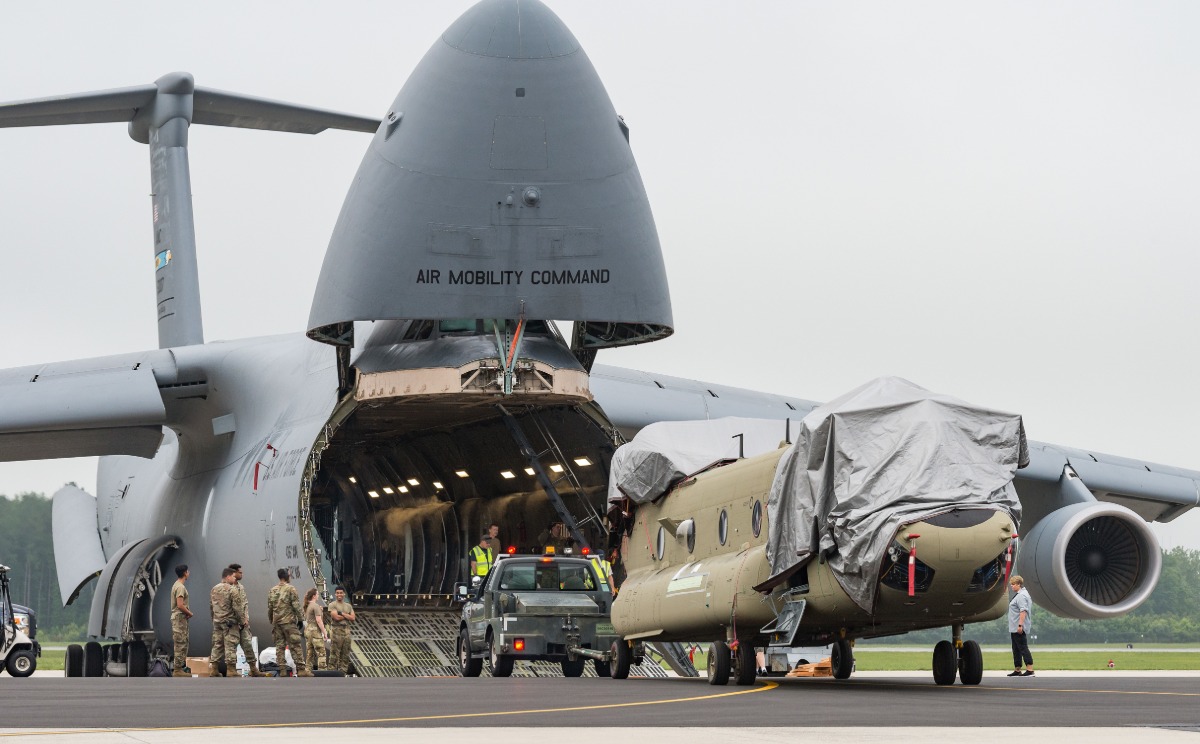
A consulting firm best known for advising Fortune 500 companies on corporate strategy just landed a nearly $20 million contract to fix one of the U.S. military’s most persistent headaches: getting American weapons into allied hands faster.
The Boston Consulting Group received a $19.9 million contract from the Army to help redesign how the service sells weapons to foreign governments, a process officially called Foreign Military Sales, or FMS, that lets allied nations buy American-made tanks, missiles, aircraft, and other military equipment through the U.S. government rather than negotiating directly with defense contractors. Under the contract, the consulting firm will analyze the Army’s current export procedures, redesign how sales are structured, develop strategy for specific weapon systems moving through the pipeline, and help implement whatever process changes come out of that work, with the job running through an estimated completion date of May 30, 2029.
The Army solicited exactly one bid for the work and received exactly one bid back, a detail buried in the routine contracting language but worth pausing on, since a single-bid competitive contract means the Army effectively had no competing offer to weigh Boston Consulting Group’s proposal against. That is not unusual for specialized consulting work requiring deep, pre-existing expertise in a narrow area like defense export policy, but it does mean taxpayers are relying on the Army’s internal cost analysis rather than market competition to determine whether $19.9 million represents fair value for the work. The Army Contracting Command at Aberdeen Proving Ground in Maryland handled the award, obligating $1 million of Fiscal Year 2026 Foreign Military Sales Trust Fund money upfront, with the remaining contract value expected to be paid out incrementally as work progresses over the multiyear engagement.
Foreign Military Sales has been a genuine sore spot for the Pentagon, now officially renamed the Department of War, for years, and the scale of the problem explains why the Army is willing to pay a major consulting firm to help fix it. The program moved a record $117.9 billion in weapons and services to allied nations in fiscal 2024 alone, according to State Department figures, but the process for getting there has grown notorious for delays that stretch into years rather than months. A foreign government seeking American weapons has to submit a formal letter of request, wait through case development and review, negotiate contract terms under a law called the Truth in Negotiations Act, and then wait again for actual production, a sequence where individual steps can each take months, and where components with long manufacturing lead times sometimes require 18 to 36 months to produce even after a deal is finalized. Industry analysts have pointed out that this unpredictability discourages American defense manufacturers from investing in additional production capacity, since companies have little incentive to expand factories and hire workers for foreign orders that might not materialize on any reliable schedule, a dynamic that has left demand backlogs in some high-profile cases stretching for years.
The Trump administration moved to address these bottlenecks starting in April 2025, when the White House issued two executive orders directing the Secretary of Defense to develop plans for speeding up both domestic defense acquisitions and foreign weapons sales, and Defense Secretary Pete Hegseth followed up that November with a formal overhaul announcement that reshuffled how the Department of War handles arms exports. That reshuffling moved the Defense Security Cooperation Agency, which manages FMS cases, and the Defense Technology Security Administration, which reviews whether sensitive technology can be released to foreign buyers, both under the department’s broader acquisition office, putting the same officials who oversee weapons purchases for the U.S. military in charge of approving those same weapons for sale abroad. The reforms also created a new layer of leadership called Portfolio Acquisition Executives, senior officials whose performance evaluations are now explicitly tied to how quickly they get weapons systems out the door, a structural change meant to align individual incentives with the administration’s stated goal of speed over process.
A separate government watchdog report released in June 2026 found the Department of War had already completed 26 of 33 reform action items tied to a related set of technology release and foreign disclosure processes, suggesting the broader reform effort has real institutional momentum behind it rather than existing only on paper, even as significant work clearly remains for firms like Boston Consulting Group to help finish.
Content preview only. Full article available at source. View Full Article
The U.S. Army awarded a $19.9 million contract to Boston Consulting Group to redesign the Foreign Military Sales process, aiming to expedite arms sales to allied nations. This contract, which will run until May 30, 2029, addresses longstanding delays in the procurement of military equipment. The Army's Contracting Command at Aberdeen Proving Ground in Maryland is overseeing the project, which is critical for improving defense procurement efficiency.
- Boston Consulting Group received a $19.9 million contract from the U.S. Army.
- The contract aims to redesign the Foreign Military Sales process.
- The Army has faced persistent delays in arms sales to foreign governments.
- The contract is expected to run until May 30, 2029.
- The Army's internal cost analysis is relied upon due to a single bid for the contract.